
Last updated November 4, 2026
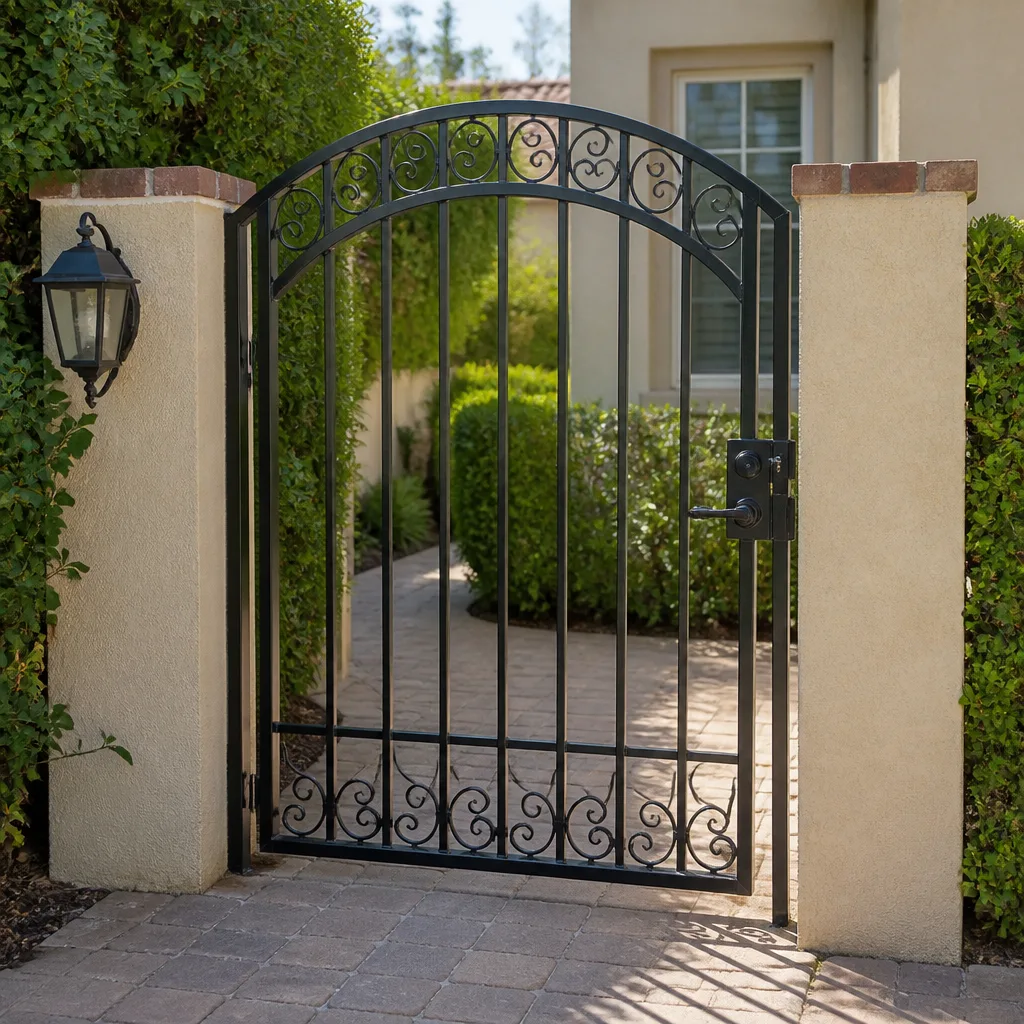 Wrought iron
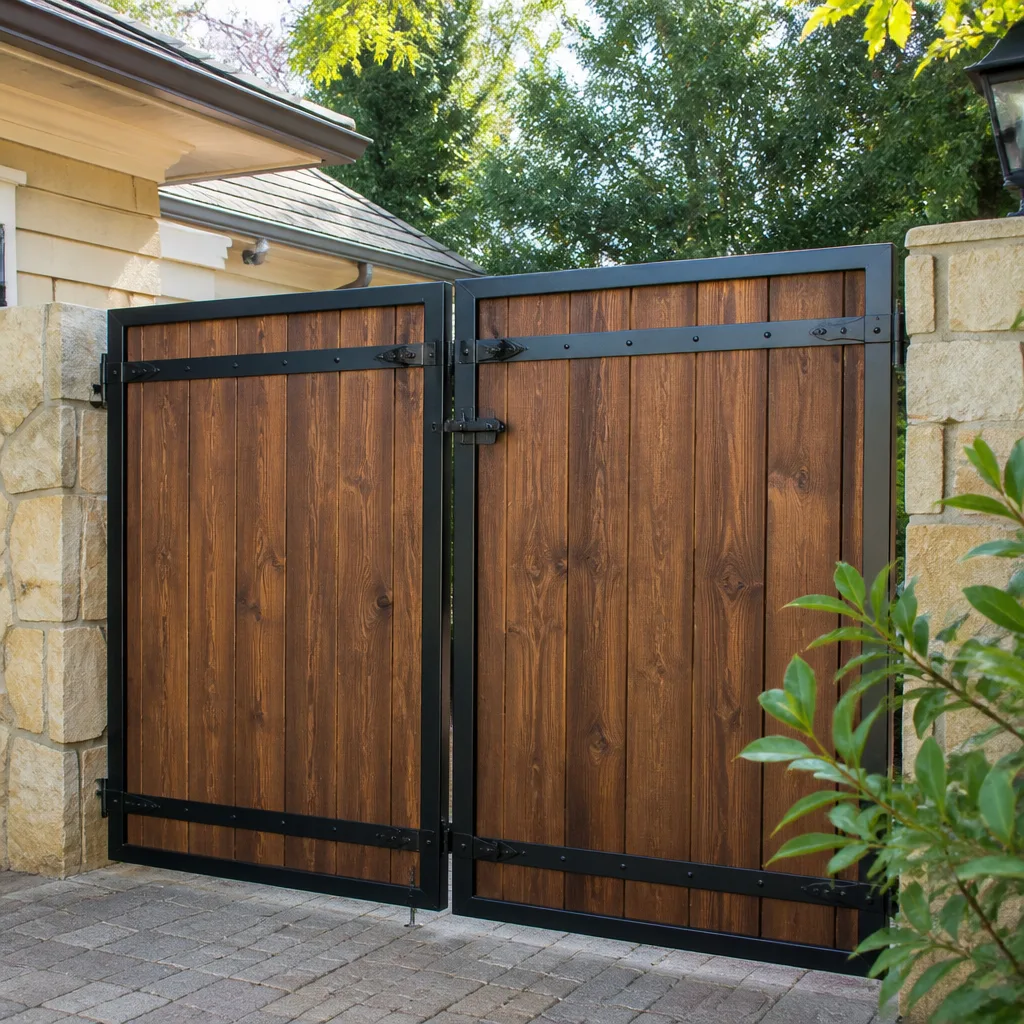 Wood & steel frame
 Farm & ranch
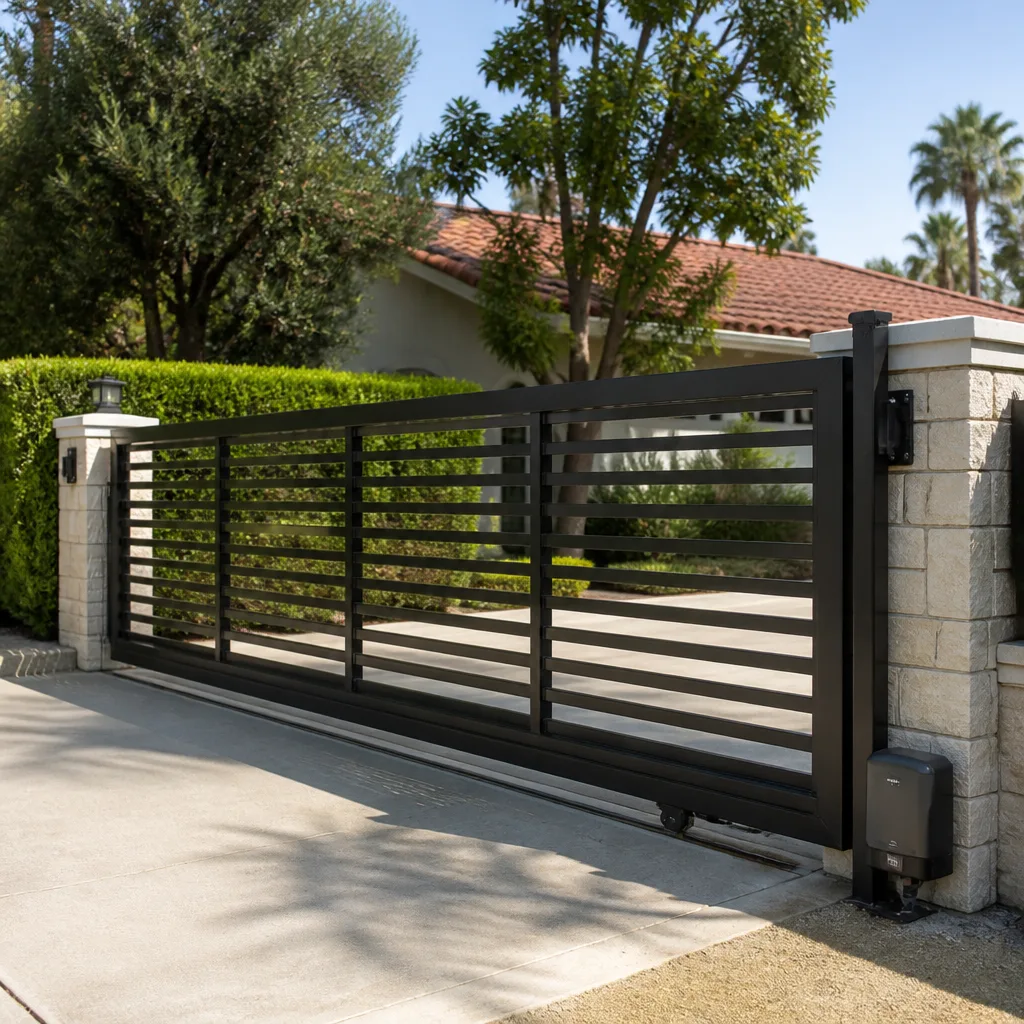 Sliding driveway gates
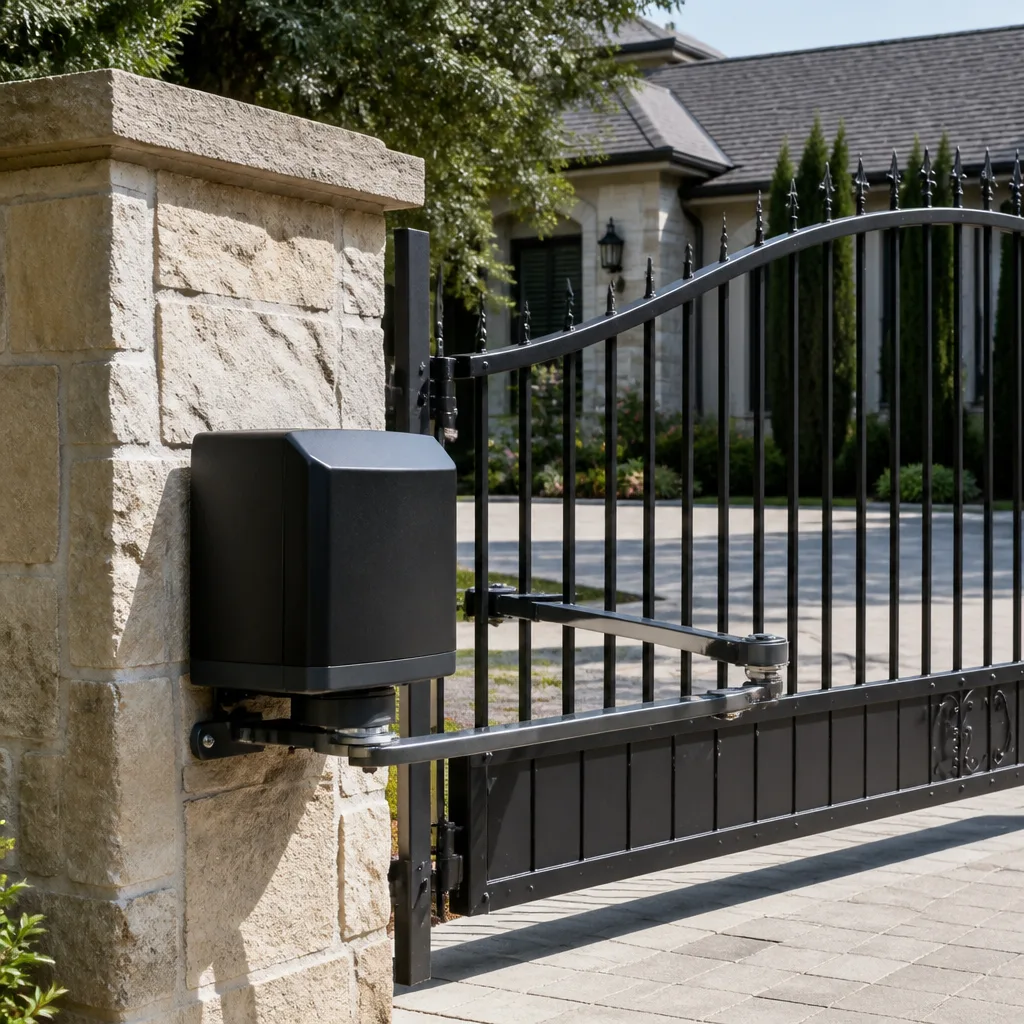 LiftMaster operators
Free on-site gate assessment - hinges, posts, and your LiftMaster or Nice gate operator checked before anything is quoted
The assessment is free and the quote is the invoice.
Get your free estimateGate Repair Maintenance Schedule: What to Do and When
A gate operator in Murrieta accumulates more airborne silica dust in one Santa Ana season than a coastal gate collects in three years, yet most maintenance guides never mention it once. That grit works its way into chain drives, hinge pins, and control board housings, grinding away at components that a generic national checklist assumes will stay clean. This guide replaces the one-size-fits-all maintenance advice with a schedule built around what actually happens to gates in our climate: dry heat that bakes lubricants into varnish, wind-driven dust that scores bearing surfaces, and the occasional winter downpour that finds every cracked seal. You’ll learn what to do, when to do it, and which tasks genuinely extend the life of a gate in Murrieta versus which ones just make you feel productive.
Quick Answer
A residential gate in Murrieta needs a hands-on maintenance session every six months, with a lighter monthly visual check and a deeper pre-summer and post-Santa Ana service. Heavy-use commercial and HOA gates cycling more than 200 times a day should move to a 90-day interval. The essential seasonal tasks are cleaning wind-driven grit from tracks and chains, replacing dried-out lubricant with the right products for arid heat, tightening hardware that thermal expansion loosens, and testing safety sensors and battery backups before they fail without warning.
Styles & brands we work with
- Wrought iron
- Wood & steel frame
- Farm & ranch
- Sliding driveway gates
- LiftMaster operators
Table of Contents
- Why Murrieta Gates Age Differently
- The Monthly Visual Check You Can Do in 10 Minutes
- Lubrication: What to Use and What’s Wrong for This Climate
- A Seasonal Maintenance Calendar for Murrieta Homeowners
- Component Lifespan Benchmarks in a High-UV, High-Dust Environment
- Reading Cycle Counts to Predict Failures Before They Happen
- Commercial vs. Residential Maintenance: Why the Interval Changes
- What’s Safe to Do Yourself and What Isn’t
Why Murrieta Gates Age Differently
National maintenance guides assume a gate lives in a mild, predictable climate. Inland Southern California isn’t that. Murrieta sits far enough from the coast that humidity stays low most of the year, which means lubricants dry out faster than their product labels anticipate. A chain that’s still supple and coated after six months in a coastal city turns stiff and gummy here in the same period. The heat isn’t the only factor. Santa Ana winds push fine silica through neighborhoods, and that dust settles into every hinge, roller track, and operator housing. Add the occasional intense winter storm that dumps a season’s worth of rain in a few days, and you have a maintenance picture that requires adjusting the timing on nearly every standard recommendation.
The practical result: components that would last five or six years in a moderate climate often need replacement a year or two sooner in Murrieta unless the maintenance schedule accounts for the conditions. A gate that receives regular, climate-appropriate attention can still hit or exceed manufacturer life expectancies. Skip the local adjustments, and wear accelerates in predictable ways. We regularly see gates in Murrieta with hinge pins that look like they were sandblasted, photo-eye lenses clouded by fine dust, and control boards coated in a layer of grit that insulates heat against sensitive electronics. None of that appears in a generic checklist.
The Monthly Visual Check You Can Do in 10 Minutes
A full maintenance session every six months doesn’t replace the value of a quick monthly look. Most gate failures announce themselves days or weeks before they become an emergency, often through something as simple as a new sound or a slight change in how the gate moves. A monthly check catches those early signals. It takes about ten minutes and you don’t need special tools for it, though a flashlight helps for the operator housing.
Here’s the monthly routine we recommend for every residential gate in Murrieta:
- Look at the gate’s path. Check for debris in the track, rocks near the hinges, or vegetation that’s grown into the swing or slide path. Murrieta yards grow fast in spring, and a vine through the photo-eye beam is a common call we see that could have been prevented with a monthly glance.
- Listen while it cycles. Open and close the gate once. A new squeak, rattle, or hesitation is an early signal. Grinding from a slide gate usually means the V-track has accumulated dirt and the wheels are dragging instead of rolling.
- Check the photo-eyes. Wipe dust from the lens covers on both sides. Santa Ana dust coats these quickly, and obscured lenses cause intermittent false triggers or, worse, disabled safety stop features.
- Inspect the hinges or roller wheels. Look for rust streaking, loose fasteners, or visible wear. If a hinge pin has shifted, the gate will sit slightly tilted and put uneven force on the operator.
- Glance at the operator wiring. Any exposed wire, cracked conduit, or chew marks from rodents is a repair waiting to happen. In Murrieta’s dry heat, wire insulation becomes brittle faster than national averages suggest.
- Test the manual release. Disconnect the operator and move the gate by hand once a month. If it’s hard to push, something is binding, and the operator is working harder than it should, which shortens motor life.
These checks are free and take no special knowledge. What they give you is a timeline of normal behavior. When something changes, you’ll notice it immediately because you’ve been listening to the gate every month. That’s how small problems get caught before they become gate repair emergencies.
Lubrication: What to Use and What’s Wrong for This Climate
Murrieta’s dry heat is unforgiving to the wrong lubricant, and the wrong lubricant is the most common maintenance mistake we see. The two products that do the most damage here are WD-40 on drive chains and petroleum grease on nylon components. Neither belongs anywhere near a gate in Inland Southern California.
WD-40 is a penetrating fluid and a solvent, not a lubricant. It displaces moisture, which is useful in a coastal environment, but in Murrieta it evaporates quickly and leaves chain links with nothing protecting the metal-on-metal contact that creates wear. Applying it regularly actually strips away whatever decent grease was there before. For chains, what you want is a dedicated chain lube designed for open drives in dry, dusty conditions. It goes on wet enough to work into the pins, then sets tacky enough to stay put through normal temperature swings without throwing off and slinging grease across the gate.
Petroleum-based grease on nylon rollers is a slower but more destructive mistake. The petroleum base interacts with many nylon formulations, accelerating breakdown. The grease also traps silica dust, creating an abrasive paste that grinds the roller surface. For any nylon component on a Viking or Ghost Controls residential system, use a dry-film or silicone-based lubricant instead. It reduces friction without attracting the airborne grit that’s constant in Murrieta during Santa Ana season.
What about hinges? Hinge pins on swing gates in Murrieta’s dry climate benefit from a heavy-duty waterproof grease applied every six months. The grease barrier does two jobs here: it keeps the steel pin from wearing against the hinge body, and it seals the moving surface against fine dust infiltration. In a coastal climate, the same grease would need more frequent replacement because of salt air. In Murrieta, it lasts longer but dries harder, so you’re not reapplying more often, you’re reapplying on a strict six-month cycle to stay ahead of the curing.
Lubrication isn’t a place to improvise. If you’re not sure what a component is made of, an electric gate repair specialist can tell you which product belongs on it and which one will quietly destroy it. The wrong choice costs more in replacement parts than a service call ever will.
A Seasonal Maintenance Calendar for Murrieta Homeowners
Murrieta’s seasons don’t follow the four-season model most maintenance guides assume. The practical calendar here has three phases: pre-summer, Santa Ana season, and winter wet. Each one stresses different components and calls for different attention. Here’s how we lay it out for our neighbors.
Pre-Summer: May Through June
This is the most important maintenance window of the year. Temperatures in Murrieta climb into the high 90s and stay there. Heat affects every component differently: lubricants thin and run off, batteries lose capacity faster at sustained high temperatures, and thermal expansion puts tension on chains, which can make a gate ride rough or trigger false obstruction stops.
During pre-summer service:
- Check chain tension. A chain that’s correct at 70 degrees can be too tight at 100 degrees. Set it just slack enough that the operator isn’t fighting expansion.
- Inspect the battery backup. Murrieta heat kills lead-acid batteries faster than most national guides predict. If your battery is more than two years old, test it under load now, not during a heat wave when it fails under peak demand.
- Clean and re-lubricate all moving components with the correct products described above.
- Verify that the operator’s cooling vents are clear of dust. A control board that can’t shed heat is a control board that fails in August.
- Test the photo-eye alignment and confirm the auto-reverse stops the gate when the beam is broken.
Santa Ana Season: September Through November
This is when Murrieta’s gates take the most abuse. Sustained winds carry fine silica dust into every exposed mechanism, and the dry air cures lubricants into brittle films. A gate that moved smoothly in August can start grinding by October because the chain is coated in grit-and-varnish paste.
Post-Santa Ana service focuses on one thing: getting the desert back out of the gate.
- Remove accumulated dust from the track, chain, hinges, and operator housing. A dry wipe is often enough; avoid spraying water into electrical compartments.
- Wipe photo-eye lenses and any reflective surfaces. Dust accumulation during Santa Ana season is the leading cause of failing sensors in Murrieta.
- Re-lubricate after cleaning. The dust removed any residual lubricant film, and what’s left is fully cured from weeks of 10% humidity.
- Check motor brushes on older operators. Fine dust accelerates brush wear on LiftMaster and older FAAC units, and this is the season that exposes it.
- Inspect weather seals on the operator housing. Dust that gets inside the control board enclosure accumulates on circuit boards and causes intermittent failures.
Winter Wet: December Through February
Murrieta winters are mild by any standard, but the rain that does arrive often comes as intense, short-duration storms. Those storms find cracked seals, corroded connections, and any component that’s been quietly failing through the dry months. Winter maintenance is electrical first.
- Inspect all wire connections for corrosion. A loose connection that worked fine in dry heat becomes a fault when humidity rises.
- Test the automatic gate’s safety systems: photo-eyes, edge sensors, and auto-reverse. These are the critical components, and wet conditions are when failures become dangerous rather than inconvenient.
- Check the ground around the gate posts. Heavy rain saturates Murrieta’s soil quickly, and a post that shifted slightly can throw the entire gate out of square, binding the hinges and straining the operator.
- Test the battery backup. Power outages during winter storms are the reason you have a backup. Discovering it doesn’t work during an outage is the worst timing.
- Lubricate hinges before the rain. A water-resistant grease barrier is what keeps moisture out of the hinge body during the wet weeks.
Component Lifespan Benchmarks in a High-UV, High-Dust Environment
Manufacturer lifespan figures assume average conditions. Murrieta isn’t average, and the components that die first here are the ones most exposed to UV radiation, dust infiltration, and repeated thermal cycling. Knowing realistic replacement windows helps you budget and plan instead of reacting to failures.
Here are the benchmarks we use when advising customers in Murrieta. These are ranges, not guarantees, and your specific gate, brand, and usage pattern will move the needle either way.
- Battery backup: 2 to 3 years. High ambient heat accelerates battery degradation more than any other factor. Coastal installs might get 4 years from the same battery. Here, a 3-year-old battery is living on borrowed time.
- Photo-eye sensors: 4 to 6 years. UV degrades the plastic housing and lens coating over time, and dust accumulation shortens the electronics’ life. A sensor that looks fine on the outside can fail internally from heat exposure.
- Hinge pins and bushings: 5 to 7 years on a swing gate with regular lubrication, 3 to 4 without it. Fine silica dust acts as a lapping compound when it gets between the pin and bushing, accelerating wear with every cycle.
- V-track and roller wheels on slide gates: 5 to 8 years. The track itself lasts longest if it’s kept clear of debris. Rollers wear quicker under dust load, and a worn roller destroys the track faster than the track wears on its own.
- Control boards: 6 to 10 years. The biggest variable is heat and dust exposure inside the operator housing. Boards in shaded enclosures with intact seals run toward the high end. Boards in full sun with compromised seals fail closer to year six.
- Gate operator motor (residential): 8 to 12 years. Cycle count matters more than age, but Murrieta’s heat pushes motors harder during summer months. A motor running a well-maintained gate with correct lubrication lasts a decade or more.
- Gate leaf itself (steel or aluminum): 15 to 25 years. Proper paint and rust prevention matters, but weight shifts and hinge wear are what eventually doom a leaf if the metal is protected from water intrusion.
These benchmarks assume the maintenance schedule in this guide is followed. Skip the seasonal lubrication, and every one of these numbers drops by 30 to 50 percent. A gate that receives regular attention lasts measurably longer, and the best place to start is with a proper Gate Repair Murrieta assessment of your gate’s current condition.
Reading Cycle Counts to Predict Failures Before They Happen
Gate operators don’t wear out by the calendar. They wear out by the cycle. Every open-and-close sequence moves the chain, spins the motor, trips the limit switches, and flexes the control board relay. Manufacturers design components around a cycle rating, and that rating is the most useful diagnostic tool most property owners never use.
Most LiftMaster, FAAC, BFT, and Linear operators track cycle counts in their diagnostics, accessible through the control board display or a handheld programmer. The count tells you exactly how many times the gate has cycled since installation or the last board replacement. When you know the cycle rating for your operator’s motor and compare it to the current count, you can predict when failure is likely and replace components on a schedule instead of waiting for breakdown.
Here’s how to use cycle data effectively:
- Find the cycle count. Access the operator’s diagnostic menu. On LiftMaster and Linear residential units, it’s typically displayed in the maintenance or information screen. On commercial FAAC and BFT panels, the count is usually under a technician-level menu.
- Record it monthly. A simple log of monthly cycle counts tells you your gate’s true usage rate. A residential gate averaging 10 cycles a day is at 3,650 cycles a year. An HOA gate cycling 300 times a day is at 109,500 cycles a year and needs a completely different maintenance and replacement schedule.
- Compare against the motor’s rated life. Many residential operators are rated for 50,000 to 100,000 cycles. When the count approaches 70% of the rating, start budgeting for a replacement motor, not necessarily a whole new operator.
- Use the count to adjust lubrication intervals. A gate that cycles 20 times a day needs chain lube more often than one that cycles 5 times a day, regardless of the calendar. The cycle data tells you the mechanical wear rate directly.
For a homeowner, monthly cycle tracking takes two minutes. The insight is the same one fleet managers use: components fail predictably when you track their actual workload instead of assuming age equals wear. Most residential gates in Murrieta cycle less than 15 times a day, which means a well-maintained motor should last toward the high end of its rating. When a motor is failing early, the cycle log points to the cause: insufficient lubrication, misaligned track, or an undersized operator for the gate’s weight.
Commercial vs. Residential Maintenance: Why the Interval Changes
A residential gate in Murrieta opens for the homeowner’s family, maybe a delivery or two a week. A commercial gate at a storage facility or an HOA entrance gate may cycle 200, 300, or 400 times a day. The maintenance schedule doesn’t just shift, it changes fundamentally. What’s adequate for residential use is a slow-motion failure for commercial cycles.
Consider lubricant breakdown. A residential gate that cycles 10 times a day puts wear on chain links at a rate of 3,650 cycles a year. A commercial gate at 300 cycles a day hits 109,500 cycles a year. Every component wears 30 times faster, but the failure mode is usually heat. A motor running 300 cycles a day builds heat that never fully dissipates, especially through a Murrieta July. That sustained thermal load degrades internal insulation in a way no residential motor ever sees.
For HOA and commercial property managers, the schedule that works is a 90-day service interval, not an annual one. That means four visits a year instead of one. The visit covers the same tasks, residential or commercial, but the tolerance for deferred maintenance drops to zero. A squeaking hinge on a commercial gate is a failure precursor measured in weeks, not months. A stretched chain on a high-cycle gate snaps under tension instead of just running rough.
Commercial operators like BFT and FAAC are built for this duty cycle, but they still require the 90-day attention. The difference is in what fails: commercial units tend to wear out consumables like chain, limit switches, and motor brushes predictably, while residential units more often fail from environmental exposure and age. Both patterns are manageable with the right schedule, but treating a 300-cycle HOA gate with a residential maintenance plan is how property managers end up with an emergency repair bill and angry residents who couldn’t get through the gate.
What’s Safe to Do Yourself and What Isn’t
Most of the monthly and seasonal tasks in this guide are safe for a homeowner to perform: visual checks, cleaning, lubrication, photo-eye wiping, and cycle count logging all require nothing more than basic attention and the right products. But there’s a hard line, and it’s drawn around the components that can cause serious injury when they fail or release stored energy.
Any task that involves opening the operator housing and working on wiring, capacitors, or motor internals belongs with a professional. The capacitor inside a gate operator stores an electrical charge even after the unit is unplugged, and it can deliver a painful or dangerous shock if discharged incorrectly. The gate leaf itself, especially on a larger swing or slide gate, carries enormous weight. If it’s moving under power while you’re adjusting limit switches or sensors, you’re standing in the crush zone.
Here’s what’s safe to handle yourself:
- Visual inspections of the track, hinges, chain, and operator exterior.
- Cleaning dust and debris from accessible surfaces.
- Lubricating chains, hinges, and rollers with the appropriate products.
- Wiping photo-eye lenses and checking that the gate’s path is clear.
- Testing the auto-reverse and safety features from a safe position.
- Logging cycle counts from the diagnostics display.
And what you should leave to someone trained on electric gate systems:
- Any repair inside the operator housing, including wiring, control board, capacitor, or motor work.
- Chain tension adjustments on high-cycle or heavy gates where mishandling can cause component failure under load.
- Photo-eye alignment that requires access to the moving gate’s path while under power.
- Any repair that involves removing the gate leaf or working on load-bearing posts and hinges.
The risk calculation is simple: a maintenance task saves you a few hundred dollars, but a crushed finger or a hospital-grade shock costs a lot more than that. We’d rather see you call us early for any task that crosses the safety line than meet you after an accident.
Common Mistakes to Avoid
- Using WD-40 on chains. It’s the most common mistake in Murrieta, and it actively strips away real lubrication while leaving chain links unprotected against silica grit. Use a dedicated dry-climate chain lube instead.
- Applying petroleum grease to nylon rollers. The petroleum base attacks the nylon and traps dust, creating an abrasive paste that destroys the roller. Silicone or dry-film products are correct for nylon components.
- Following a coastal or national maintenance calendar. Murrieta’s dry heat and Santa Ana dust mean lubricants cure faster and components wear on a different timeline. Pre-summer and post-Santa Ana service are the critical windows that generic guides miss.
- Ignoring the battery backup until the power goes out. Heat degrades batteries faster in Murrieta than national averages predict, and the worst time to discover a dead backup is during a winter storm with the gate stuck closed.
- Treating a high-cycle HOA gate like a residential one. A gate cycling 200+ times a day needs a 90-day service interval. Annual maintenance on a commercial gate is a deferred failure in progress.
- Never checking cycle counts. The operator already tracks its own wear. Not using that data means replacing motors after they fail instead of before, and facing an unplanned breakdown instead of a planned maintenance visit.
- Doing electrical work inside the operator without training. Charged capacitors and moving gate leaves are serious hazards. Maintaining the exterior is safe; opening the control enclosure is not.
See the difference
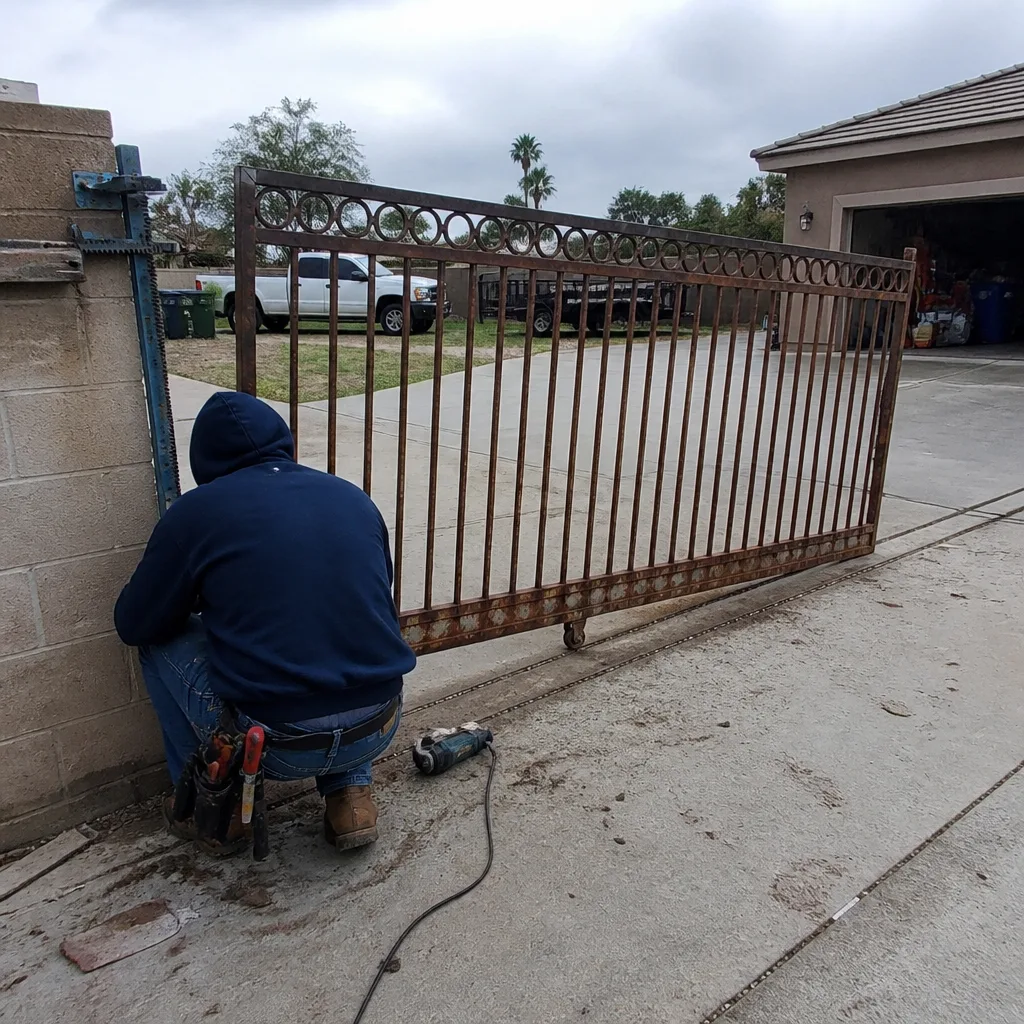 Before
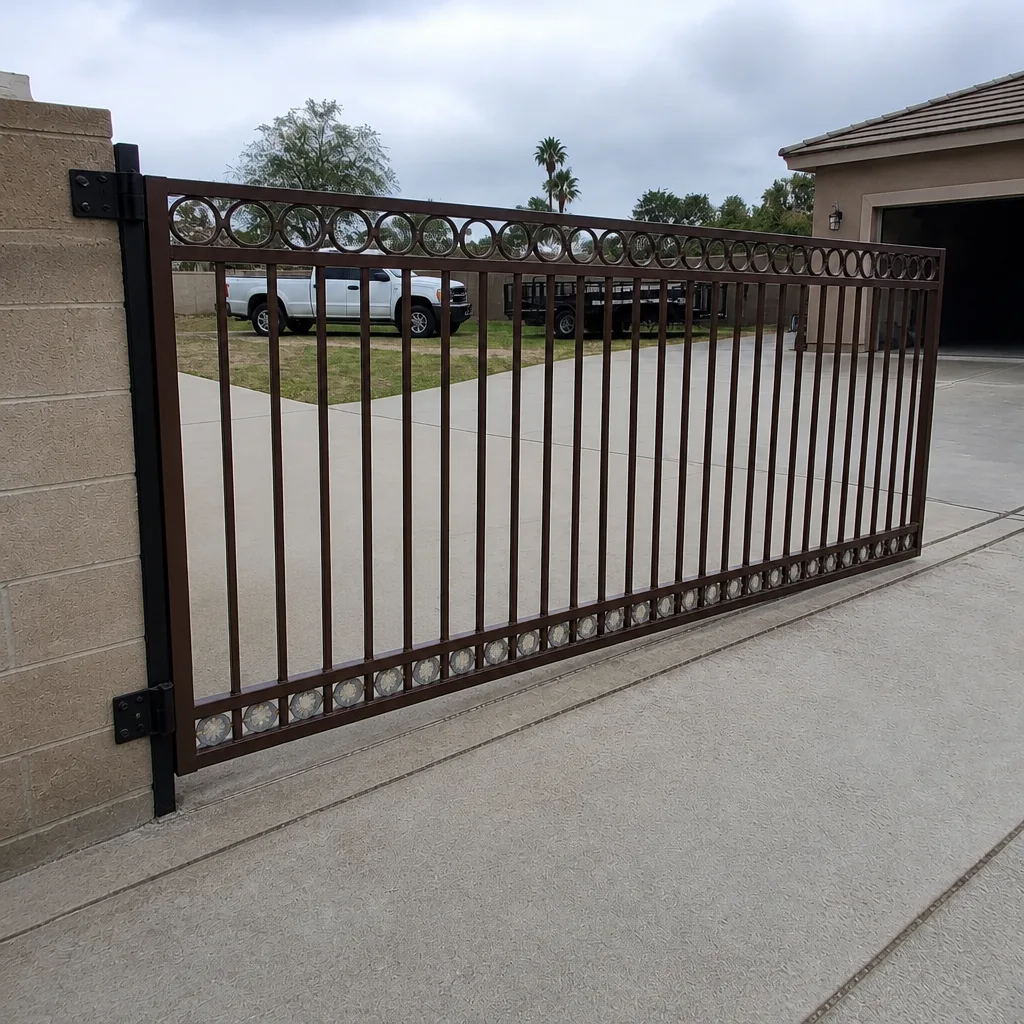 After
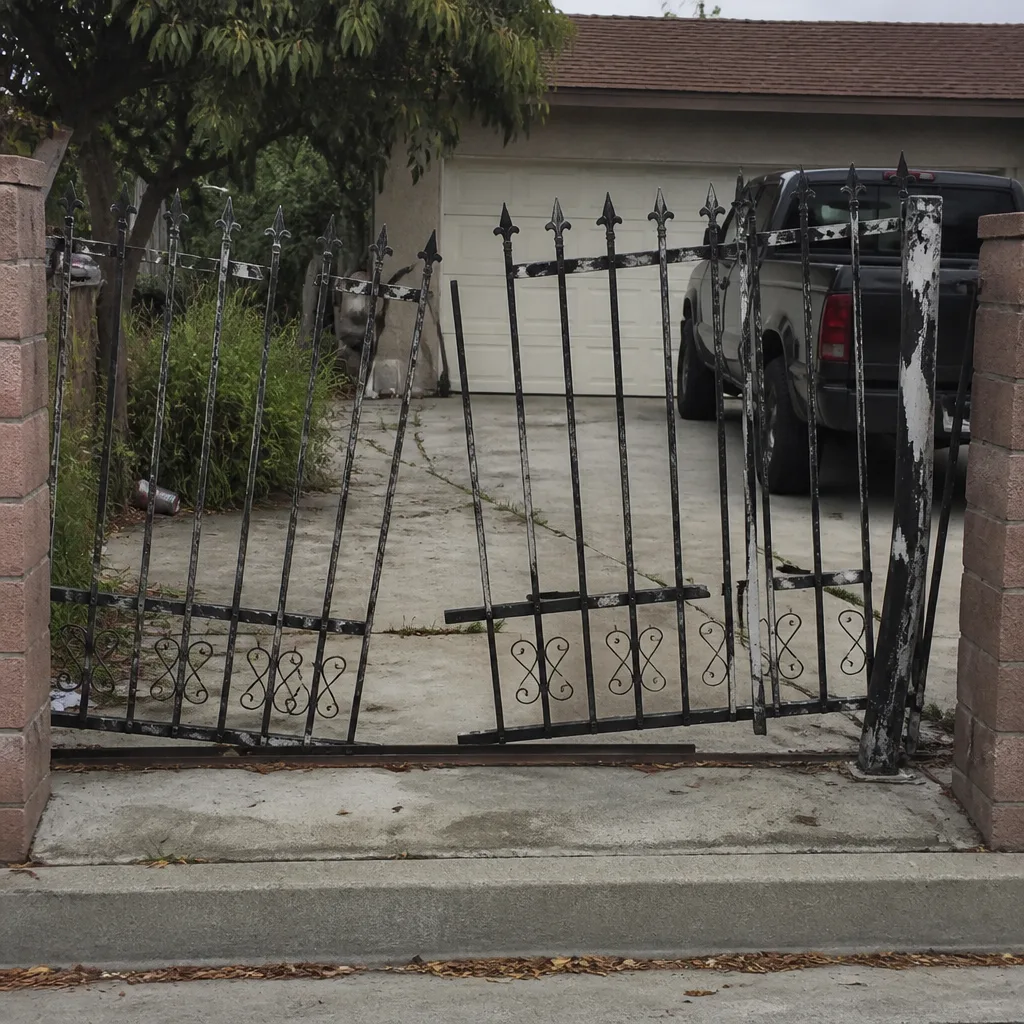 Before
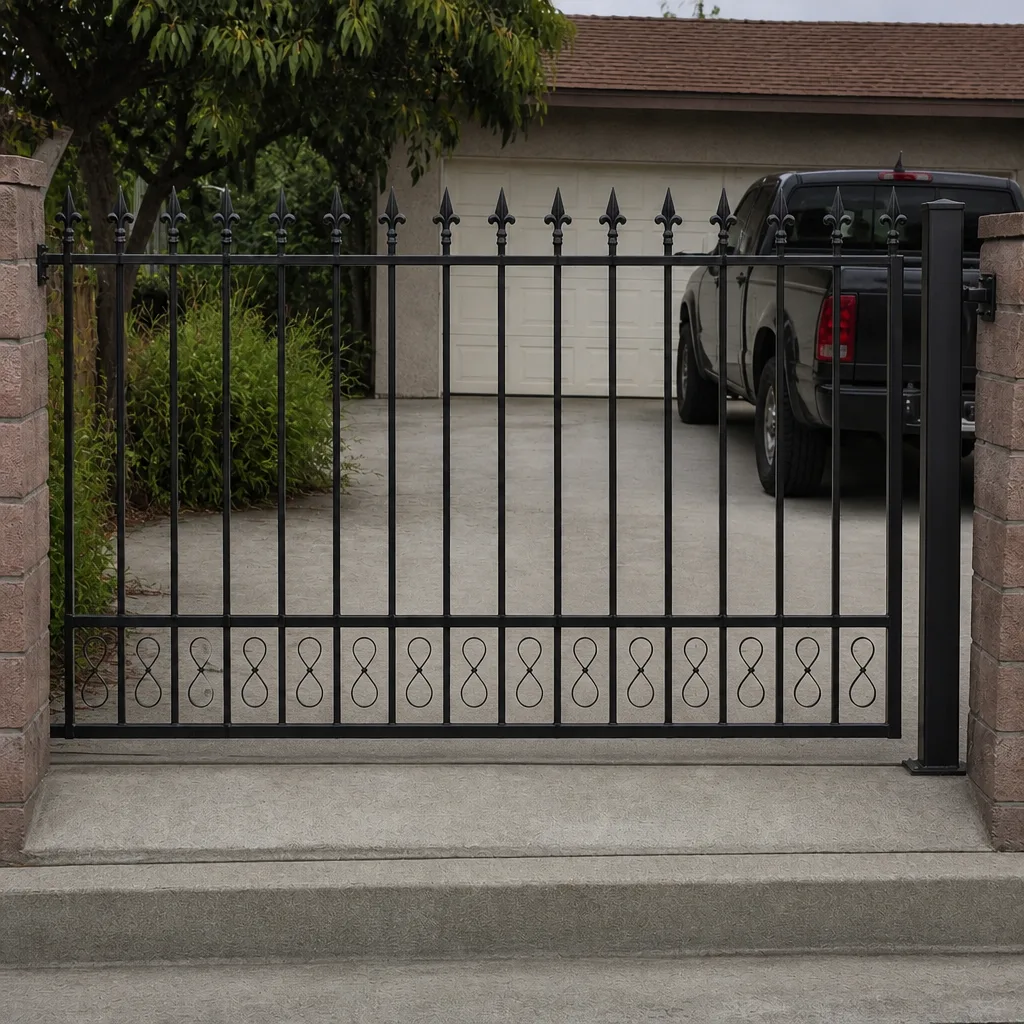 After
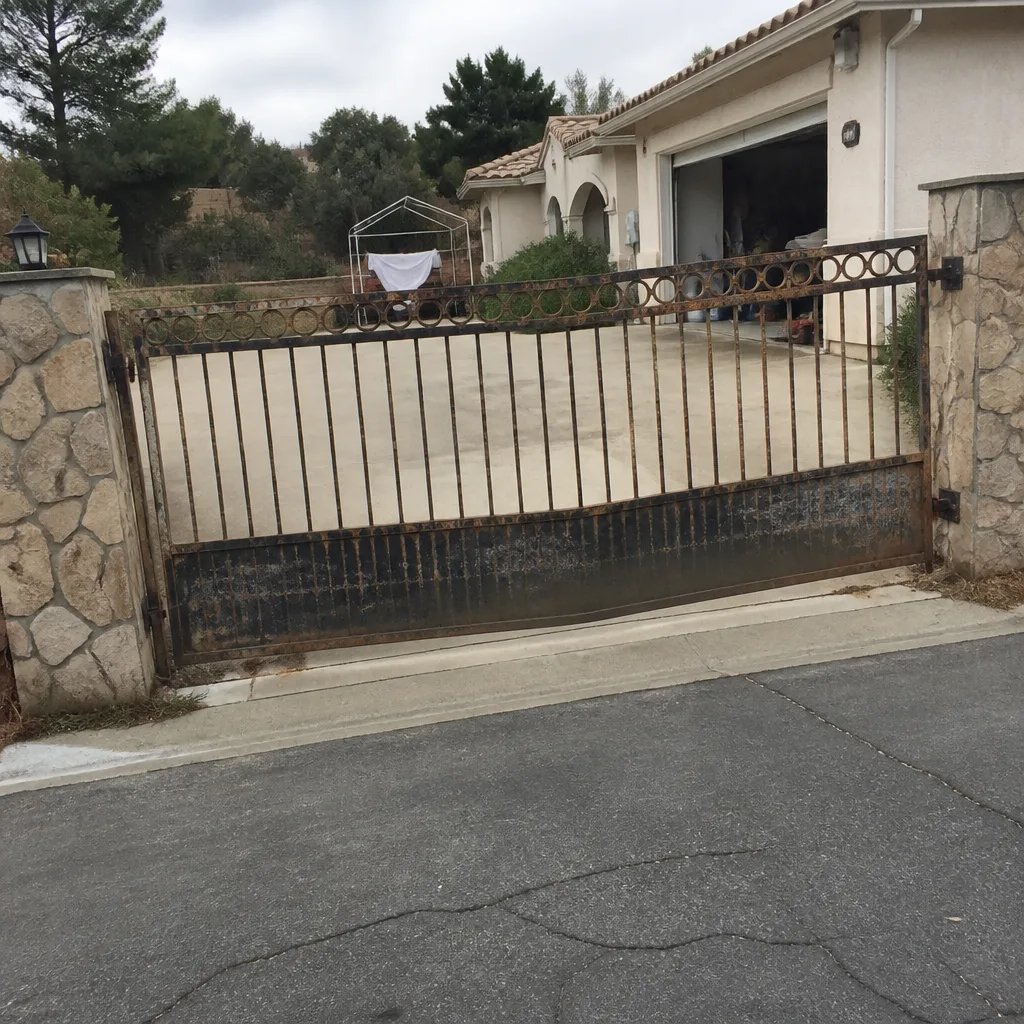 Before
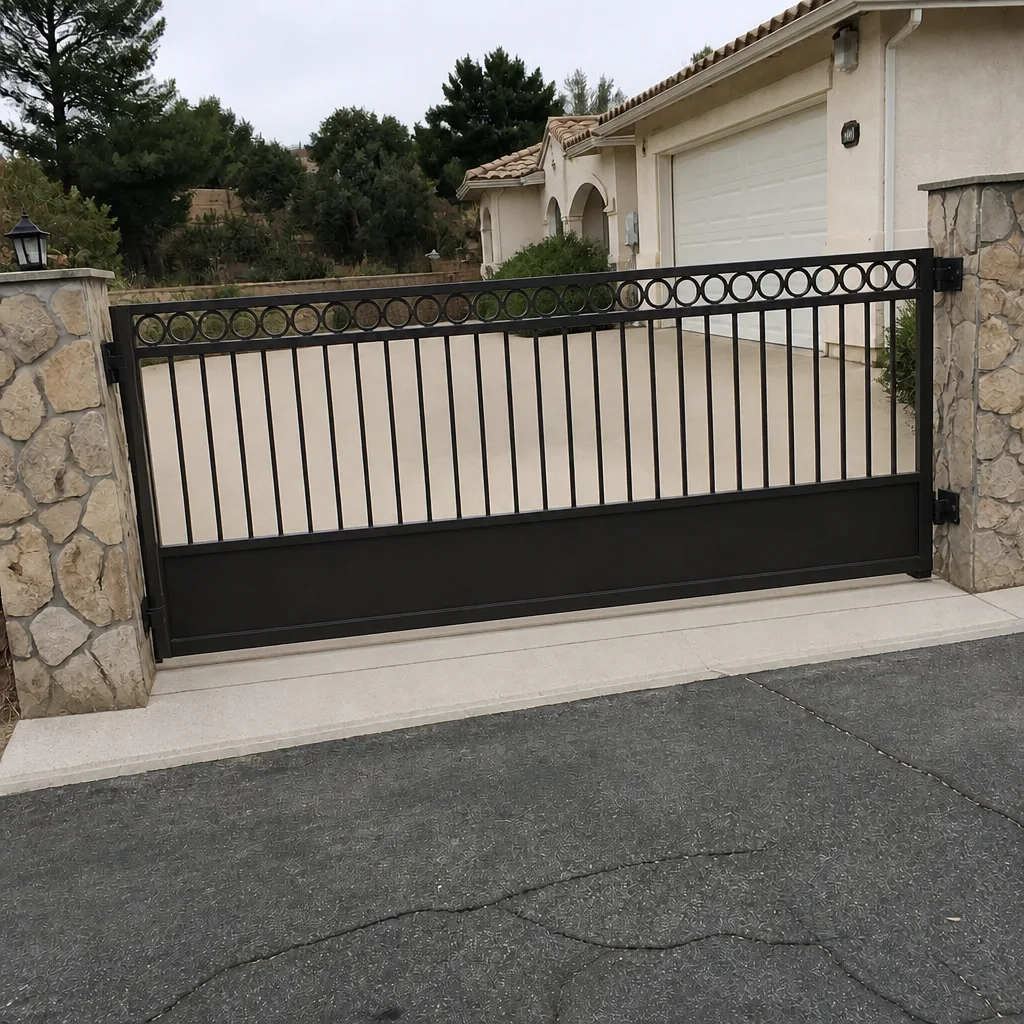 After
When to Call a Professional
Some maintenance tasks genuinely require a specialist, and knowing when to call separates a well-cared-for gate from one that’s been accidentally damaged by good intentions. Call a professional if you hear grinding that doesn’t stop after cleaning and lubrication, if the gate reverses without an obstruction, if the operator hums but the gate doesn’t move, or if you see exposed or burned wiring. Any symptom that involves the gate moving unpredictably, stopping in the wrong position, or failing to respond to the safety sensors is a repair issue, not a maintenance one.
A Murrieta gate specialist can also establish the baseline: a full inspection that finds the current cycle count, identifies existing wear, and builds a maintenance plan specific to your gate’s brand, duty cycle, and exposure. Gate Repair Murrieta offers free estimates on maintenance and repair work. Call (855) 817-0665 and we’ll assess the gate, explain what it needs, and give you a written price before any work begins. We answer 24/7. Fast dispatch from 7am to 7pm, Sunday through Friday.
Frequently Asked Questions
Lubricate chains, hinges, and rollers every six months as part of a seasonal service, with additional attention after Santa Ana wind events that deposit heavy dust throughout the gate. The dry heat in Murrieta cures lubricants faster than in coastal climates, and fine silica dust replaces the film faster than a monthly visual check can keep up with. Using the correct product for each component matters more than lubricating more often.
Heat-related control board failures and dried-out chain lubrication are the two most common summer issues we see. Sustained high temperatures push boards that already run hot past their tolerance, especially when dust inside the operator housing acts as insulation. Chains that weren’t re-lubricated during May or June run dry by August and either stretch, bind, or snap under tension.
Yes, when a gate cycles 200 or more times daily, the wear accumulates 30 times faster than a typical residential gate. A 90-day interval catches components before they fail, which is critical when a failed gate locks out an entire community. The cost of quarterly maintenance is lower than the cost of emergency replacement plus the resident complaints that come with an inoperable entrance.
Replacing a battery backup is often straightforward, but the specific procedure varies by operator brand and model. Some LiftMaster and Linear units require a simple swap; others, especially commercial FAAC and BFT panels, may need the charger circuit checked at the same time to confirm the new battery won’t be overcharged. If you’re uncertain, call a specialist rather than risk damaging a new battery or the charging system.
Post-Santa Ana cleaning is the most effective protection: remove dust from the track, chain, hinges, and operator housing, then re-lubricate with dust-resistant products. Pre-season lubrication with a dry-film silicone on nylon components and a tacky chain lube on the drive chain also helps. Sealing the operator enclosure and keeping photo-eye lenses wiped prevents dust from becoming an electrical problem.
Test them monthly by placing an object in the gate’s path while it’s closing and confirming the gate reverses. If the gate continues closing or you hear a click but the gate hesitates without reversing, call a specialist. A gate that doesn’t reverse safely is a serious safety hazard, and Murrieta’s dry conditions mean photo-eye lens dust is a common cause of intermittent failures.
The Bottom Line
A gate in Murrieta will last as long as you maintain it for the conditions it actually lives in, not the generic national averages. The schedule that works here is a monthly visual check, a full lubrication and cleaning every six months, and a deeper seasonal service before summer and after Santa Ana season. Track your cycle counts, use lubricants that don’t break down in dry heat, and respect the safety line between exterior maintenance and electrical work. A gate that gets this level of attention won’t surprise you with a failure. It will run predictably for years, and when it does need help, you’ll know before the emergency call. Call (855) 817-0665 for a free estimate. We answer 24/7. Fast dispatch from 7am to 7pm, Sunday through Friday.
Written by the team at Gate Repair Murrieta, serving Murrieta since 2013.