
Last updated November 4, 2026
 Wrought iron
 Wood & steel frame
 Farm & ranch
 Sliding driveway gates
 LiftMaster operators
Free on-site gate assessment - hinges, posts, and your LiftMaster or Nice gate operator checked before anything is quoted
The assessment is free and the quote is the invoice.
Get your free estimateGate Repair Permits, Codes & Inspections in Murrieta, CA: What You Need to Know
Most Murrieta homeowners assume a gate repair permit is only needed for a full driveway gate installation. That assumption gets expensive. Under California’s Title 24 and the local amendments Murrieta enforces, the trigger isn’t how much the gate costs or whether it looks the same as before. The trigger is whether electricity is involved. Replace a failed operator with an identical model and you are technically performing an electrical alteration. Skip the permit and you can face a stop-work order, a forced inspection of all related electrical work, and a permit fee plus penalty that often totals more than the repair itself. This guide explains exactly when Murrieta requires a permit, when it doesn’t, and what an inspector actually looks at.
Styles & brands we work with
- Wrought iron
- Wood & steel frame
- Farm & ranch
- Sliding driveway gates
- LiftMaster operators
Quick Answer
In Murrieta, a permit is generally required when you install a new automatic gate operator, add or modify wiring, or install access control systems such as keypads and vehicle loop detectors. A like-for-like repair, where a technician replaces a failed part with an equivalent part without changing the wiring or operator’s configuration, usually does not require a permit. The short version: mechanical repairs are typically exempt; electrical alterations are not. When in doubt, call the City of Murrieta Building & Safety Division before the work begins.
Table of Contents
- When a Permit Is Required in Murrieta
- When a Permit Is Not Required
- UL 325 Safety Standards and Entrapment Protection
- HOA and Community Gate Systems: Who Pulls the Permit
- What a Murrieta Gate Inspection Actually Checks
- The Risk of Skipping the Permit: Liability and Resale
- How the Permit Process Works in Murrieta
- Common Mistakes to Avoid
- When to Call a Professional
- Frequently Asked Questions
- The Bottom Line
When a Permit Is Required in Murrieta
Murrieta follows the California Electrical Code, which is based on the National Electrical Code, with local amendments. The city’s building department treats any alteration to an electrical circuit as permit-triggering work. For gates specifically, that means three situations put you squarely in permit territory.
First, installing a new automatic gate operator. Whether the gate is a swing gate on a residential driveway or a slide gate at a commercial property, the operator requires a dedicated electrical circuit, and running that circuit or connecting a new operator to an existing one is electrical work. The city wants to verify the circuit is properly sized, grounded, and protected by ground fault circuit interrupter, or GFCI, protection where required.
Second, modifying any wiring. If a technician opens a junction box, splices new conductors, relocates an outlet, or runs a new line from the panel to the gate operator, that is an electrical modification. Even if the operator itself is being reused, the wiring change triggers the permit requirement.
Third, adding access control systems. A keypad, card reader, telephone entry system, vehicle loop detector, or intercom wired into the gate operator adds new low-voltage wiring. Low-voltage work still requires a permit under the California Electrical Code when it connects to the line-voltage side of the operator. Many Murrieta homeowners are surprised by this. They assume a keypad is minor. The city does not always agree.
There is a fourth trigger that flies under the radar: replacing an operator with a different model that draws more current. A Mighty Mule operator swapped for a heavier FAAC commercial unit may require a larger circuit. If the existing wiring cannot handle the new load safely, the city treats the change as an alteration, not a repair.
When a Permit Is Not Required
The California Electrical Code and Murrieta’s enforcement practice exempt genuine like-for-like repairs. If a technician replaces a failed component with an equivalent component, without changing the wiring, the circuit load, or the operator’s configuration, no permit is required. The repair is considered maintenance, not alteration.
Common exempt repairs include:
- Replacing a failed control board with an identical replacement board from the same manufacturer.
- Swapping a burned-out motor in a DoorKing operator for the same motor model.
- Replacing a broken limit switch, safety edge, or photo eye sensor with the same part.
- Replacing a damaged gate hinge, wheel, roller, or track section. These are mechanical fixes with no electrical component.
- Replacing a manual gate with a new manual gate. No electricity, no permit.
- Rebuilding a column or post footing that failed. If the work does not change the gate’s structural footprint, Murrieta treats this as repair.
The distinction comes down to function and equivalency. A like-for-like replacement restores the gate to its prior condition. Anything that changes the system’s electrical load, safety features, or control wiring crosses into alteration territory.
Here is the practical test we recommend. If the part number on the old component matches the part number on the new component, you are almost certainly in repair territory. If you are tempted to “upgrade” while the gate is apart, you are almost certainly in permit territory.
UL 325 Safety Standards and Entrapment Protection
UL 325 is the safety standard that governs automatic gate operators in the United States. It is not a building code, but Murrieta inspectors use it as the benchmark when evaluating entrapment protection on gate installations. The standard exists because gates can kill. A moving gate that encounters an obstruction and does not reverse can crush a person or animal. The standard requires operators to detect obstructions and stop or reverse.
Entrapment protection falls into two categories. Type A protection is inherent, meaning the operator itself senses the obstruction through current monitoring or a built-in internal entrapment circuit. Most modern operators from brands like LiftMaster and Elite include some form of internal entrapment sensing. Type B protection is external, meaning separate devices such as photo eyes, safety edges, or pressure sensors are mounted on the gate and wired to the operator.
Murrieta inspectors verify that operators are installed with the entrapment protection specified by the manufacturer. For a swing gate, that typically means photo eyes placed to cover the full travel path of the gate leaf. For a slide gate, the inspector checks that photo eyes or safety edges are mounted at the leading edge and along the fence line, so a person standing near the gate cannot be struck or pinched.
There is a common failure point in Murrieta. Homeowners install a Mighty Mule operator from a big-box retailer, follow the simplified instructions, and skip the external photo eyes because the kit only includes a control board and a receiver. The operator may work, but the installation violates UL 325 if the manufacturer requires external entrapment protection for that model. An inspector will flag it. So will an insurance adjuster if an injury ever occurs.
Sensor placement is not a suggestion. It is the difference between a compliant gate and a liability waiting to happen. In our experience working on gate systems across Murrieta, we have seen operators that function flawlessly but are mounted too high for the photo eyes to detect a small child. The gate opens and closes perfectly. It is still unsafe, and it will still fail inspection.
HOA and Community Gate Systems: Who Pulls the Permit
Murrieta has a large number of planned developments and gated communities. When a shared gate at a community entrance fails, the permit question gets complicated because responsibility is split between the HOA and the utility company or the city, depending on where the gate sits and what infrastructure backs it.
For a gate on private HOA common property, the association is responsible for the permit. The HOA board or management company must obtain the permit through the City of Murrieta before the gate operator is replaced or the access system is upgraded. In practice, many HOAs delegate this to the gate contractor, who pulls the permit as part of the job. That is the right approach. A contractor who refuses to handle the permit process is leaving the HOA exposed.
For a gate where the road is public or the gate is located within a city easement, the picture shifts. The city may have recorded access agreements that define who owns the gate, the operator, and the electrical service. In some Murrieta communities, the city retains the right to override a gate’s access control during an emergency. If the gate is on an easement, the permit is still the HOA’s responsibility for the operator and wiring, but the city may impose additional requirements for sight distance, signage, and fire access.
The fire department has a say. A gate across a community entrance must allow emergency vehicles through. Murrieta Fire & Rescue enforces access requirements. The most common system is a click-to-enter, formerly known as a siren-activated switch, that opens the gate when an emergency vehicle’s siren triggers a sensor. Some newer communities use a Knox key switch or a radio override. When an HOA replaces a gate operator, the fire department may require that the new operator be compatible with the existing emergency access system.
If a shared gate fails and the HOA replaces the operator without a permit, the board is taking on personal liability. The volunteers sitting on an HOA board become the responsible parties in an unpermitted installation. That is a conversation most board members do not want to have with their insurance carrier.
What a Murrieta Gate Inspection Actually Checks
When you pull a permit for gate work in Murrieta, the city schedules an inspection. The inspector is not there to admire the gate. The inspection is focused, targeted, and short. Here is what the inspector works through, step by step.
- Bonding and grounding. The inspector verifies that the gate operator’s metal frame is bonded to the equipment grounding conductor. A metal gate connected to an electric operator must be grounded. If the gate sits on a concrete pad, the inspector checks the grounding electrode and the connection at the operator.
- GFCI protection. The electrical receptacle serving the gate operator must have GFCI protection if it is accessible and within the required distance of grade. Murrieta inspectors enforce this. A standard outlet with no GFCI will fail.
- Entrapment protection devices. The inspector confirms that the photo eyes, safety edges, or other entrapment devices required by the manufacturer and by UL 325 are present, wired, and functional. The inspector will obstruct the gate’s path to verify the operator reverses.
- Operator settings. The inspector tests the operator’s force and speed settings. A gate that moves too fast or applies too much force before reversing fails. Modern operators have adjustable settings for this. The inspector checks that the settings match the manufacturer’s specifications for the gate’s size and weight.
- Clearances and pinch points. The inspector walks the gate’s travel path, looking for gaps where a finger or hand could be caught between the gate leaf and a fixed post. Murrieta requires that openings conform to the current standard so a child’s hand cannot fit through a hinge-side gap.
- Emergency release. The inspector confirms the operator has a manual release mechanism accessible without tools, so the gate can be opened during a power outage or fire.
The inspection usually takes under an hour. If the work is clearly done to code, the inspector signs off and leaves. If there are deficiencies, you get a correction list, and the gate contractor addresses the items. Re-inspection is scheduled after corrections.
The Risk of Skipping the Permit: Liability and Resale
Unpermitted gate work in Murrieta does not stay hidden. It surfaces at the worst possible moment: when you sell the home.
California’s residential disclosure requirements are strict. Sellers must disclose known unpermitted work. If you replaced a gate operator without a permit and you know about it, you must disclose it on the Transfer Disclosure Statement. Failing to disclose exposes you to a lawsuit after escrow closes. Buyers sue over unpermitted work. It is one of the most common post-closing disputes in California real estate.
When a buyer’s agent sees an automatic gate on a property, one standard question is whether the gate and operator were installed with permits. If the seller cannot produce a permit, the buyer may demand a retroactive permit, a price reduction, or both. A retroactive permit in Murrieta means opening the electrical work back up for inspection. If the work is buried behind stucco or inside a column, the city may require destructive investigation. The repair costs more than the original unpermitted repair would have.
Insurance is the second exposure. If a guest is injured by the gate and the operator was installed without a permit, the homeowner’s insurance carrier may deny the claim. The carrier’s position is straightforward: the insured altered the property without following the law. That denial leaves the homeowner personally liable. The same logic applies to an HOA. A gate-related injury in a community where the operator was replaced without a permit puts the HOA’s master policy and the board’s directors-and-officers coverage at risk.
The penalty for unpermitted work itself is not draconian. The city typically charges a permit fee plus an investigation fee that can run two to three times the standard permit fee. But the real cost is the forced inspection, the remediation, and the disclosure liability. It is a slow, expensive leak, not a single splash.
How the Permit Process Works in Murrieta
Pulling a permit for gate work in Murrieta is not complicated, but it does require knowing the sequence. Here is the process from start to finish.
- Determine the scope. Identify whether the job is a repair or an alteration. If a new operator is being installed, the permit path is set. If the work includes any wiring changes, the permit is set. If it is a straight replacement of a failed board or mechanical part, no permit is needed. When the scope is unclear, call the City of Murrieta Building & Safety Division and describe the job. A verbal description is usually enough for a preliminary answer.
- Prepare the submittal. For most residential gate operators, the city accepts a simple permit application. You need a description of the work, the operator make and model, and a basic site plan showing the gate location, electrical panel location, and proposed wiring path. For more complex jobs, like a commercial slide gate, the city may require manufacturer specifications and a load calculation for the circuit.
- Pay the permit fee. The fee is set by the city’s fee schedule. Expect it to be in the range of a few hundred dollars for a typical residential operator installation. The exact amount depends on the valuation of the work.
- Perform the work. Install the operator and wiring to code. This is where the contractor’s attention to detail matters. The work must pass inspection on the first visit, or you pay for a re-inspection and wait for a new appointment.
- Call for inspection. Once the work is complete, you call the building department to schedule the inspection. The inspector comes out, works through the checklist in the section above, and either approves the work or issues a correction list.
- Close the permit. When the inspector signs off, the permit is final. Keep the finaled permit with your home records. You will need it if you sell the home.
Common Mistakes to Avoid
- Assuming a like-for-like operator swap is always exempt. A new operator with a different current draw, different voltage, or different entrapment protection requirements is an alteration, not a repair. Check the specs before assuming.
- Skipping the external photo eyes on a DIY install. Many big-box operator kits from Mighty Mule or Ghost Controls are sold without external entrapment devices, but the operator still requires them on most gate configurations. A gate that works without them will still fail an inspection and could injure someone.
- Not checking with the HOA before working on a community gate. A homeowner cannot pull a permit for HOA common property. The association must be the permit applicant or authorize the contractor to pull it. Working on a shared gate without HOA sign-off creates liability for whoever did the work.
- Using a general electrician who does not know gate operators. An electrician can run the circuit correctly, but the operator still has to meet UL 325 entrapment requirements and manufacturer installation specs. A generalist may not know what the inspector will check on the gate side. The result: failed inspections and re-inspection fees.
- Burying the junction box. Murrieta inspectors need access to the wiring connections at the operator. If the junction box is buried inside a column or behind a welded panel, the inspector cannot verify the connections and may require the contractor to open it up.
- Forgetting the manual release accessibility. The operator must have a manual release that works without tools. Inspectors specifically check this. A release that requires a hex key or a ladder fails.
- Throwing away the permit paperwork. When you sell the home, the permit proves the work was done legally. Without it, the gate becomes a negotiation point in escrow.
When to Call a Professional
If your gate work involves a new operator, any wiring change, or an access control addition, you are heading into permit territory. A gate specialist who understands Murrieta’s enforcement practice can pull the permit, install to code, and get the inspection passed. A specialist who works across brands, including LiftMaster, FAAC, BFT, Linear, Viking, Ghost Controls, DoorKing, Elite, and Mighty Mule, can diagnose the existing system accurately and recommend a replacement that fits the circuit you already have. That matters because a replacement that forces a panel upgrade turns a simple gate job into a much larger electrical project. Gate Repair Murrieta offers free estimates in Murrieta. Call (855) 817-0665. We answer 24/7. Fast dispatch from 7am to 7pm, Sunday through Friday.
Frequently Asked Questions
Yes, if the replacement changes the operator’s electrical load, wiring, or safety configuration. A like-for-like replacement with the same model may not require one. Call the City of Murrieta Building & Safety Division to confirm before starting work. For an exact scope assessment, call Gate Repair Murrieta at (855) 817-0665. We answer 24/7.
UL 325 is the safety standard for automatic gate operators, mandating entrapment protection such as photo eyes, safety edges, or internal sensors. Murrieta inspectors verify that operators meet the manufaffurer’s UL 325 installation requirements, because a gate that cannot detect an obstruction is a serious injury or fatality risk. A gate specialist familiar with the standard will get the installation right the first time.
The HOA is responsible for permits on gates serving common areas or community entrances. Homeowners cannot pull permits for HOA property. Most HOAs authorize their gate contractor to handle the permit, which is the cleanest path. If you sit on an HOA board, confirm the contractor’s permit process before signing a work order.
Murrieta can issue a stop-work order and require a retroactive permit. The city charges an investigation fee on top of the standard permit fee, and the inspector may require opening up finished work to verify the wiring. At resale, the unpermitted work must be disclosed, and buyers often demand a retroactive permit or a price reduction. Call (855) 817-0665 to have a specialist assess what a corrective path would look like.
You can install it, but the electrical connection is still subject to Murrieta’s permit requirements, and the operator still must meet UL 325 entrapment protection rules. Most DIY installs fail inspection on entrapment devices or grounding. A professional installation costs less than the correction work after a failed inspection. Gate Repair Murrieta offers free estimates.
Yes. An unpermitted gate operator can void coverage for a gate-related injury claim. Insurance carriers routinely deny claims when the insured altered the property without a permit. A permitted, inspected installation protects you. For gate repair or electric gate repair, call (855) 817-0665. We answer 24/7. Fast dispatch from 7am to 7pm, Sunday through Friday.
The Bottom Line
In Murrieta, the permit question for gate work comes down to one word: electricity. A mechanical fix needs no permit. An electrical alteration does. The moment you change an operator, touch the wiring, or add an access system, you are in permit territory. A retroactive permit costs more than a proactive one. An unpermitted gate surfaces at resale and can crater a sale or a claim. The safe path is to understand the triggers, pull the permit when required, and use a gate specialist who knows Murrieta’s inspection process and the UL 325 safety standard. The gate is not just a convenience. It is a piece of electrical equipment, and the city treats it that way.
Written by the team at Gate Repair Murrieta, serving Murrieta since 2013.
See the difference
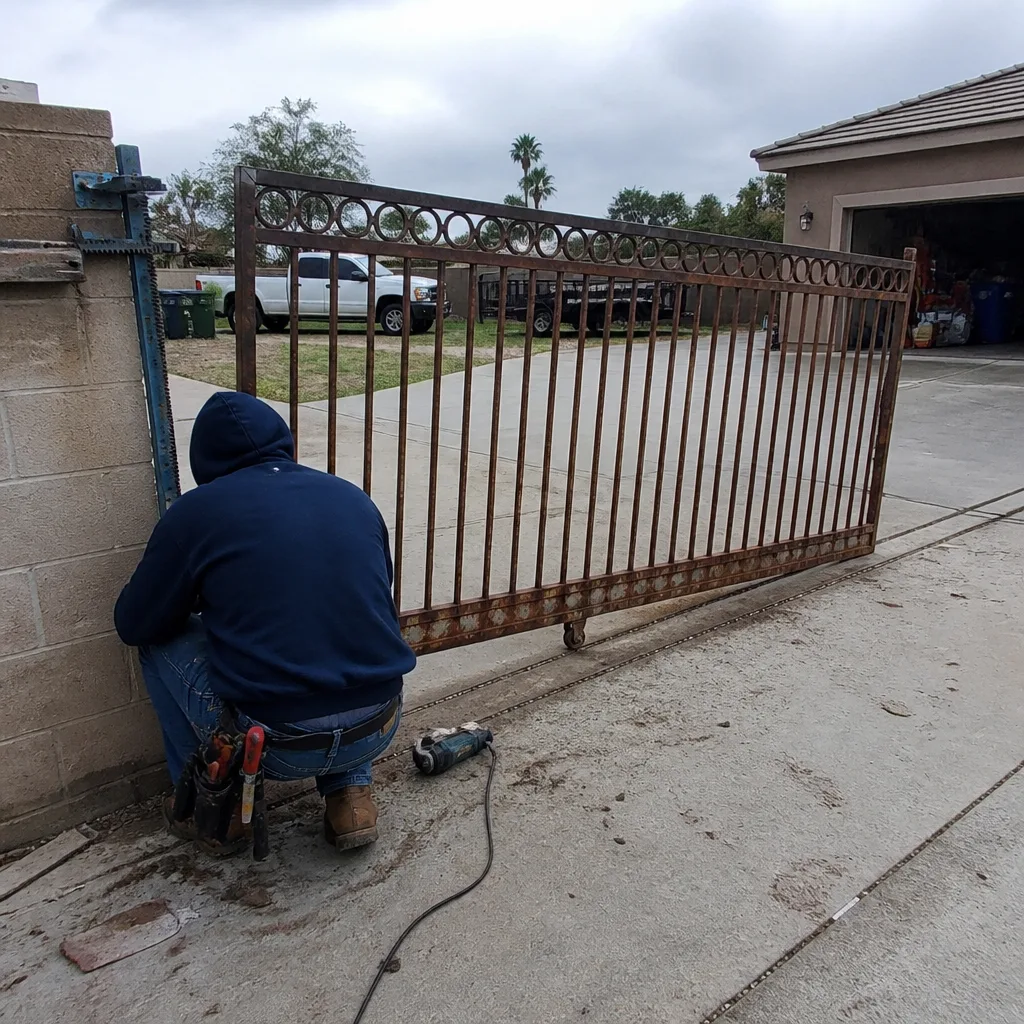 Before
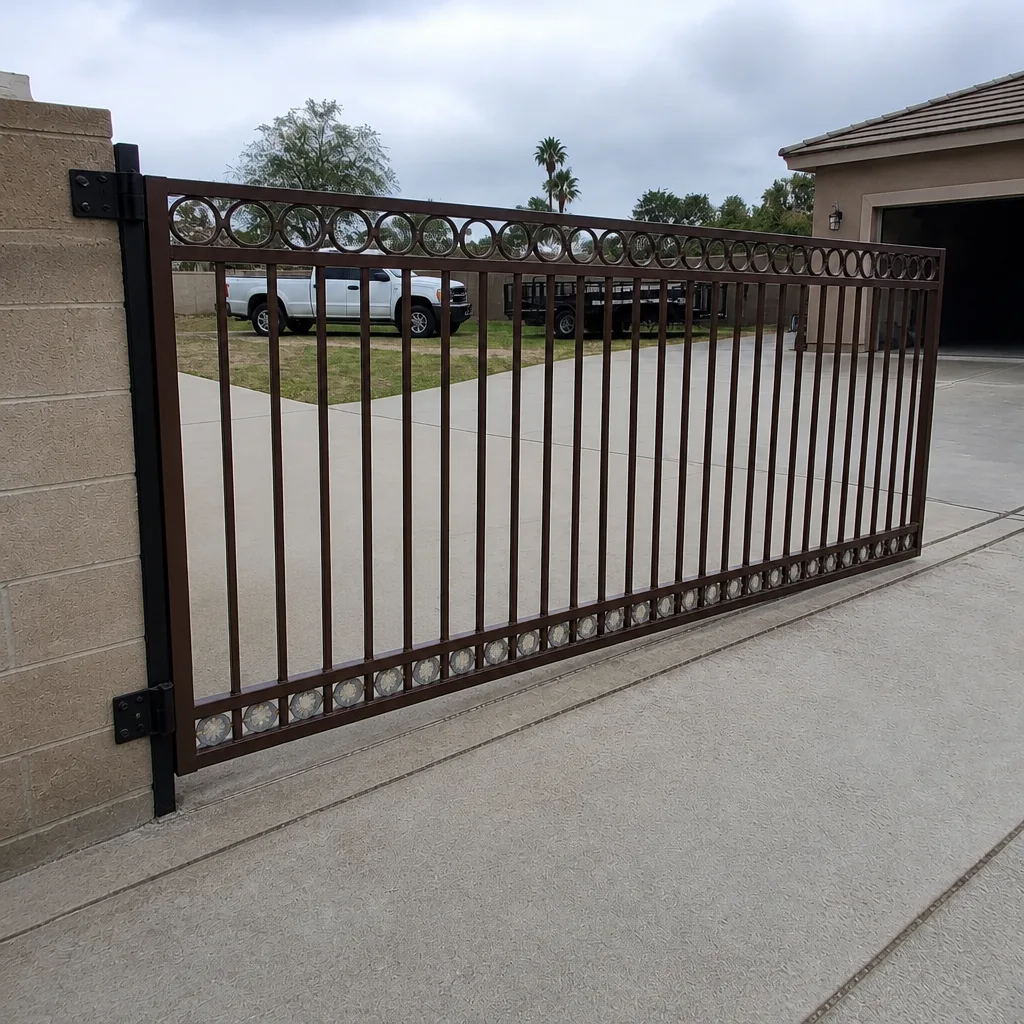 After
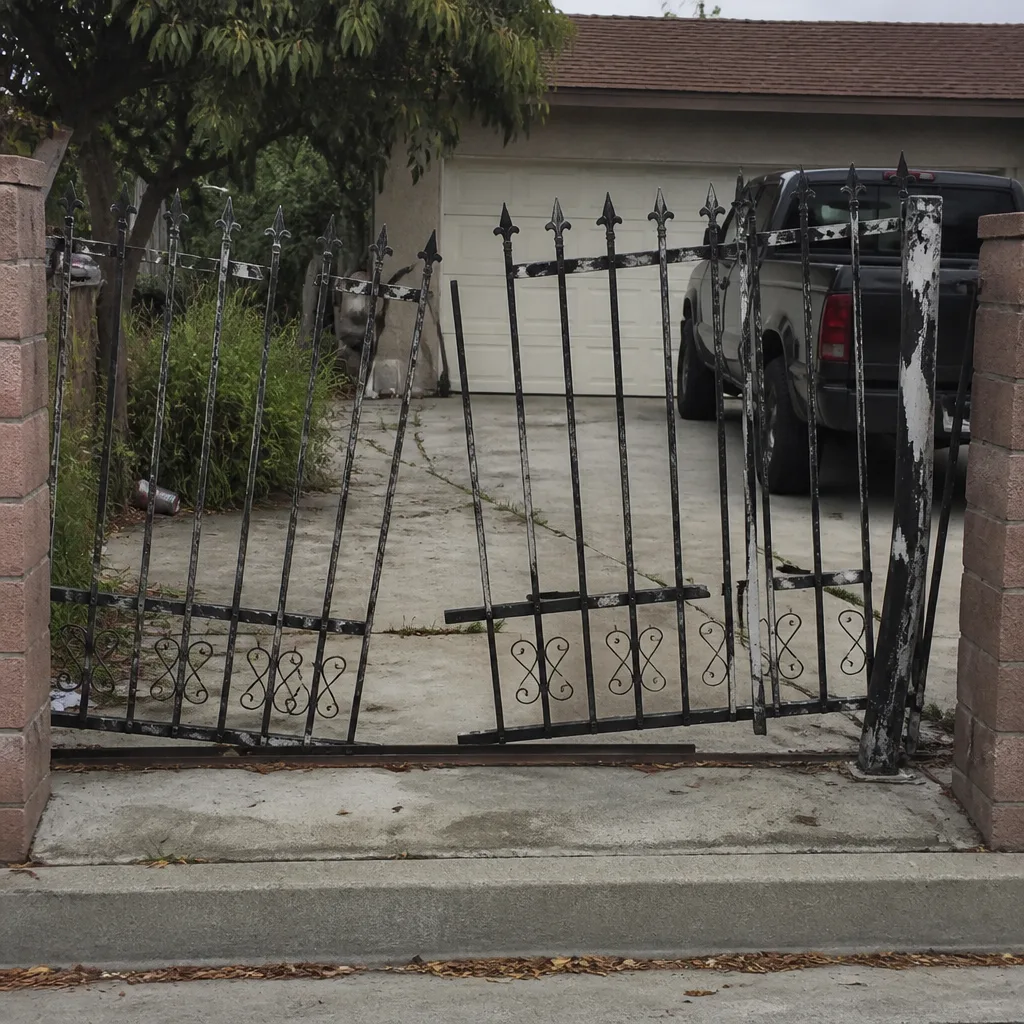 Before
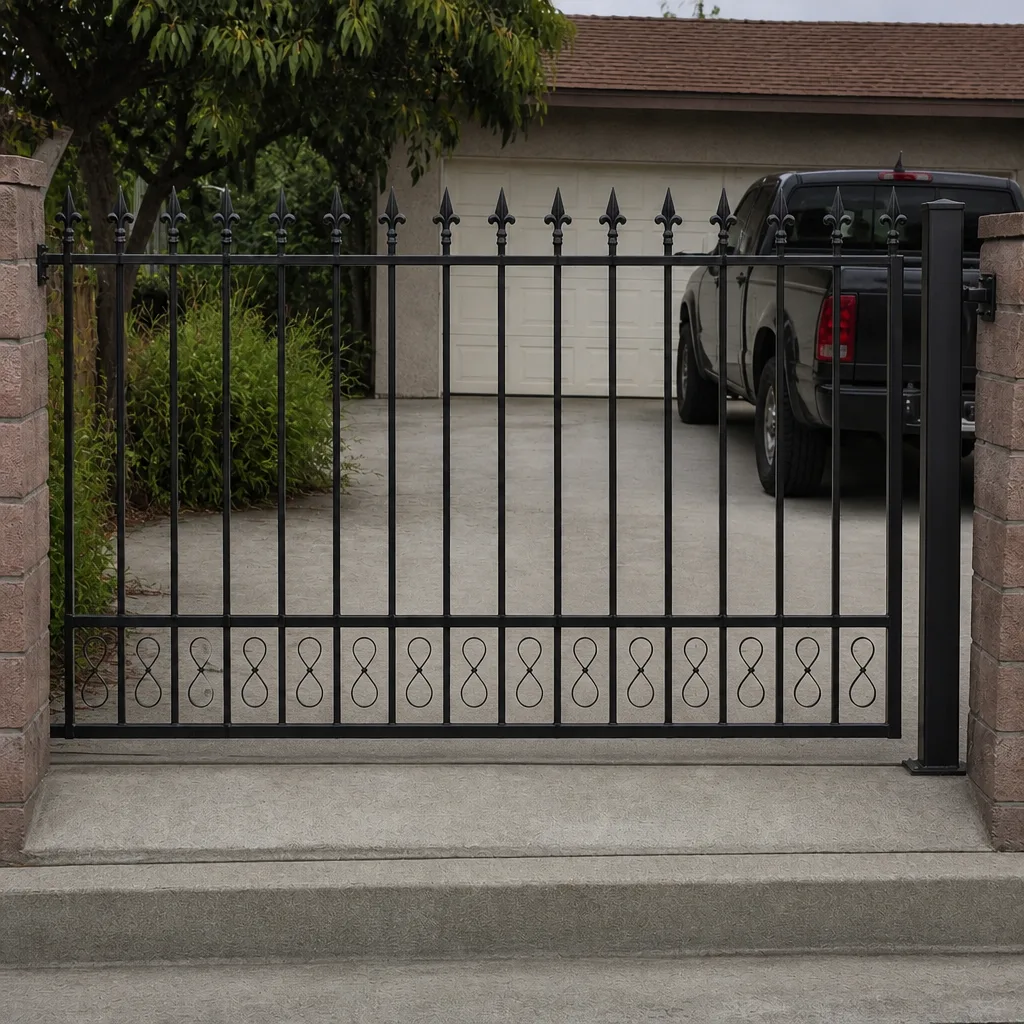 After
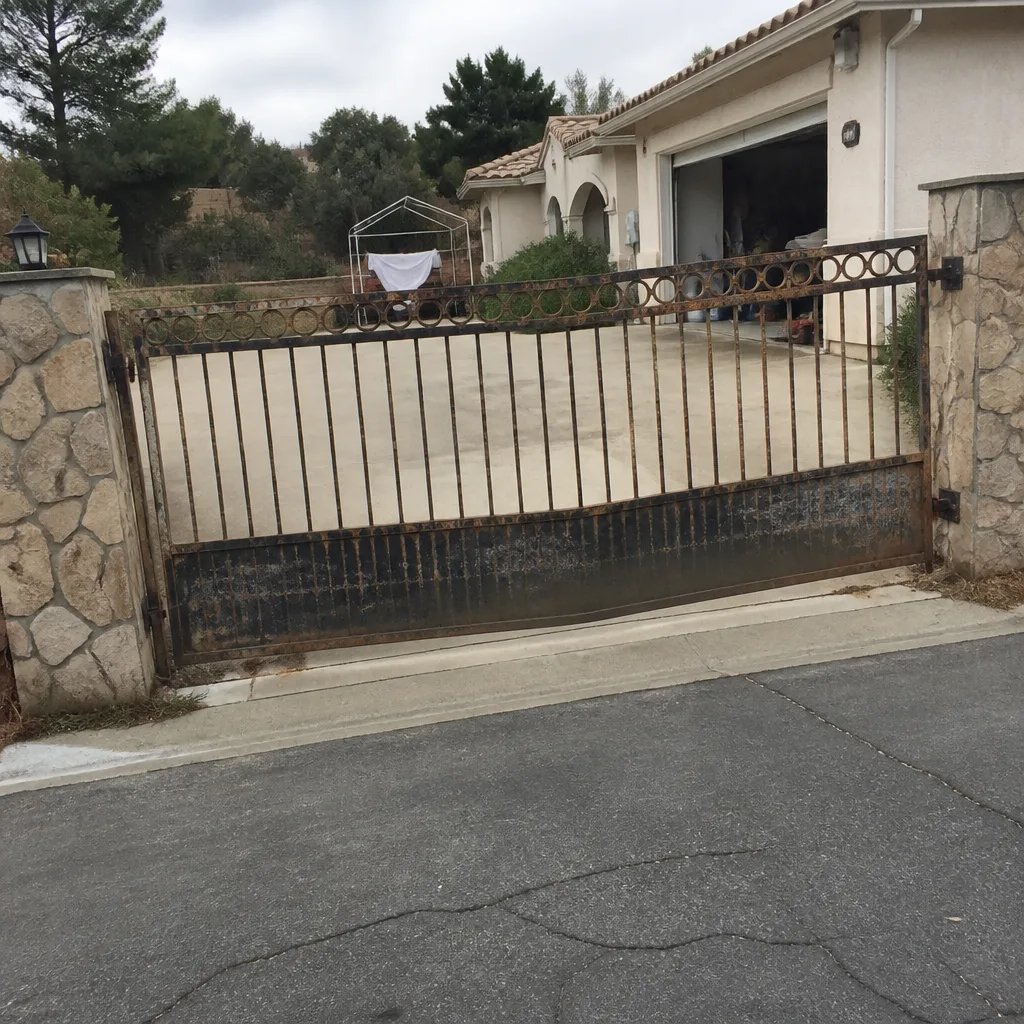 Before
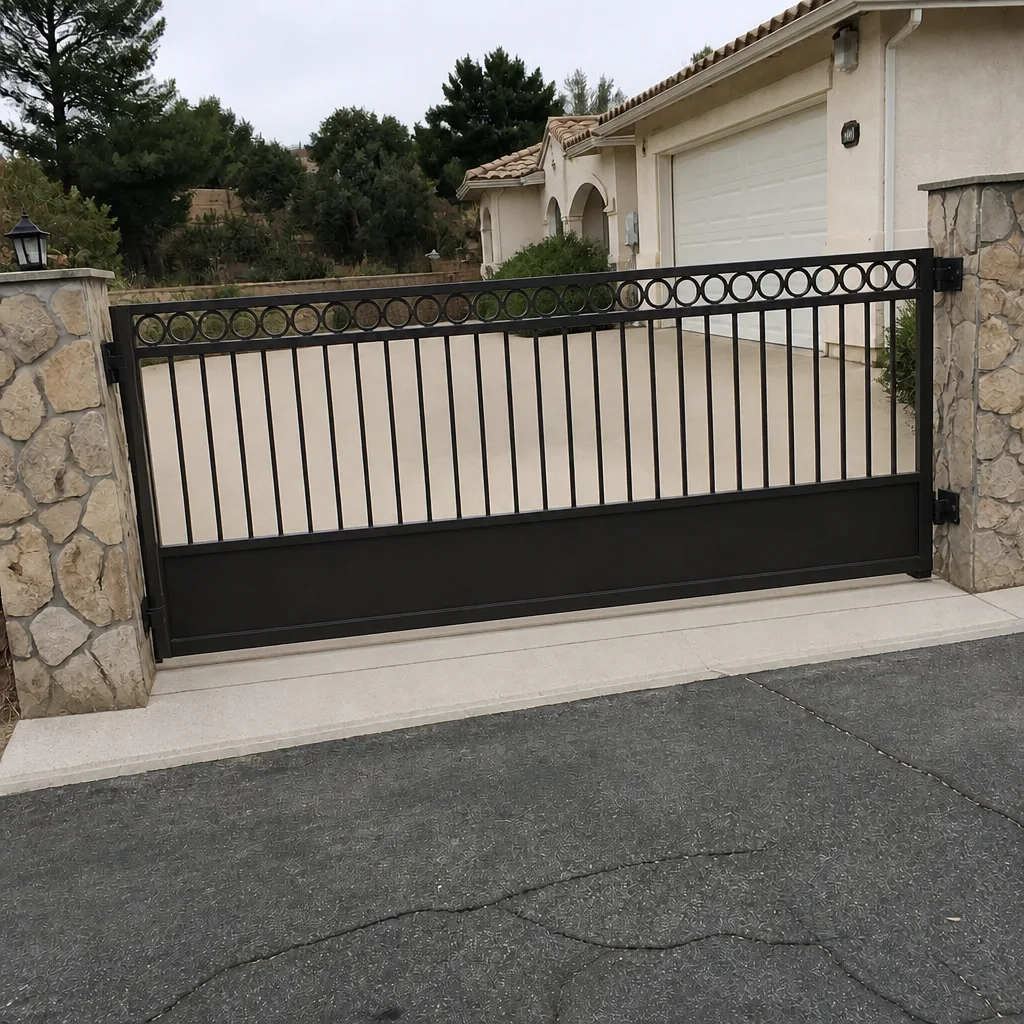 After