
Last updated November 4, 2026
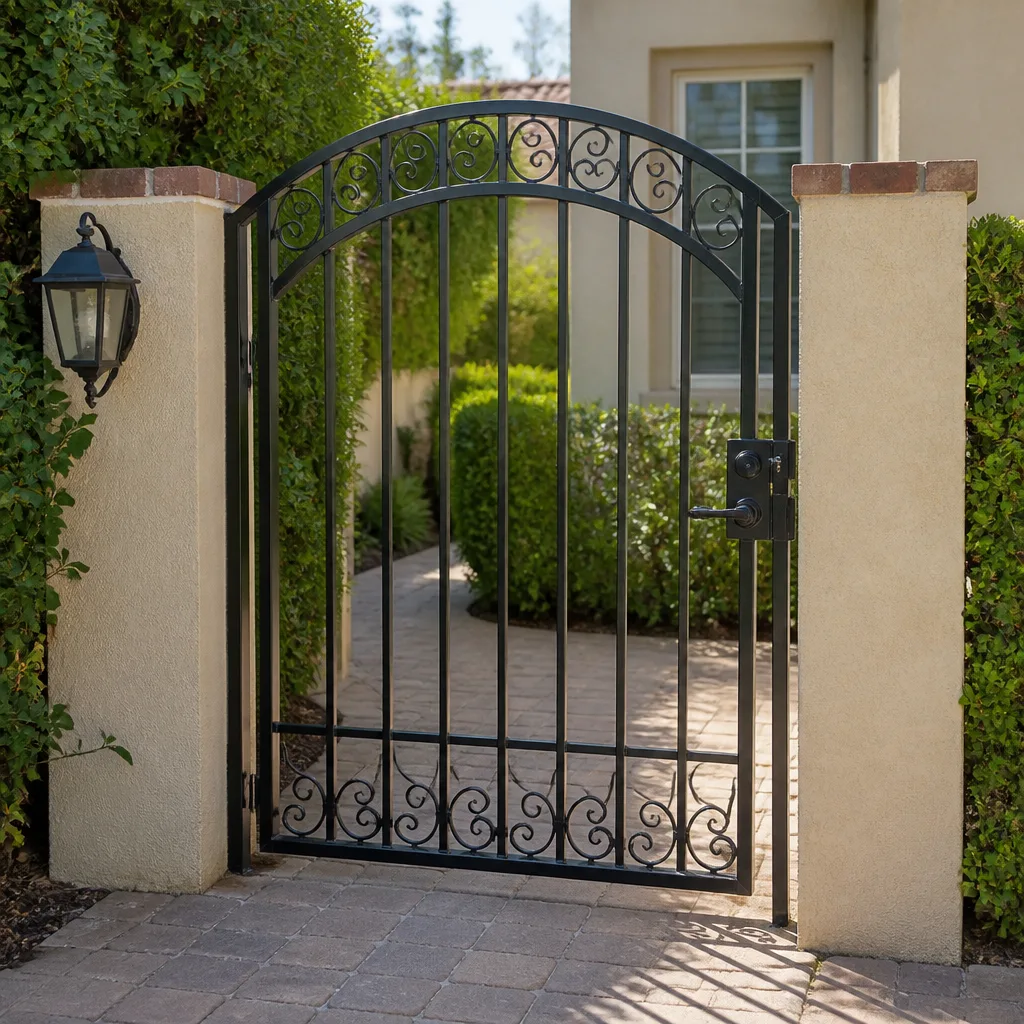 Wrought iron
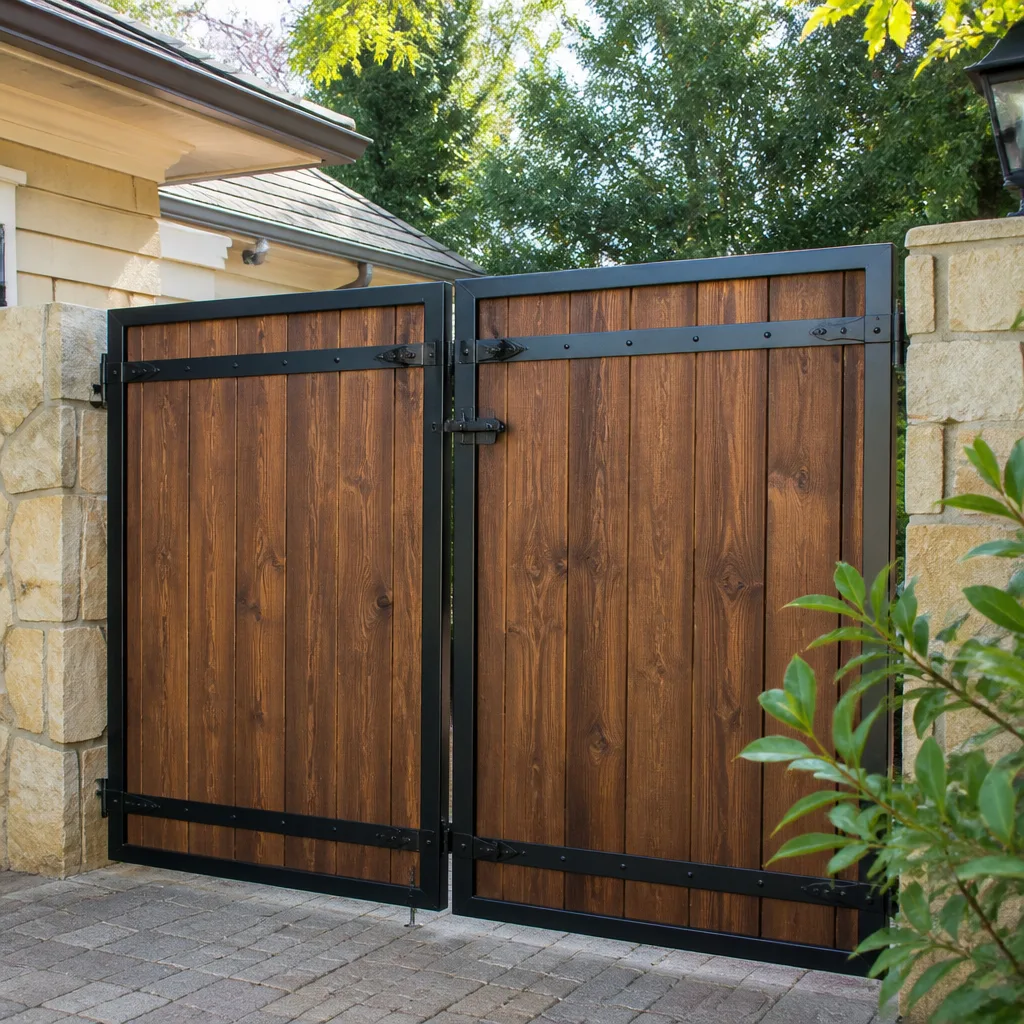 Wood & steel frame
 Farm & ranch
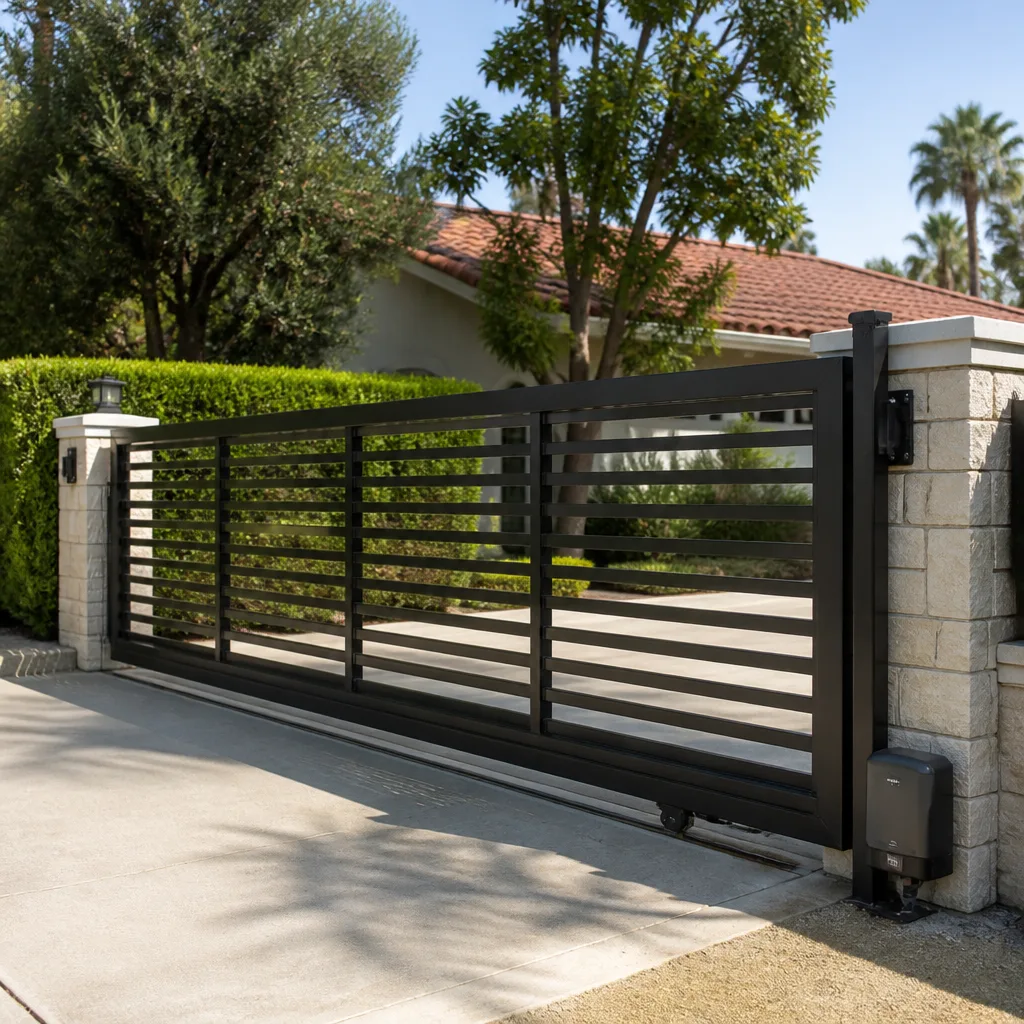 Sliding driveway gates
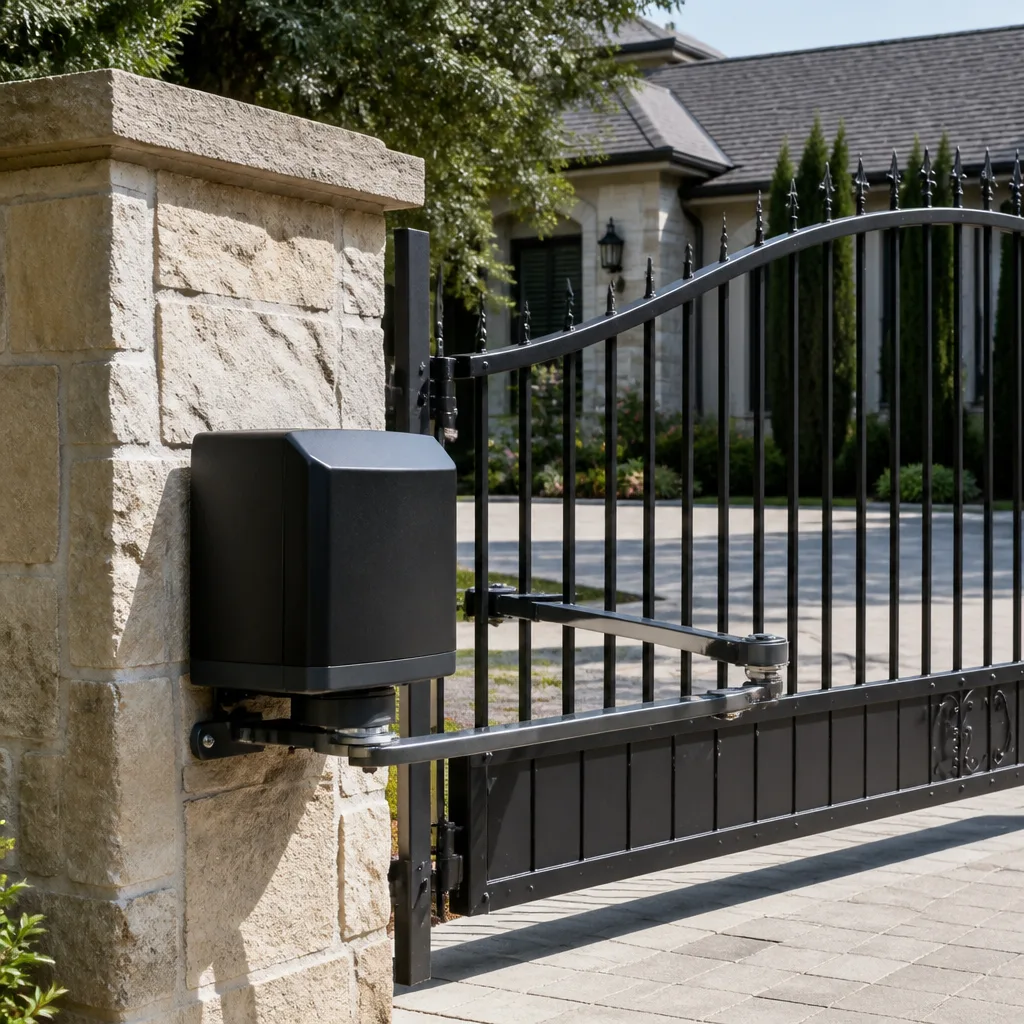 LiftMaster operators
Free on-site gate assessment - hinges, posts, and your LiftMaster or Nice gate operator checked before anything is quoted
The assessment is free and the quote is the invoice.
Get your free estimateGate Repair Troubleshooting in Murrieta: Common Problems and How to Fix Them
A gate that reverses before closing isn’t broken. It’s telling you exactly what’s wrong. The mistake most homeowners make is ignoring what the gate is saying and guessing at the fix, which usually means replacing parts that were never the problem. This guide walks you through the symptom chain method we use to diagnose gates across Murrieta: read the observable behavior, isolate whether the fault is mechanical or electrical, and only then reach for a tool or a parts order. You’ll learn the five root causes behind most gate failures, how to distinguish between them without specialized equipment, and when the problem genuinely needs a technician.
Quick Answer
Most gate failures in Murrieta trace back to one of five root causes: a mechanical load problem, a limit-switch fault, an obstruction sensor false-trigger, a failing motor capacitor, or a control board versus loop detector fault. The fastest way to narrow it down is a two-step check: test the gate balance by disengaging the operator and pulling the gate manually, then watch the exact point in the travel cycle where the gate misbehaves. That symptom point tells you whether you’re dealing with electrical logic or physical resistance. Call (855) 817-0665 for a free estimate in Murrieta if the manual pull feels heavy or the gate still misbehaves with the operator disengaged.
Styles & brands we work with
- Wrought iron
- Wood & steel frame
- Farm & ranch
- Sliding driveway gates
- LiftMaster operators
Table of Contents
- Read the Symptom Chain, Not Just the Symptom
- Mechanical Load vs. Electrical Fault: The Two DIY Checks
- Limit-Switch Fault vs. Sensor False-Trigger vs. Capacitor Failure
- Why a Gate Moves Slowly in Summer but Fine in Winter
- Control Board Fault vs. Loop Detector Fault: Don’t Swap the Board First
- Symptom Patterns on Viking, LiftMaster, and FAAC Operators
- Common Mistakes to Avoid
- When to Call a Professional
Read the Symptom Chain, Not Just the Symptom
A gate that won’t close fully and a gate that closes then immediately reverses look similar, but they’re almost never the same problem. The first is usually a mechanical obstruction or a limit setting. The second is the safety system doing its job, or a sensor that thinks it’s doing its job when it isn’t. Murrieta homeowners who call us after already replacing a sensor or a remote often describe the same frustration: the gate still misbehaves, and now they’ve spent money on a part that was fine.
The difference matters because gates are sequential systems. The operator receives a command, the motor starts, the travel cycle begins, the limit switch tells the control board where the gate is, and the safety inputs monitor for obstructions. A failure at any stage produces a symptom that looks like the stage after it. A motor that’s fighting a heavy gate will trip thermal cutoff and stop mid-travel, which looks like a control board fault. A loose wire to a limit switch will cause the gate to stop short, which looks like a sensor problem.
Our approach at Gate Repair Murrieta is to work backward from the exact moment the symptom occurs. Before touching any component, we ask: Does the gate fail at the same point in the travel cycle every time? Does it happen when the gate is cold, hot, or both? Does the remote work but the keypad not, or both? The answers isolate the fault faster than any parts-cannon approach. That’s the difference between a technician who guesses and one who diagnoses.
Mechanical Load vs. Electrical Fault: The Two DIY Checks
Every gate has a manual release, usually a lever or a keyed cylinder on the operator or the gate itself. Disengaging it separates the gate from the motor. This is the single most informative test you can perform before calling anyone, and it requires no tools. The two checks below tell you whether the problem is physical resistance in the gate structure or something in the electrical control system.
Check 1: The Gate Balance Test. With the operator disengaged, push the gate open by hand. It should move smoothly through the entire arc or slide path with consistent resistance. A properly balanced swing gate will stay where you put it. A slide gate should glide along the track without binding. If you feel a point where the gate catches, grinds, or suddenly gets harder to move, that’s a mechanical load problem: a failing wheel, a sagging hinge, debris in the track, or a post that’s shifted in the Murrieta soil. No control board or sensor adjustment fixes physical resistance. The operator is simply fighting the load, and the symptom is often intermittent because the binding only occurs at a specific point in the travel.
Check 2: Manual-Release Pull Force. This is the diagnostic that tells you the most. After disengaging the operator, pull the gate through its full range using a fish scale or just your own judgment. A properly maintained residential gate should never take more than about 15 to 20 pounds of force to move. A commercial gate, more. If the pull feels heavy from the first inch, the problem is mechanical load, and the operator needs service or the gate structure needs repair, not a new motor. If the gate swings freely and lightly but misbehaves when the operator is re-engaged, you’ve isolated the fault to the electrical side. That’s when you start looking at limit switches, sensors, and the operator itself.
This matters because in our experience across gate repair calls, a heavy manual pull is the most commonly missed root cause. Homeowners replace the operator, and the new one fails the same way within months because the underlying load problem was never addressed. The manual test takes five minutes and saves real money.
Limit-Switch Fault vs. Sensor False-Trigger vs. Capacitor Failure
These three faults share a symptom: the gate doesn’t complete its travel cycle the way it should. Separating them requires watching when and how the gate fails, not just that it fails.
Limit-Switch Fault. The limit switch tells the control board the gate has reached the open or closed position. When it fails or drifts out of adjustment, the gate typically stops short of full travel, or it slams into the stop and immediately reverses. The key symptom: the gate consistently stops at the same wrong point, every cycle, regardless of temperature or how long it’s been running. Limit switches are mechanical devices that wear, and they’re one of the most common repairs we perform on operators from Linear and Viking, where the switch is often a small rotary component inside the operator housing.
Obstruction Sensor False-Trigger. Photo eyes and safety edges exist to prevent the gate from closing on a car, a child, or a pet. When they false-trigger, the symptom is usually a gate that reverses shortly after beginning to close, or refuses to close at all when the area is clear. The giveaway: the behavior is intermittent and seems tied to sunlight, shadows, or moisture. Murrieta gets bright direct sun most of the year, and a dusty or misaligned photo eye in direct afternoon light is a classic false-trigger source. Cleaning the lens and checking alignment often resolves it. If the gate reverses only when the sun hits the sensor at a specific angle, that’s not a board problem. That’s optics.
Failing Motor Capacitor. A capacitor gives the motor the starting torque it needs to move the gate from a dead stop. When it weakens, the motor may hum but not move, or start slowly and gain speed. The symptom pattern is distinct: the gate struggles to start, especially when cold, but runs more normally once moving. A failing capacitor can also cause the gate to stop mid-travel and then start again after a pause. Capacitors degrade gradually, so the failure gets worse over weeks, unlike a limit-switch fault that appears suddenly. This is a component we replace frequently on older operators, and it’s one of the least expensive electrical repairs compared to a motor or board.
Here’s the sequence to check, in order:
- Disengage the operator and pull the gate manually. Heavy resistance means the problem is mechanical load, not any of the three electrical faults above.
- Re-engage the operator and run a full open-close cycle. Note exactly where the gate stops or reverses.
- If the gate stops at the same wrong position every time, suspect the limit switch or its adjustment.
- If the gate reverses without touching anything, clean and realign the photo eyes, then test again in direct sunlight.
- If the gate hums, starts slowly, or stops and restarts mid-travel, suspect the capacitor.
Why a Gate Moves Slowly in Summer but Fine in Winter
A gate that’s noticeably slower in August than in February is a seasonal observation we hear from Murrieta homeowners every year. The common assumption is that the operator is dying. Usually, it isn’t.
The first suspect is grease viscosity. Gate operators and the mechanical components they drive, wheels, hinges, chains, and slides, use lubricants that thin out as they warm. In Murrieta’s hot inland summers, where daytime temperatures regularly exceed 90 degrees, the grease in an older gate’s drivetrain can become thin enough that it no longer stays where it’s needed, or thick enough in cooler months that it adds resistance. Gates that run beautifully on a 60-degree January morning and sluggishly on a 95-degree July afternoon are often simply showing lubricant that’s past its service life or the wrong type for the climate. The fix is cleaning and re-lubricating with the correct product, not replacing the operator.
The second suspect is thermal cutoff. Every residential gate operator has a thermal protection circuit that shuts the motor down if it overheats. A motor that’s already working hard, because the gate is slightly heavy or a wheel is beginning to bind, will run closer to its thermal limit in summer. The added ambient heat pushes it over the threshold more quickly. The gate may run normally for a few cycles in the cool morning, then stop mid-travel in the afternoon heat, resume after a rest, then stop again. That’s the thermal cutoff doing its job. The real problem is the underlying mechanical load or an aging motor, not the heat itself.
Murrieta’s climate also brings dust. Summer months are dry, and fine dust from the surrounding hills settles into tracks, slide channels, and operator housings. Dust mixed with lubricant forms a paste that increases friction. A gate that was last serviced in spring can be noticeably slower by late summer simply from accumulated dust in the works. A professional cleaning and re-lubrication is part of any thorough electric gate repair service call, and it’s often the only thing needed to restore normal speed.
Control Board Fault vs. Loop Detector Fault: Don’t Swap the Board First
The control board is the operator’s brain. The loop detector is a small device connected to loop wires buried in the driveway that tells the gate when a vehicle is present. When a gate opens on its own, won’t close with a car on the loop, or cycles erratically, the instinct is to replace the control board. That’s the expensive instinct.
We see this pattern repeatedly in Murrieta: a homeowner calls about a gate that opens by itself in the middle of the night or won’t close after they’ve driven through. The gate company they called first replaced the board. The gate still misbehaves. The actual fault was the loop detector or the loop wire in the driveway, and the board was fine.
Here’s how to tell the difference:
- Control board fault. The gate behaves erratically in ways that span multiple functions. The remote stops working, the keypad stops working, the gate opens but won’t close, or the display shows no lights at all. A board fault often affects multiple systems at once because everything routes through it.
- Loop detector fault. The gate’s behavior is specifically tied to vehicle detection. The gate won’t close after a car exits. It opens on its own when no car is present. It closes too quickly after a car passes. The remote and keypad work fine; the problem is only the vehicle sensing.
Before replacing a board, a competent technician will test the loop detector by bypassing it and running the gate from the manual controls. If the gate behaves normally with the loop bypassed, the problem is the loop or the detector, not the board. Loop detector failures are common in Murrieta because the dry, shifting soil can crack loop wires over time, and a car driving over a compromised loop can finish the break. The fix is often a new loop wire cut into the driveway, or a new detector, either of which is a fraction of the cost of a control board.
The lesson: test the cheap inputs before condemning the expensive component. That’s exactly the kind of disciplined diagnosis we apply on every service call, from a residential Ghost Controls operator to a commercial FAAC system.
Symptom Patterns on Viking, LiftMaster, and FAAC Operators
Different brands fail in different ways. After working on the industry’s widest range of residential and commercial gate operators, we can often guess the fault from the brand and the symptom before opening the housing. That doesn’t mean we skip diagnosis; it means we know where to look first.
Viking. Viking operators are common on residential swing gates throughout Murrieta’s larger-lot neighborhoods. The most frequent symptom we see is a gate that stops mid-travel and the operator’s diagnostic LED blinks a code. Viking builds solid, serviceable units, but their limit systems are sensitive to drift, and the operator’s internal wiring connections can loosen over years of temperature swings. A Viking gate that intermittently stops and reverses is often a limit adjustment or a wiring connection issue at the terminal strip, not a motor failure.
LiftMaster. LiftMaster is the most widely installed residential gate brand in the area, and the most common failure point is the capacitor and the belt or chain tension. LiftMaster operators are workhorses, but a gate that starts slowly or hums before moving is usually the capacitor aging out. A gate that slams or shudders near the end of travel is often belt tension that’s loosened. Both are straightforward repairs that don’t require replacing the operator.
FAAC. FAAC is predominantly a commercial and industrial line, and the systems we service are often on HOAs, apartment complexes, and commercial properties. FAAC operators are hydraulic in many models, which changes the failure profile. A FAAC gate that moves erratically or jolts during travel is often low hydraulic fluid or a worn seal, not an electrical fault. A FAAC gate that’s slow to respond to commands but moves smoothly once operating points to the control board’s communication with the access system, not the hydraulics.
This kind of cross-brand literacy matters. A technician who mostly sees one brand will interpret every symptom through that brand’s lens. Our technicians work across LiftMaster, FAAC, BFT, Linear, Viking, Ghost Controls, DoorKing, Elite, and Mighty Mule, which means we’re not locked into one manufacturer’s diagnostic playbook. The correct fix gets identified regardless of what name is on the operator.
Common Mistakes to Avoid
- Replacing the control board first. The board is the most expensive component and the least likely to be the root cause when the symptom is tied to a single function like vehicle detection. Test the loop, the sensors, and the limit switches first.
- Adjusting the force settings to overcome a heavy gate. Cranked-up force will make a binding gate move again, temporarily. It also burns out motors, strips gears, and makes the gate unsafe if the obstruction detection is defeated. If the gate is hard to pull manually, the fix is mechanical, not an adjustment.
- Ignoring the manual-release test. Five minutes with the gate disengaged tells you more than an hour of electrical testing. Heavy manual pull means mechanical load; easy pull means electrical. Skipping this sends the diagnosis down the wrong path in half the cases we see from Murrieta homeowners.
- Assuming a sensor is bad because the gate won’t close. A dirty lens, a misaligned photo eye, or direct Murrieta sun hitting the receiver is more common than an actual sensor failure. Clean and align first.
- Replacing the operator when the gate structure needs work. A sagging hinge, a shifted post, or a worn slide wheel will destroy a new operator just as it did the old one. The structure comes first.
- Treating an intermittent problem as “fixed” because the gate worked once. Intermittent faults are the hardest to diagnose and the most tempting to ignore. A gate that fails every third cycle has a real problem, and it will get worse. Document exactly when and how it fails before calling for service.
- Using the wrong lubricant. Spray lubricants that work on a garage door are often wrong for a gate. The wrong product attracts dust, gums up, and can speed up wear in Murrieta’s dry summer conditions. This is a job for the correct grease, applied to the correct points.
When to Call a Professional
Some problems are worth fixing on your own: cleaning a photo eye lens, clearing debris from a slide track, or checking the balance with the manual release. Others should never be attempted without training. Any fault inside the operator housing, including capacitors, limit switches, control boards, and wiring, involves stored electrical energy and line voltage. A capacitor can hold a charge even with the power off. A miswired board can fry itself or the motor. If the gate is a heavy commercial slide unit, the mechanical forces are enough to cause serious injury if a chain or cable lets go while you’re working on it. Call a professional for anything electrical inside the operator, any hydraulic issue, or any mechanical repair involving cables, chains, or a gate that won’t stay put when disengaged. Gate Repair Murrieta offers free estimates in Murrieta. Call (855) 817-0665. We answer 24/7. Fast dispatch from 7am to 7pm, Sunday through Friday.
See the difference
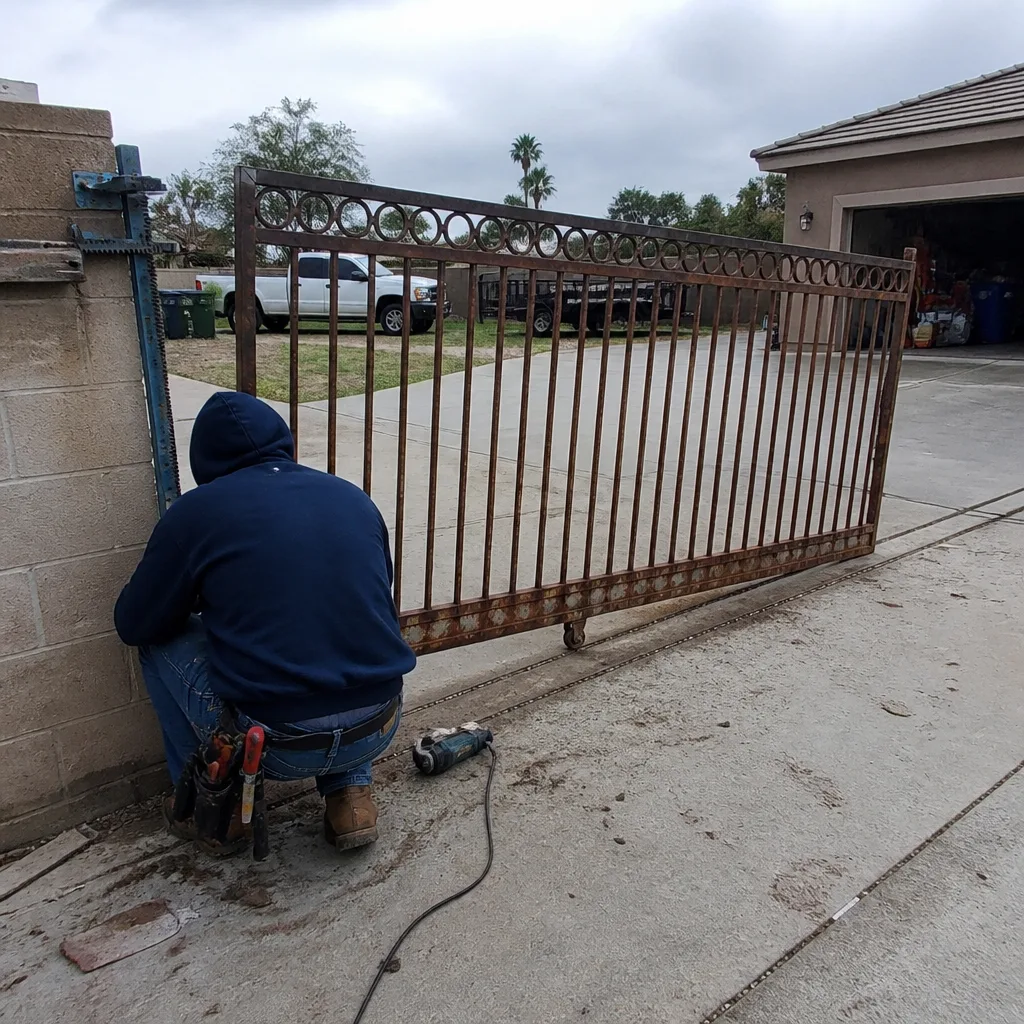 Before
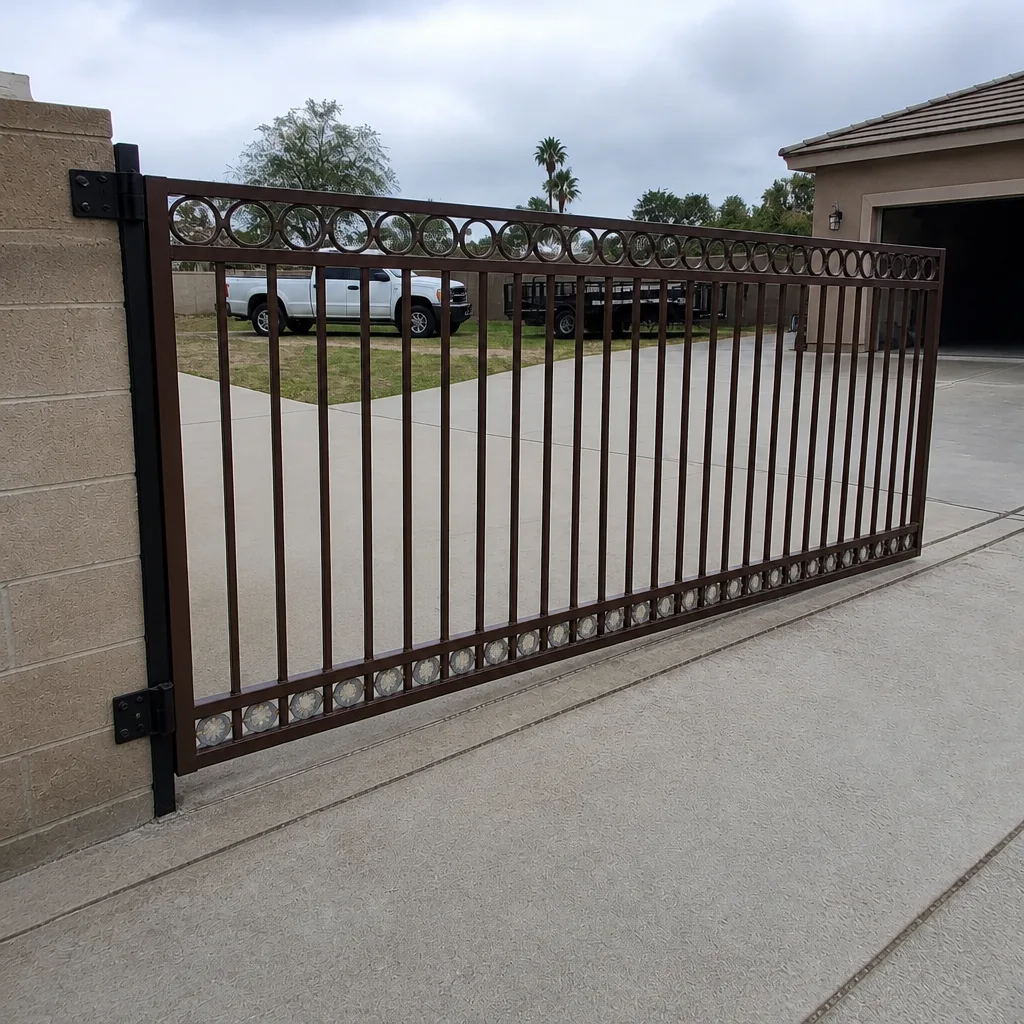 After
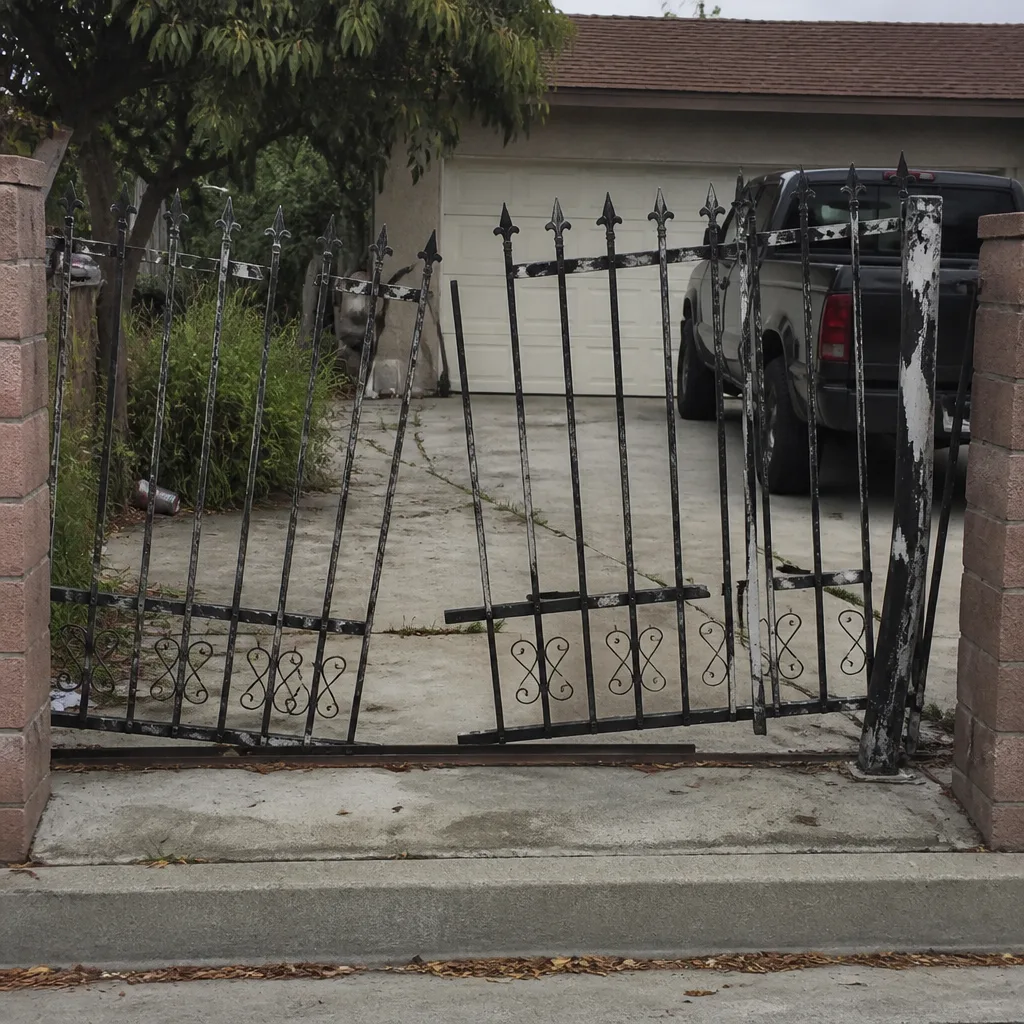 Before
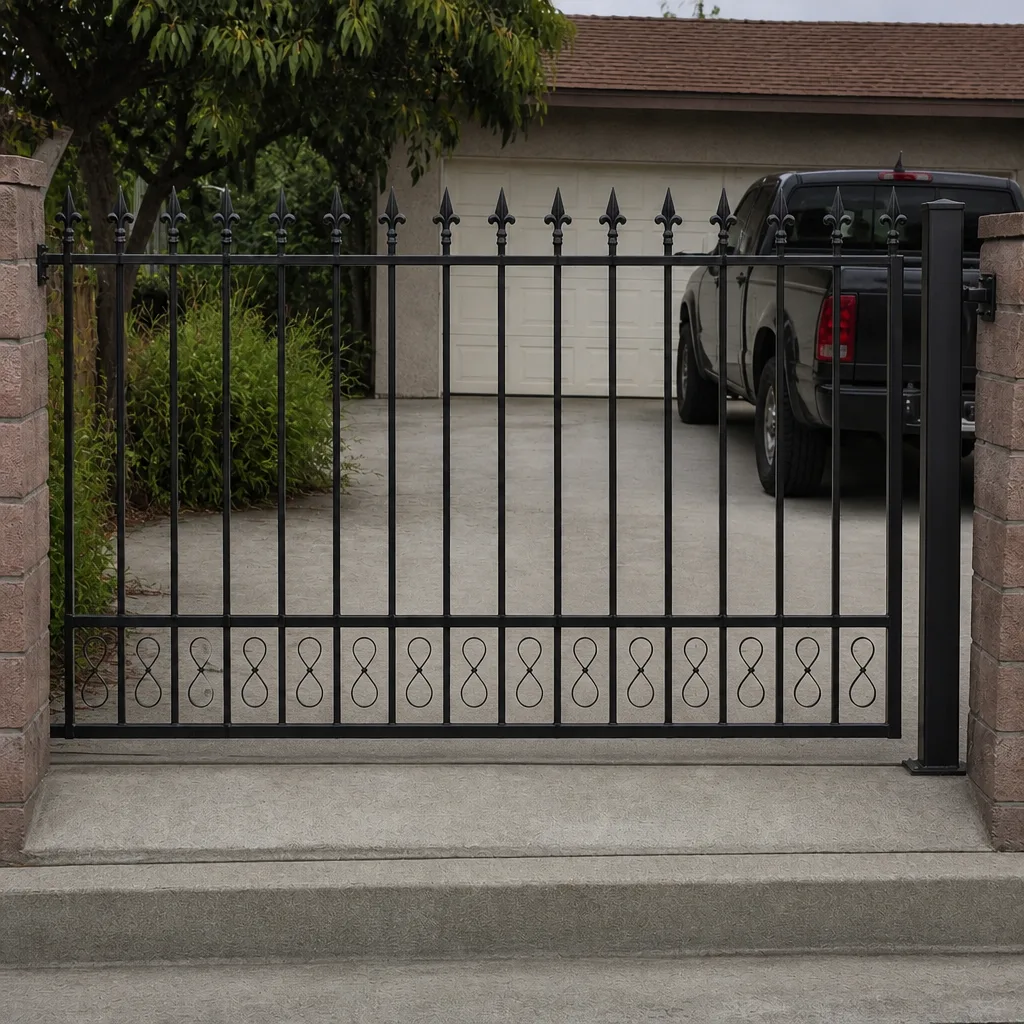 After
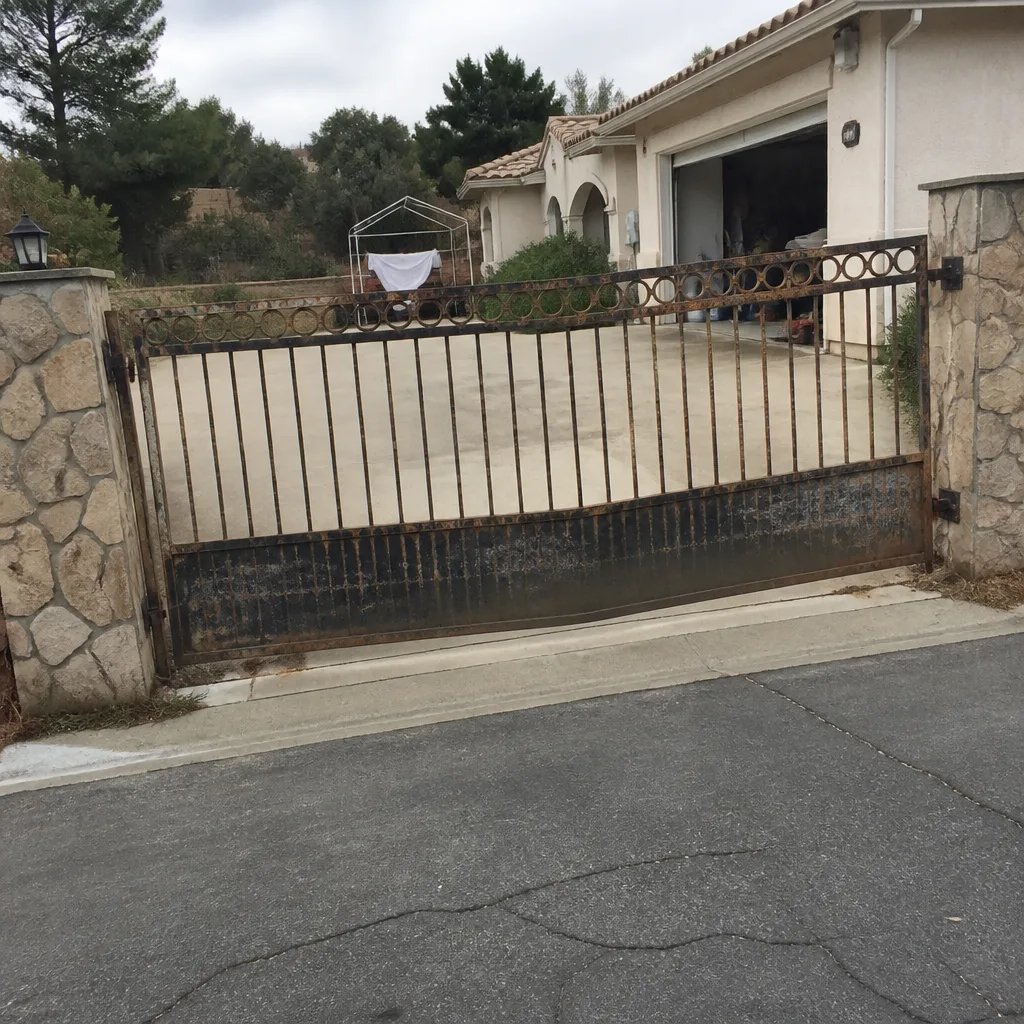 Before
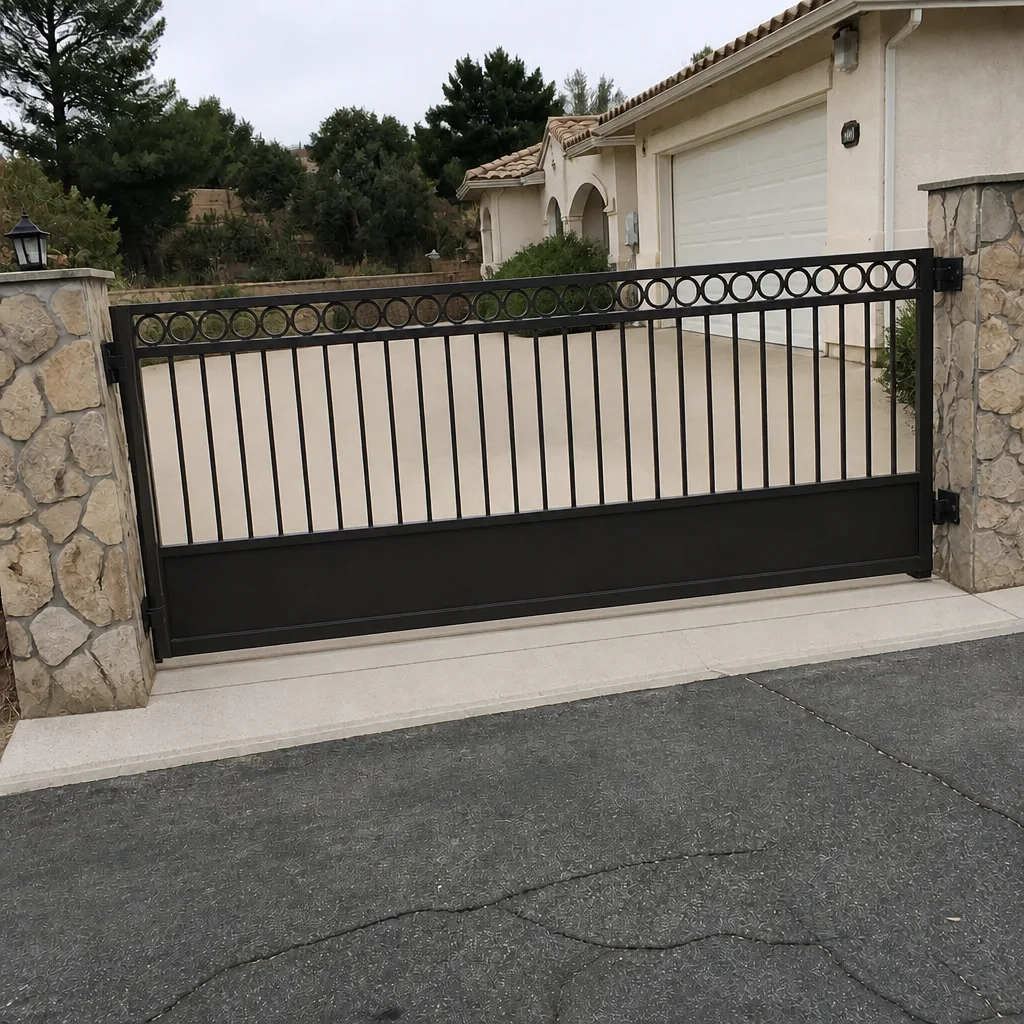 After
Frequently Asked Questions
A gate that opens on its own is usually a false trigger from the loop detector or a failing receiver on the access system, not a control board problem. Loop wires buried in Murrieta’s dry, shifting soil can crack, and a compromised loop can false-trigger when moisture or temperature changes the wire’s resistance. A qualified technician can test the loop by bypassing it before recommending any board replacement. Call (855) 817-0665 for a free estimate.
Disengage the operator and pull the gate manually. If it moves freely and lightly, the problem is electrical. If it binds, catches, or feels heavy, the problem is mechanical load. This single test takes five minutes and is the most reliable first step in gate repair troubleshooting in Murrieta.
Summer slowdowns in Murrieta are usually caused by lubricant thinning in the heat, dust accumulation in the track or operator, or the motor running closer to its thermal cutoff because of an underlying mechanical load. A cleaning and re-lubrication with the correct product often restores normal speed without replacing the operator.
Start by cleaning and realigning the photo eyes, and clear any debris from the track. If the gate still reverses, the problem may be a limit-switch fault, a failing capacitor, or a sensor that needs replacement. Electrical work inside the operator should be left to a trained professional because capacitors store charge even with the power off.
We work on LiftMaster, FAAC, BFT, Linear, Viking, Ghost Controls, DoorKing, Elite, and Mighty Mule. That range covers budget residential operators through commercial and industrial systems, and our technicians are trained to diagnose across brands rather than being locked into one manufacturer’s playbook.
The price depends on the root cause, not the symptom. A capacitor replacement is an inexpensive electrical repair; a loop wire replacement is more involved; a control board is the most expensive common component and often not the problem. Every repair is quoted and agreed before any work starts. Call (855) 817-0665 for a free estimate, and we’ll diagnose the gate and give you a written price up front.
The Bottom Line
A misbehaving gate is a symptom chain, and the skill is in reading it correctly. Most gate failures in Murrieta trace back to five root causes: mechanical load, limit-switch drift, sensor false-triggers, aging capacitors, or loop detector faults. The manual-release test is the fastest way to separate mechanical problems from electrical ones, and the exact point in the travel cycle where the gate fails usually names the faulty component. Don’t replace the control board because it’s the obvious suspect; test the cheap inputs first. And when the problem is genuinely electrical or structural, call a specialist who can diagnose the brand you own, not a generalist who sees one brand every other week.
Written by the team at Gate Repair Murrieta, serving Murrieta since 2013.