
Last updated November 4, 2026
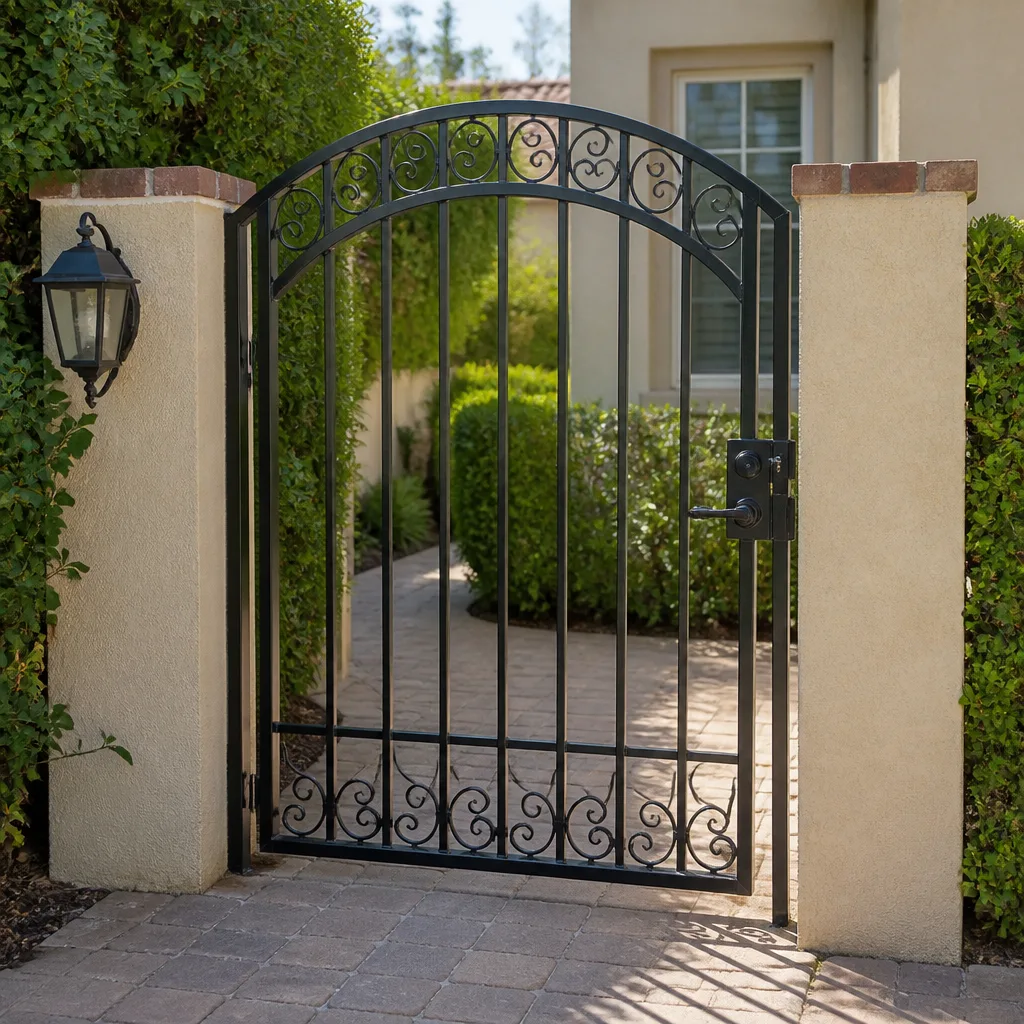 Wrought iron
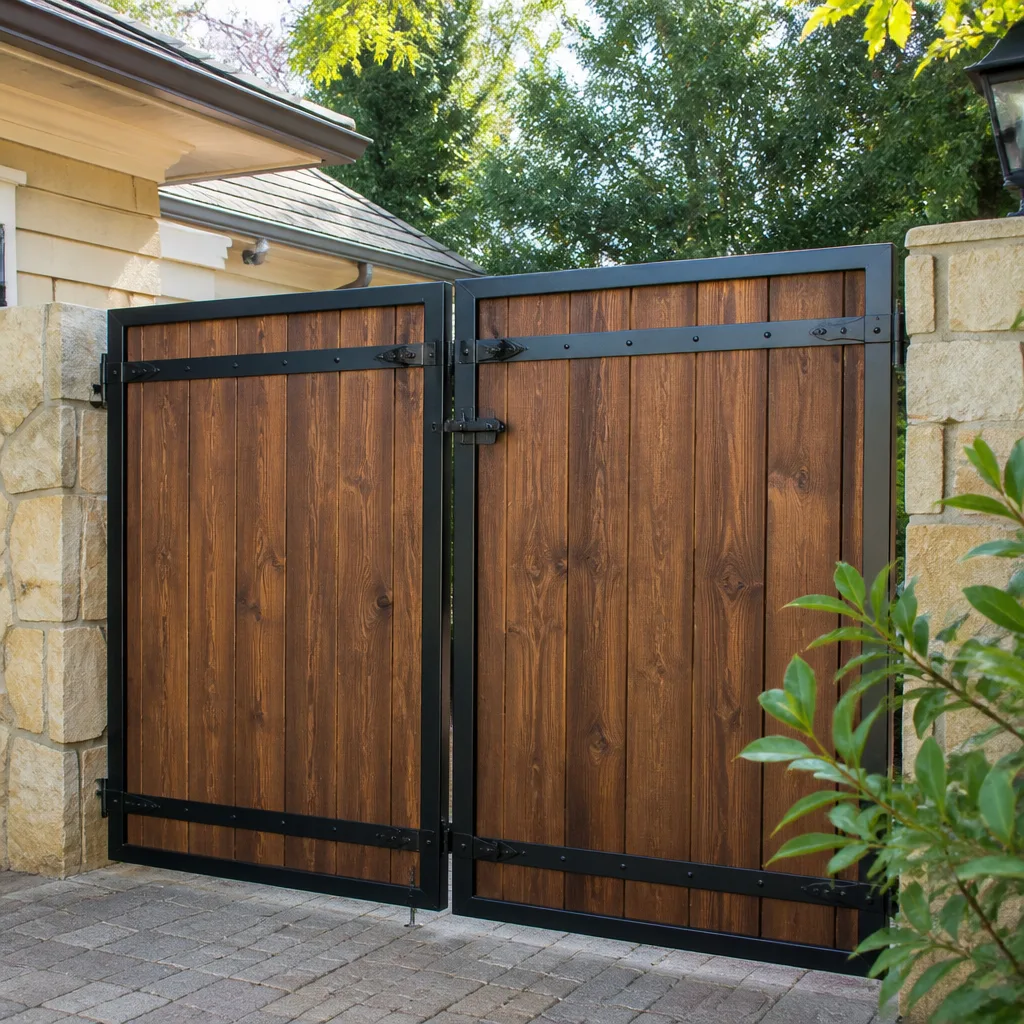 Wood & steel frame
 Farm & ranch
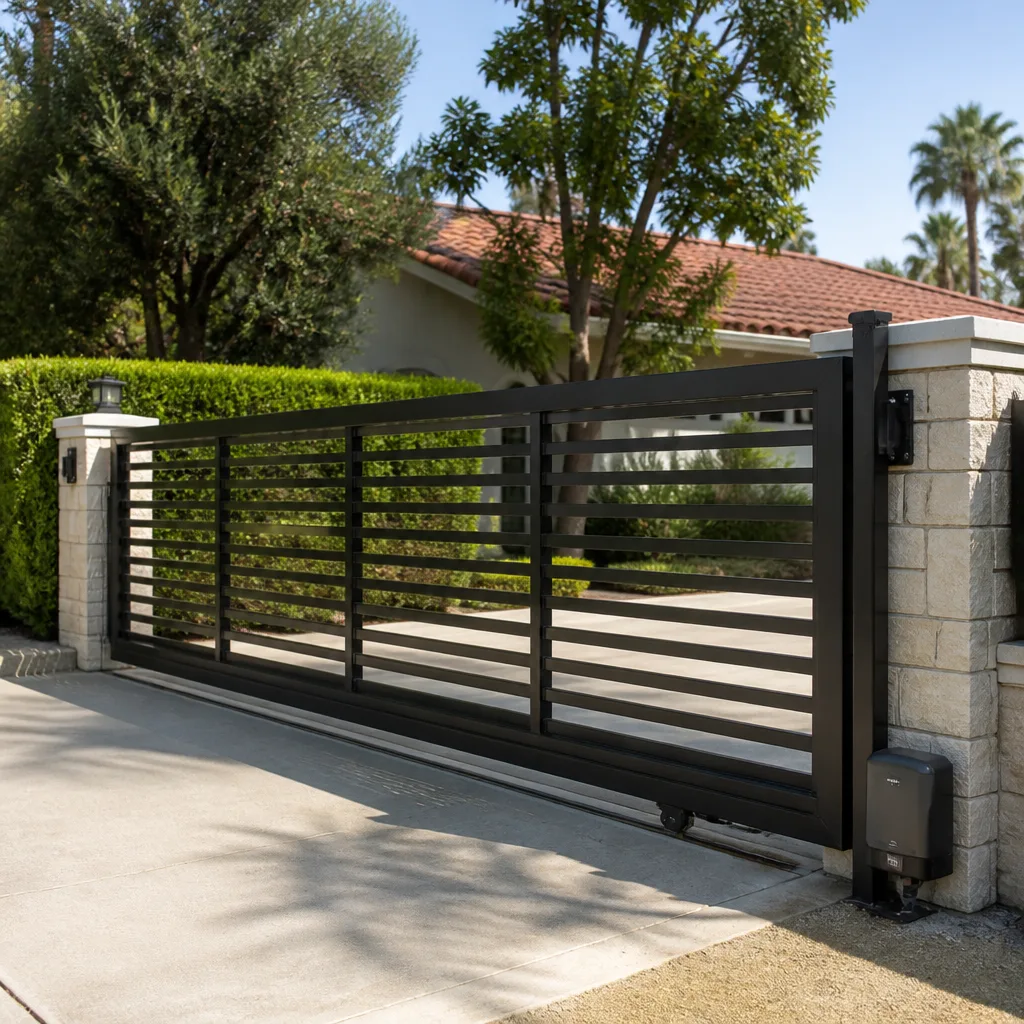 Sliding driveway gates
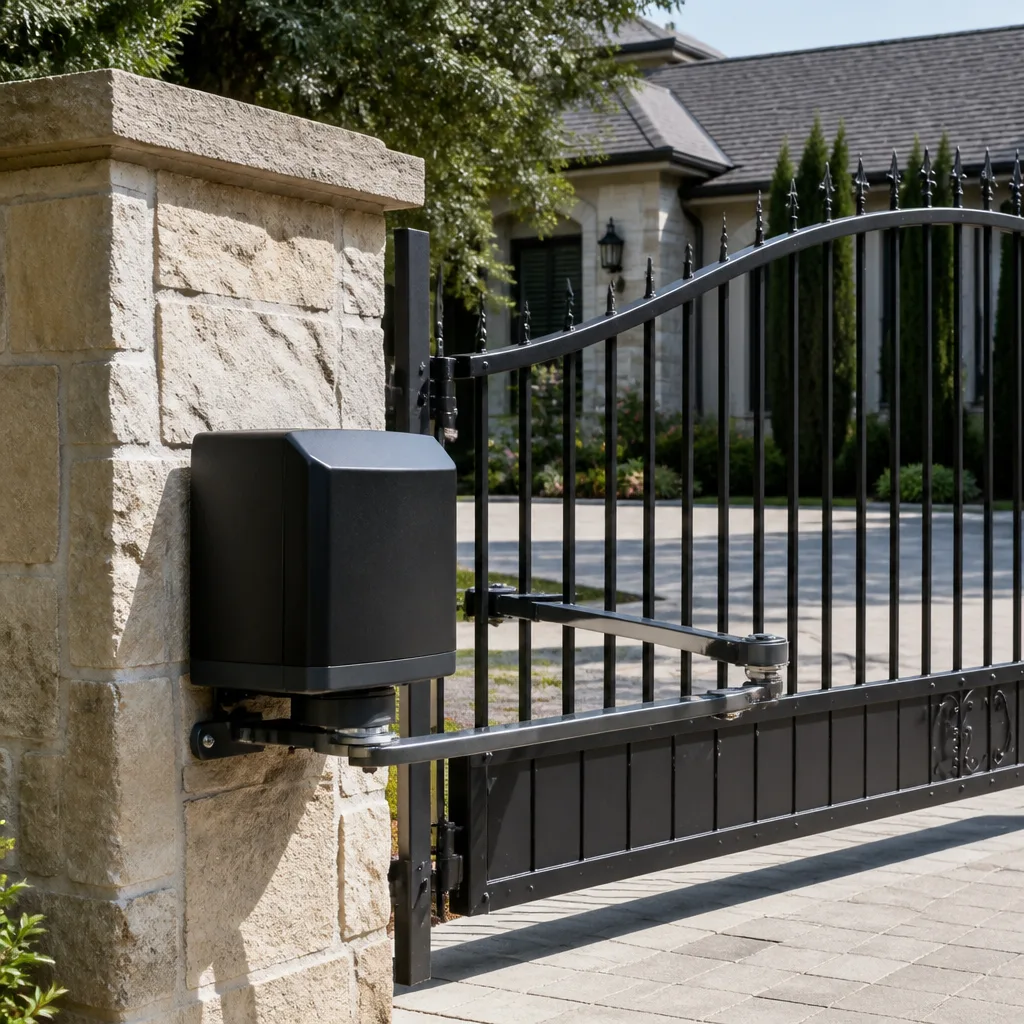 LiftMaster operators
Free on-site gate assessment - hinges, posts, and your LiftMaster or Nice gate operator checked before anything is quoted
The assessment is free and the quote is the invoice.
Get your free estimateGate Repair Maintenance Checklist for Murrieta Homeowners
Lubricating a rack-and-pinion drive with WD-40, a step that appears on dozens of generic checklists, accelerates wear by stripping the light grease the nylon rack depends on. That single example explains why most maintenance guides fail Murrieta homeowners. A swing gate with a hydraulic operator shares almost nothing with a slide gate on a chain drive, yet generic checklists treat them as one system. This guide separates maintenance by gate type and operator style, so you’re checking what actually matters on your specific setup, in Murrieta’s heat and soil conditions, not wasting a weekend on irrelevant steps.
Quick Answer
A proper gate maintenance checklist for Murrieta depends on whether you have a swing gate or slide gate, and whether the operator is hydraulic or electromechanical. At minimum, every Murrieta homeowner should inspect hinges or rollers monthly, lubricate moving components with the correct product each quarter, and test safety systems like photo-eyes and battery backup twice a year. Residential gates need this level of attention; HOA and commercial systems in Murrieta need inspections every 30 to 60 days because cycle counts are far higher.
Styles & brands we work with
- Wrought iron
- Wood & steel frame
- Farm & ranch
- Sliding driveway gates
- LiftMaster operators
Table of Contents
- Swing Gate Maintenance Checklist for Murrieta
- Slide Gate Maintenance Checklist for Murrieta
- Hydraulic vs. Electromechanical Operators: Different Maintenance Tracks
- Component-Specific Lubrication Guide
- Electrical Health Checks Homeowners Can Do Safely
- HOA and Commercial Gate Systems in Murrieta: A Different Cadence
- Maintenance Log: What to Track and Why It Matters
- Common Mistakes to Avoid
Swing Gate Maintenance Checklist for Murrieta
Swing gates hang on hinges or pivot posts and move through an arc. In Murrieta, the two things that most affect swing gate health are heat and soil movement. The clay-heavy soil common across Murrieta expands and contracts with moisture changes through the year, which shifts post footings slightly. A gate that swung cleanly in spring may drag by late summer. The monthly checklist for a swing gate should be built around catching that movement early.
Here’s the monthly walk-around we recommend for swing gates in Murrieta:
- Watch one full open-and-close cycle. Stand to the side, not in the path. Listen for grinding, popping, or a change in motor pitch. A swing gate should accelerate, travel, and decelerate smoothly. Hesitation at the start often means the operator is fighting a binding hinge.
- Check the gap under the gate at the latch post. If the gap has shrunk since last month, a post is shifting. Catching this early means a pier adjustment instead of a full post reset.
- Inspect hinges and pivot points for rust or powder. Bronze or steel hinges that show a fine rust dust are grinding metal-on-metal. A light application of the correct grease now prevents replacement later.
- Test the manual release. Disengage the operator and swing the gate by hand. It should move with even resistance. If it’s heavy on one side or sticks at one point in the arc, that’s a mechanical problem, not an electrical one.
- Look at the gate frame welds and pickets. Murrieta’s summer heat expands steel and aluminum. Expansion cracks at welds appear as hairline lines in the paint or powder coat. Wrought iron gates with ornamental pickets are prone to stress cracks at the top hinge rail.
Quarterly, add these steps:
- Lubricate hinges with a white lithium grease or a dry-film lubricant, never a penetrating oil. Apply just enough to coat the pin; wipe away anything that drips.
- Check the actuator arm or piston for dirt buildup. Clear accumulated dust from the shaft so it doesn’t get pushed into the seal.
- Tighten all exposed bolts and set screws. Thermal cycling in Murrieta loosens hardware faster than coastal climates because temperature swings are wider day to night.
- Verify the gate stops are still secure. A loose stop lets the gate over-travel and puts the full force of the operator into the hinge welds.
We work on swing gates from every major manufacturer, including Gate Repair Murrieta installations across the city, and the failure we see most often is a hinge that was never lubricated until it seized. Monthly attention prevents that entirely.
Slide Gate Maintenance Checklist for Murrieta
Slide gates ride on rollers along a track or are cantilevered, meaning the gate panel hangs from rollers inside a frame and doesn’t touch the ground at the leading edge. The distinction matters more in Murrieta than most places because of the fine dust that blows through the inland valleys. That dust mixes with grease on a track and forms an abrasive paste that eats rollers and wheels.
For a track-guided slide gate, run through this monthly list:
- Clear the track of debris. Rocks, gravel, leaves, and seed pods from Murrieta landscaping end up in the track. A small stone wedged in the track makes the operator work harder and can bend a wheel bracket.
- Inspect every roller and wheel for flat spots or wobble. A flat-spotted wheel thumps on each rotation and transmits shock into the gate frame. Replace wheels in sets, not one at a time.
- Check the rack or chain for wear. On a rack-and-pinion drive, look at the teeth. They should have a flat top, not a knife edge. A chain drive should have less than half an inch of sag at the midpoint when properly tensioned.
- Verify the guide posts or rollers at the top of the gate. These keep the panel from leaning. When they wear, the gate tips and scrapes the track. In Murrieta’s wind events, a leaning slide gate catches enough force to jump the track.
- Listen to the motor during travel. A laboring motor on a slide gate usually means debris friction or a failing wheel. Address it before the thermal overload trips and leaves the gate dead.
Quarterly steps for slide gates:
- Lightly lubricate the rack teeth with a synthetic grease designed for nylon or plastic gears. Do not use WD-40 or a penetrating oil. A rack is not a chain, and the wrong product removes the film the nylon rack needs.
- Clean the photoelectric sensors with a dry cloth. Murrieta dust coats the lenses quickly, and a dirty sensor makes the gate falsely reverse or refuse to close.
- Check the end stops and limit cams. The limit cams tell the operator where to stop. Vibration loosens the set screws, and the gate creeps past the stop position, straining the drive.
- Inspect the power and control wiring where it exits the ground or conduit. UV damage to insulation is a real issue in Murrieta’s sun exposure.
If you have a cantilevered slide gate, the track isn’t on the ground, but rollers inside the frame carry the full weight. Those rollers need lubrication and inspection just as often. For a complete breakdown of slide gate repair options, see our gate repair page.
Hydraulic vs. Electromechanical Operators: Different Maintenance Tracks
A hydraulic operator uses fluid pressure to move the gate. An electromechanical operator uses a motor, gearbox, and mechanical linkage. They fail in different ways, need different inspections, and using the wrong maintenance schedule can hide a problem until it’s expensive. We see both types across Murrieta, and the split between them is more common than homeowners assume.
Hydraulic operators
These are typically found on heavier swing gates. Brands like BFT and FAAC, which we service regularly, build hydraulic rams that are common on residential and commercial gates. Hydraulic systems are sealed, which means most of the maintenance is external.
Check these things quarterly:
- Inspect the ram shaft for pitting or scoring. A scored shaft chews the internal seal, leading to fluid weep. You’ll see a thin oily film with stuck-on dirt at the seal.
- Check for oil staining at fittings and hoses. Hydraulic fluid is clear to amber. A small leak at a fitting is often just a loose connection; a leak at the ram body usually means a seal replacement.
- Listen for air in the system. A hissing or gurgling noise during operation means air has entered the lines, often through a loose fitting or low reservoir. A hydraulic system with air in it moves erratically and can slam the gate.
- Check the reservoir level if the unit has a sight glass. Low fluid without a visible leak means the leak is internal to the cylinder. That’s a professional repair, not a top-up job.
Hydraulic operators don’t need monthly lubrication the way mechanical hinges do. The sealed system handles itself. But when a hydraulic operator fails, it fails without warning if the external inspection is skipped. A seal that looks wet is the early signal.
Electromechanical operators
These are more common on slide gates and lighter swing gates. LiftMaster, DoorKing, Elite, and Mighty Mule all build electromechanical units we service in Murrieta. The maintenance is mostly about mechanical wear and heat.
Check these things quarterly:
- Feel the motor housing after a full cycle. It should be warm, not hot. Excessive heat in an electromechanical operator means excess friction in the drive or failing bearings. Murrieta summer days push these motors toward their thermal limit faster than homeowners expect.
- Inspect the gearbox for oil seepage. Many residential operators have a sealed gearbox, but a dark stain at the seam means the seal has breached. The gearbox is lubricated for life only as long as the seal holds.
- Check the drive belt or chain tension. A loose belt slips and glazes. A loose chain slaps the housing. Both shorten motor and gearbox life.
- Verify the manual release works smoothly. If the release arm is stiff, the internal mechanism is corroding or gummed up. A release that doesn’t work means the gate can’t be opened manually in a power outage.
- Find the battery disconnect switch or breaker feeding the operator.
- Turn off the main power to the operator only. Do not open the cabinet.
- Operate the gate from the keypad or remote. If it moves at normal speed, the battery is holding charge.
- If the gate moves slowly, refuses to move, or the operator beeps an error, the battery is weak or dead.
- Turn the main power back on.
- Cracking or splitting in plastic conduit lets water and insects inside. Water follows the conduit into the operator and shorts the control board.
- Chalky white powder on PVC is UV degradation. The conduit hasn’t failed yet, but its remaining life is short.
- Bare wire visible through split insulation means the circuit is one rain away from a ground fault. Murrieta gets most of its rain in a few winter storms, and that’s when these failures appear.
- Place a cardboard box about 12 inches tall in the gate’s path, directly between the photo-eyes.
- Try to close the gate using the normal control.
- The gate should stop or reverse immediately when the beam is broken.
- If the gate continues through the box’s position, the photo-eyes are misaligned, dirty, or bypassed.
- Try the test again from the opposite direction.
- Monthly: Full mechanical inspection of rollers, wheels, hinges, rack or chain, and safety edges. Test the photo-eyes and the reversing loop. Check the manual release.
- Quarterly: Lubrication of all pivot points, gearbox seal check, limit switch verification, and control board inspection for burned or swollen components. Test battery backup under load.
- Semi-annually: Full load test with the gate opening and closing against resistance to verify safety reversing functionality. Test access control integration: keypads, remotes, phone entry, and any gate operator programming.
- Annually: Professional service visit to measure motor current draw, check gearbox oil level where applicable, inspect loop detector sensitivity, and run the system through at least 20 consecutive cycles to verify performance under heat.
- Date and time of every inspection. Even a two-minute visual check gets a line.
- Who performed the check. Homeowner, property manager, or company name if a technician visited.
- What was checked. Note the specific components: hinges, rollers, rack, chain, photo-eyes, battery, manual release.
- What was found. Even “no issues” goes in the log. The absence of findings over time establishes a baseline.
- What was lubricated and with what product. This matters if a board or rack fails. A manufacturer or a technician can see whether a wrong lubricant caused the damage.
- Any parts replaced, and the brand and part number. If a wheel set is replaced and the gate fails at the opposite wheel six months later, the log shows the failure pattern.
- Technician notes from any service visit. If a tech says “post suspected to be shifting, monitor,” the log preserves that warning.
- Using WD-40 on rack teeth or hinges. Penetrating oil is a cleaner, not a lubricant. It strips grease and leaves bare metal. A nylon rack lubricated with WD-40 will show measurable wear within months in Murrieta’s dust.
- Lubricating the slide gate track. The track should be clean and dry. Grease or oil on a track collects dust and grit, creating drag that works the operator twice as hard. This one mistake shortens motor life more than any other single habit.
- Ignoring a gate that closes slightly slower than it used to. Gates don’t gradually slow down without a reason. A slower gate means increasing friction or a weakening capacitor or motor winding. Waiting until it stops entirely usually turns a $200 maintenance visit into a $1,500 operator replacement.
- Testing the photo-eyes by waving a hand through the beam. A hand is thin and fast. A moving car or a child on a bike presents a different profile. Use the cardboard box test described above. If the gate only sometimes reverses, that’s a sensor or alignment problem, not a fluke.
- Keeping the same maintenance schedule for a residential gate and an HOA gate. The HOA gate cycles months worth of residential use in a single week. Twice-a-year inspections on a 300-cycle-per-day gate miss failures by months.
- Ignoring a battery backup that only half-opens the gate. A weak battery is a failed battery. If a Murrieta power outage hits and the gate only opens partway, emergency vehicles can’t get in. Replace the battery when it starts to degrade, not when it’s dead.
- Using a generic “gate guy” who works on everything. Gates are a specialist trade. A generalist with a truck full of garage door parts doesn’t have the right board, the right gearbox, or the right diagnostic habits. You want a gate specialist who carries parts for your brand, not someone who orders everything in.
The key difference: hydraulic operators tolerate heat better than electromechanical ones but hide internal wear. Electromechanical operators show wear externally but overheat faster in Murrieta’s summer. Your maintenance cadence has to match the system you own, not the checklist you found online.
Component-Specific Lubrication Guide
Most gate damage from “maintenance” comes from applying the wrong product to the wrong part. A homeowner reads “lubricate the gate” and grabs whatever spray is in the garage. The result is often worse than doing nothing. Here’s the product map we use in our own service work.
| Component | Correct Product | Never Use | Why It Matters |
|---|---|---|---|
| Steel hinges and pivot pins | White lithium grease or a moly grease | WD-40, penetrating oil, motor oil | Penetrants strip existing grease and wash out, leaving bare metal. The hinge then grinds and seizes. |
| Nylon rack teeth on slide gates | Synthetic grease made for plastic gears | WD-40, graphite spray, silicone spray | A nylon rack depends on a light grease film. Penetrants and dry lubricants leave the nylon running bare against the steel pinion, which accelerates tooth wear. |
| Chain drives | Chain-specific lubricant or light gear oil | Grease, WD-40 | Grease collects Murrieta dust and becomes an abrasive slurry. A chain lube penetrates the pins and resists dust buildup. |
| Limit cams and micro-switch levers | Dry-film spray or no lubricant at all | Any wet lubricant | Wet lubricant attracts dust and gums the switch. A dry film lubricates without becoming sticky. |
| Slide gate track | Nothing. Keep it clean and dry. | Grease, oil, graphite | A lubricated track collects dirt and creates drag. The wheels or rollers ride the track; the lubrication lives in the wheel bearings, not on the track surface. |
| Operator arm or piston shaft | Clean cloth only; light silicone on exposed sections if manufacturer allows | Grease | Grease on a piston shaft gets pushed into the seal and can contaminate hydraulic fluid or bind the mechanism. |
The WD-40 mistake on rack teeth is the most common and most damaging. In Murrieta’s dry climate, the dust finds bare metal fast. A homeowner sprays the rack once, the WD-40 dissolves the factory grease, and within weeks the nylon teeth show visible wear. We’ve replaced racks that would have lasted another decade if they had been left alone or lubricated correctly.
Electrical Health Checks Homeowners Can Do Safely
We do not recommend opening the operator cabinet or touching exposed terminals. The capacitor inside an operator can hold a charge long after power is disconnected, and a 120V line shock is serious. But there are electrical checks you can do safely from the outside that catch most developing problems.
Battery backup voltage
Many Murrieta gate operators, especially LiftMaster and DoorKing models, include a battery backup. The battery sits outside the main logic path and keeps the gate functional during an outage. These batteries degrade after two to four years in Murrieta’s heat. Heat is the primary killer of sealed lead-acid batteries, and a battery bake in summer shortens life.
To check it safely:
A battery that fails this test needs replacement, not recharging. A battery that only opens the gate partway is well past its useful life.
Wiring conduit inspection
UV radiation is relentless in Murrieta. Flexible conduit and insulated wires exposed to direct sun crack and chalk. Walk the run from the operator to the gate and look at any exposed conduit:
If you see cracked conduit, call for electric gate repair before the board fails. The repair cost for conduit is a fraction of a control board replacement.
Photo-eye alignment test
Photo-eyes are the safety sensors that stop the gate from closing on a vehicle or pedestrian. Dust and vibration knock them out of alignment, and in Murrieta’s dry stretches, dust is constant. Test them monthly:
A gate that ignores a blocked photo-eye is a serious safety failure. Fix it the same day. This is not a maintenance item to schedule around.
HOA and Commercial Gate Systems in Murrieta: A Different Cadence
A single-family slide gate in Murrieta cycles maybe six to ten times per day. A gate at a Murrieta HOA entrance cycles two or three hundred times daily. That’s a thirty-fold increase in wear, and the maintenance schedule has to reflect it. HOA boards and property managers who apply the residential checklist to a commercial system find out the difference in the worst way: a failed gate during morning commute hours.
HOA and commercial systems in Murrieta typically use commercial-grade operators from manufacturers like DoorKing, BFT, and FAAC. These systems include features residential units don’t: loop detectors embedded in the asphalt, higher-cycle gearboxes, and often a telephone entry or access control integration. Each of those adds inspection points.
For HOA and commercial gates, we recommend this cadence:
HVAC and asphalt in Murrieta complicate HOA gates. Loop detectors fail when the asphalt shifts in summer expansion. Control boards overheat in direct sun when the cabinet’s cooling fan fails. A quarterly cadence catches these before the gate strands residents outside on a 105-degree day.
We service residential and commercial operators across the same brands, and the cross-brand diagnostic work matters most at HOA sites. A gate built with a BFT operator isn’t repaired with a DoorKing playbook. You want a gate specialist who knows the difference. That’s what we do.
Maintenance Log: What to Track and Why It Matters
Documentation changes how warranty claims resolve and how repair decisions get made. When a technician sees a log showing quarterly lubrication and monthly inspections, the diagnosis shifts from “neglected system” to “component failure.” That distinction determines whether a manufacturer covers a part under warranty or you eat the full cost.
Keep a simple log, either paper in a garage binder or a shared digital note. What to record:
For HOAs in Murrieta, this log should live with the property management company and be passed between board members. A gate system that has cycled for 11 years without a documented inspection is a liability question waiting for an insurance adjuster, not just a repair bill.
Common Mistakes to Avoid
When to Call a Professional
Some maintenance findings mean the job has moved beyond homeowner scope. A wet hydraulic ram seal, a burning smell from the motor, a control board with visible burn marks, a gate that has jumped its track, or a post that has shifted from soil movement: these are repair calls, not maintenance items. A gate that ignores its photo-eyes or safety edge is an immediate call, not a scheduled appointment. Murrieta’s HOA gates and commercial systems should always be on a professional inspection schedule due to the cycle counts and liability exposure. If you’re seeing something you can’t explain or the gate is behaving unpredictably, Gate Repair Murrieta offers free estimates in Murrieta. Call (855) 817-0665. We answer 24/7. Fast dispatch from 7am to 7pm, Sunday through Friday.
See the difference
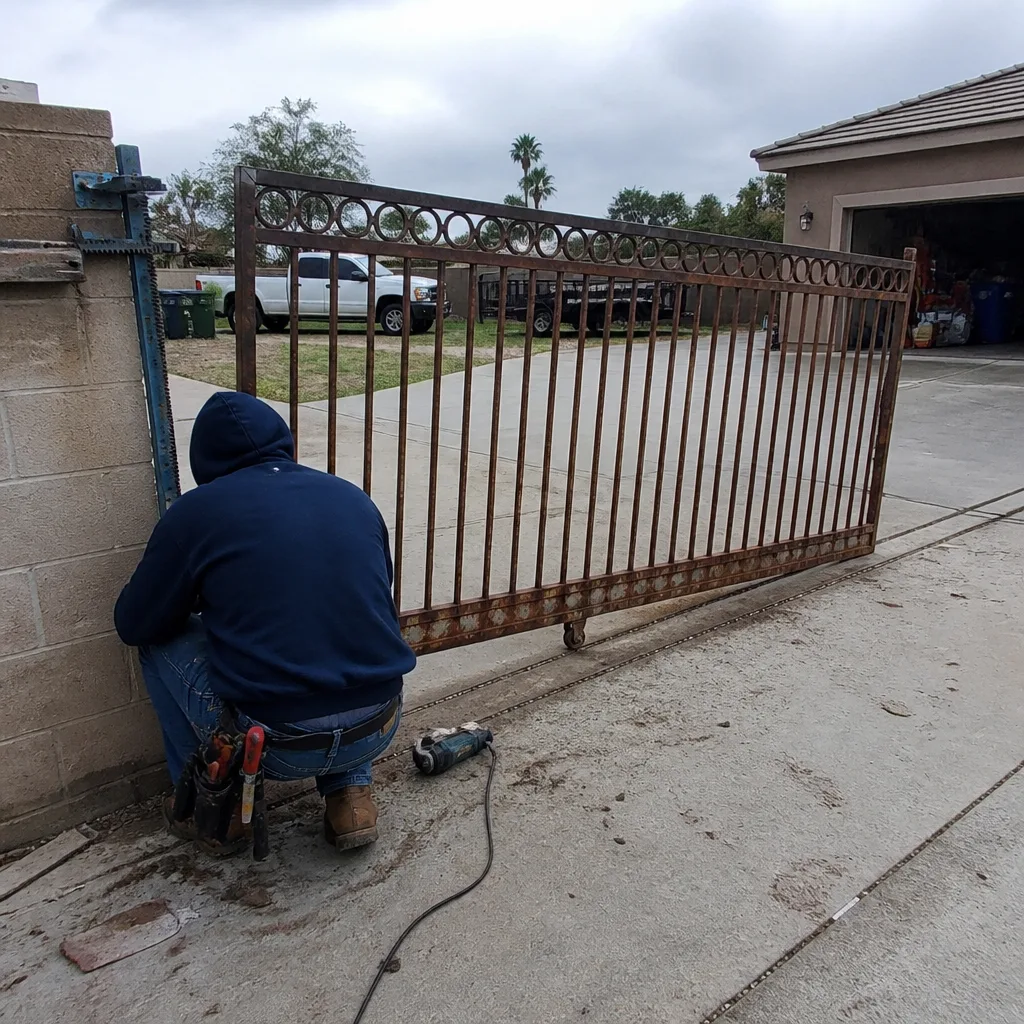 Before
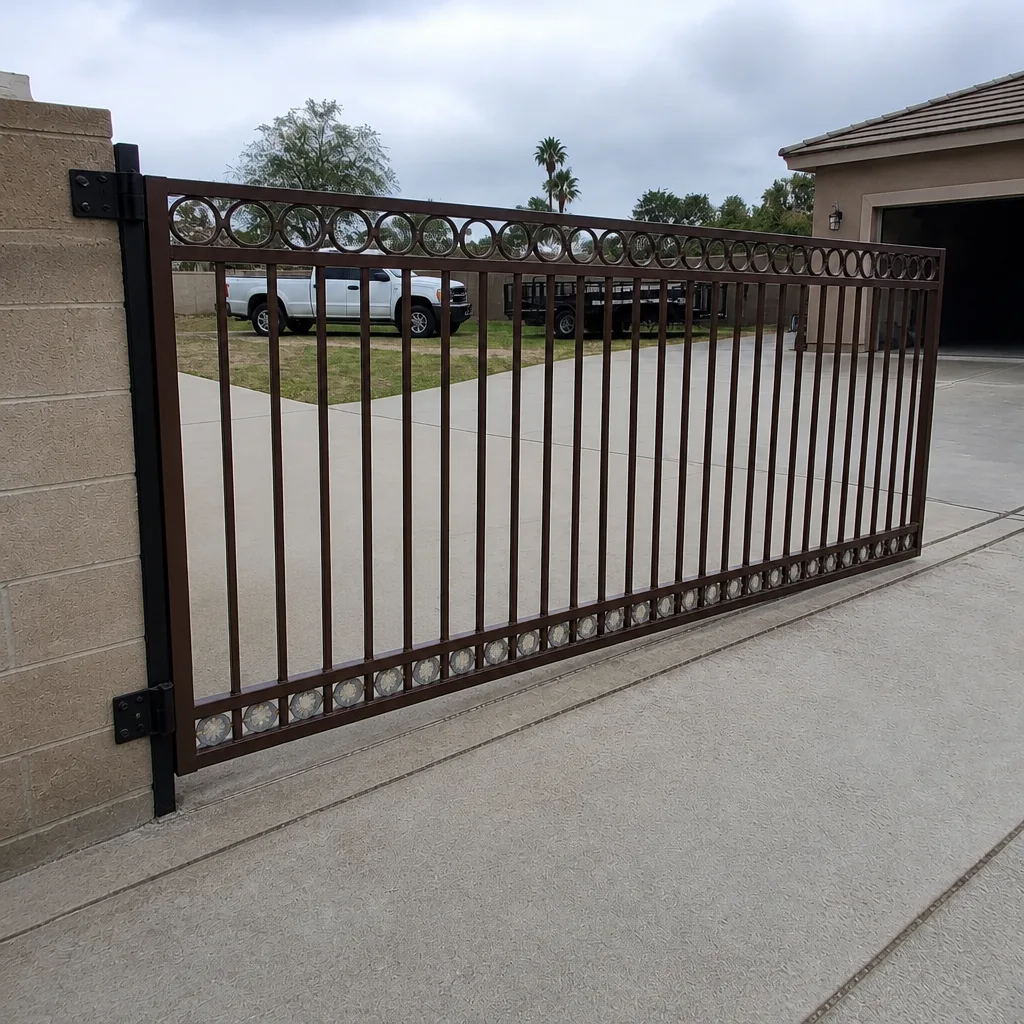 After
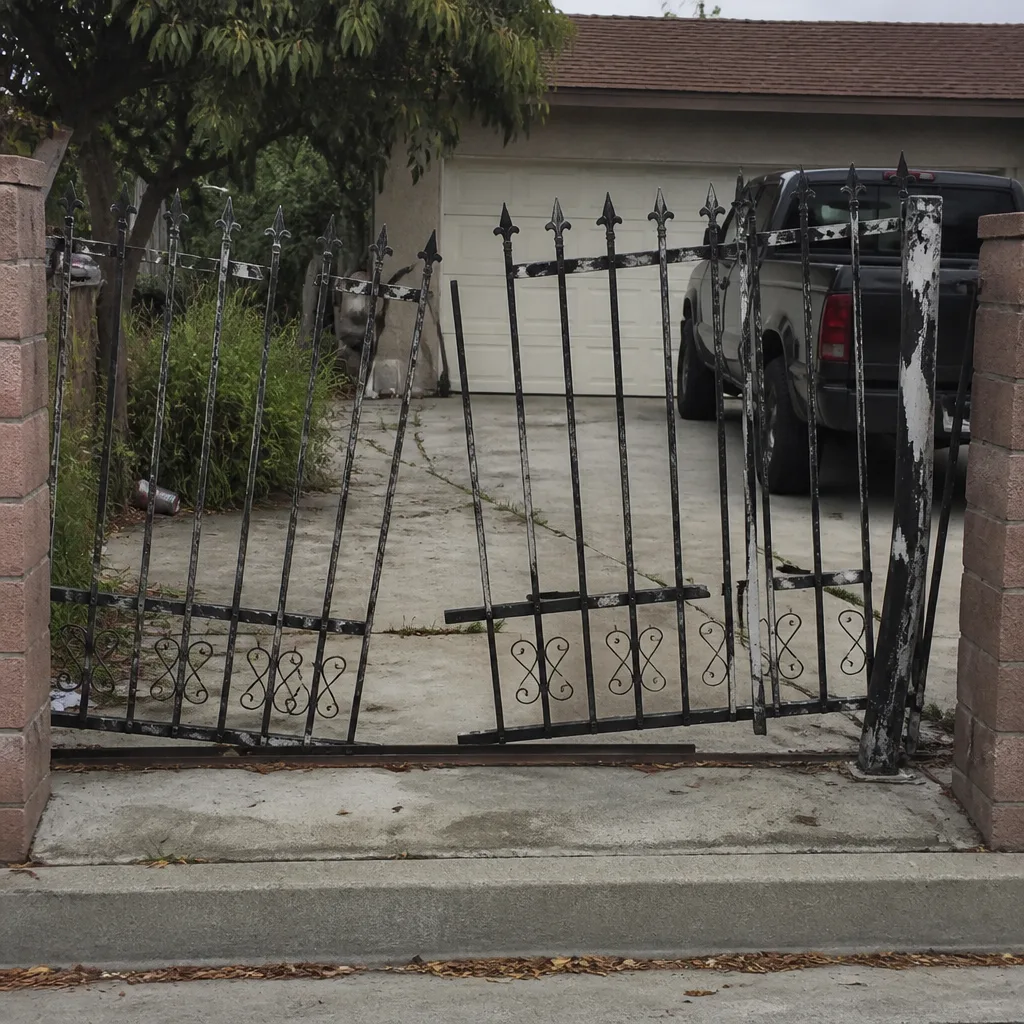 Before
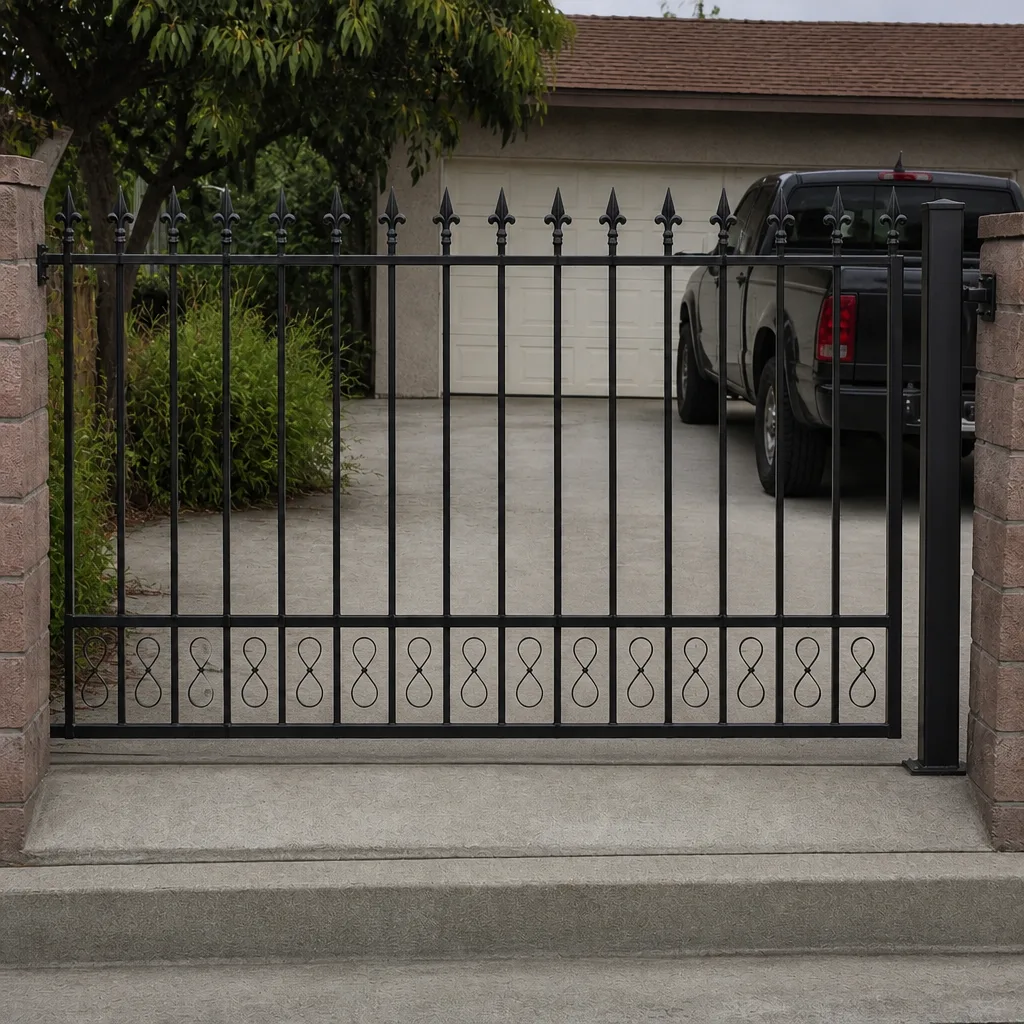 After
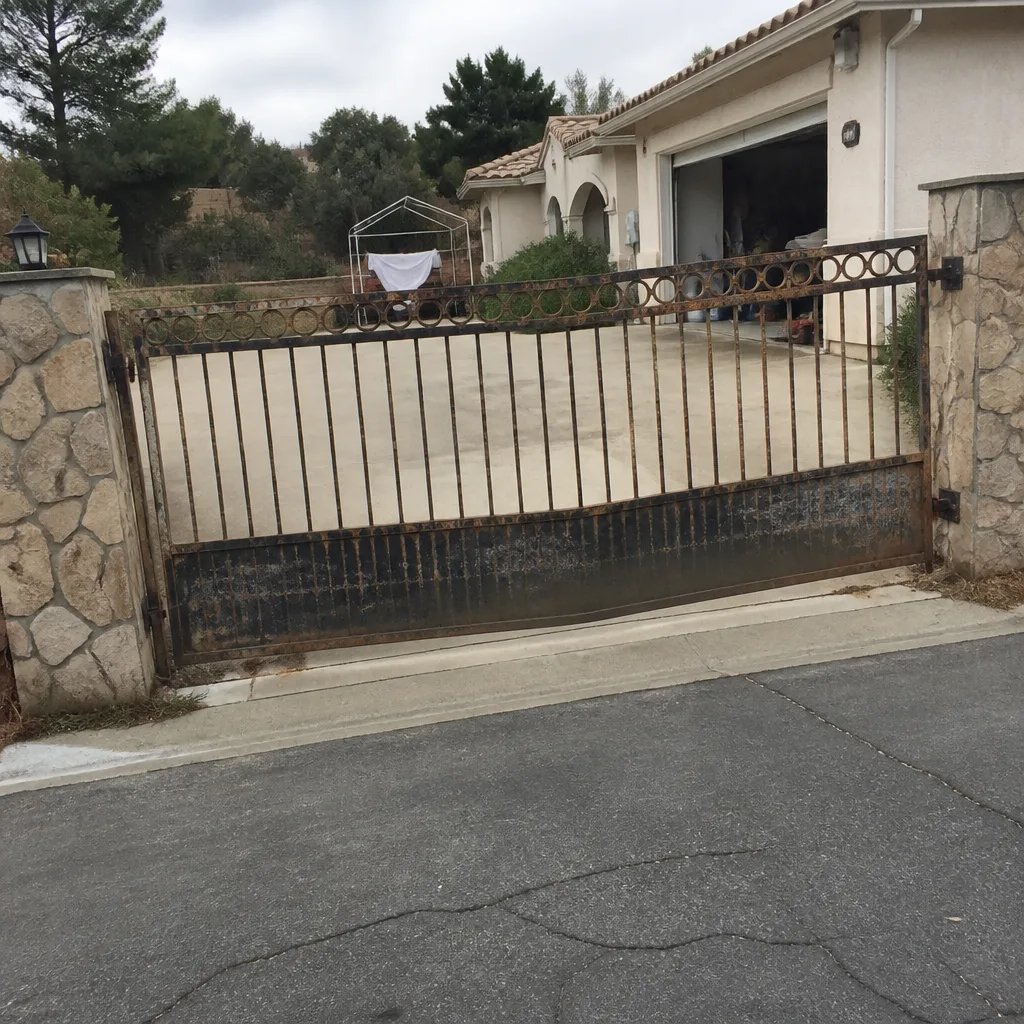 Before
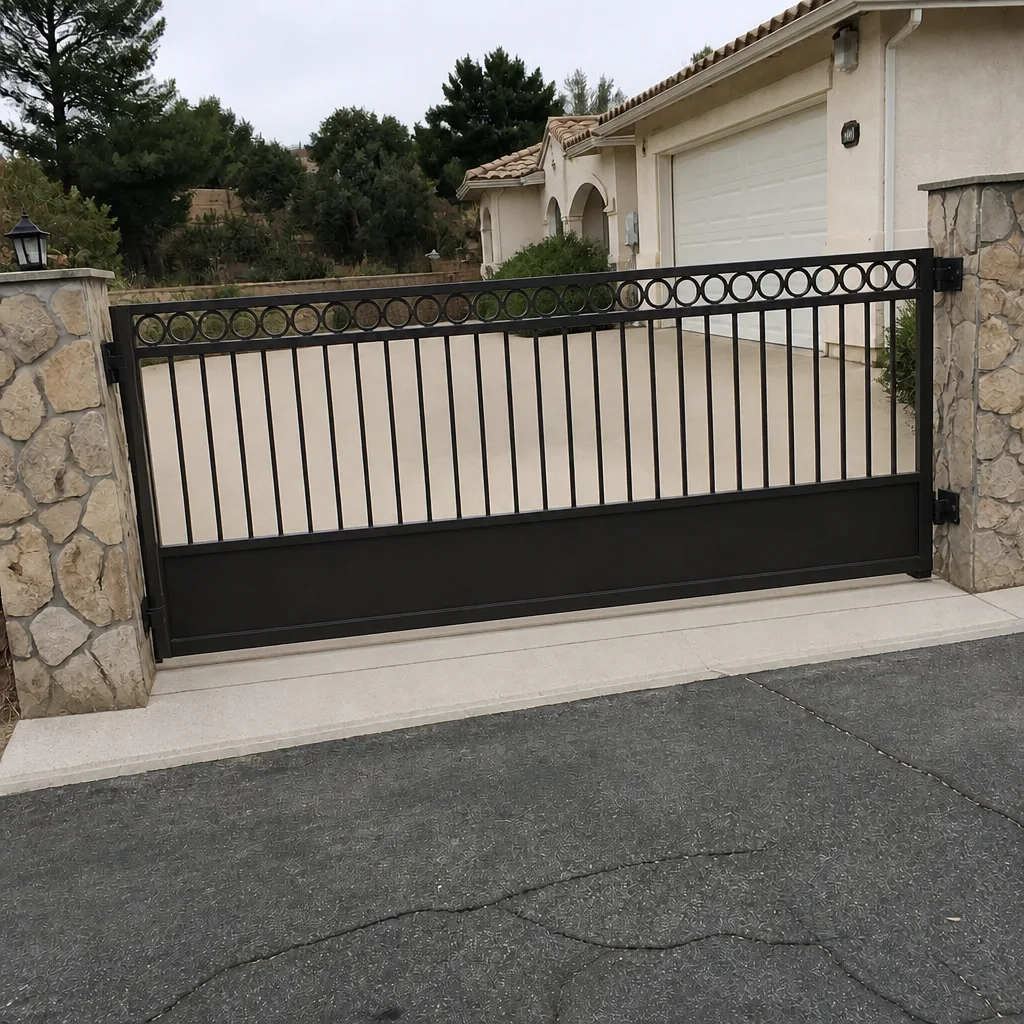 After
Frequently Asked Questions
Lubricate hinges, rollers, and rack teeth quarterly, using the correct product for each component. Murrieta’s dust load makes more frequent lubrication unnecessary and can actually cause buildup. If the gate is an HOA or commercial system with high cycle counts, lubricate monthly. Call (855) 817-0665 for a free estimate if you’re unsure which products apply to your gate.
The most common failure we see in Murrieta is a dead control board caused by heat, power surges, or water intrusion through UV-cracked conduit. The board is the brain of the operator, and when it fails, the gate usually won’t respond to any input. A close second is wheel or roller failure on slide gates due to dust and track debris that was never cleared.
You can perform the visual inspections, cleaning, and lubrication on most residential gates. The electrical checks described above are also safe when done as written. If you find a hydraulic leak, a failing motor, a control board issue, or anything involving the operator’s internal wiring, call a professional. Opening an operator cabinet without training exposes you to a charged capacitor, which can deliver a serious shock even with power disconnected.
A residential gate operator in Murrieta typically lasts 10 to 15 years with proper maintenance. HOA and commercial operators last 7 to 10 years due to higher cycle counts, though well-maintained commercial units can go longer. Heat is the main factor in Murrieta; control boards and batteries age faster here than in milder climates. Without maintenance, an operator can fail in half that time.
Yes. An HOA gate cycles hundreds of times per day, while a residential gate cycles fewer than a dozen. HOA systems also use more complex components: loop detectors, telephone entry systems, and commercial-grade operators from manufacturers like DoorKing and BFT that run hotter and harder. HOA gates need monthly inspections at minimum, with quarterly professional service.
Call (855) 817-0665. We answer 24/7. A call outside dispatch hours is booked into the next opening, Sunday through Friday, 7am to 7pm. If the gate is stuck open, secure the property as best you can and disconnect the operator if it’s safe to do so. If the gate is stuck closed, use the manual release to open it if possible. Do not force a gate open against its operator; that bends arms, breaks racks, and can injure you.
The Bottom Line
A maintenance checklist only works if it matches the gate you actually own. Swing gates need hinge and post inspection. Slide gates need track clearing and wheel checks. Hydraulic operators want seal and fluid monitoring. Electromechanical operators want heat and gearbox attention. And in Murrieta, the dust and summer heat mean the wrong lubricant or a skipped inspection has a faster, more expensive consequence than in milder climates. Match the checklist to the system, use the right products, keep a written log, and call a specialist when a finding is beyond your scope. The goal is simple: catch a $150 hinge issue before it becomes a $1,500 operator replacement or a day with no gate at all.
Written by the team at Gate Repair Murrieta, serving Murrieta since 2013.