
Last updated November 4, 2026
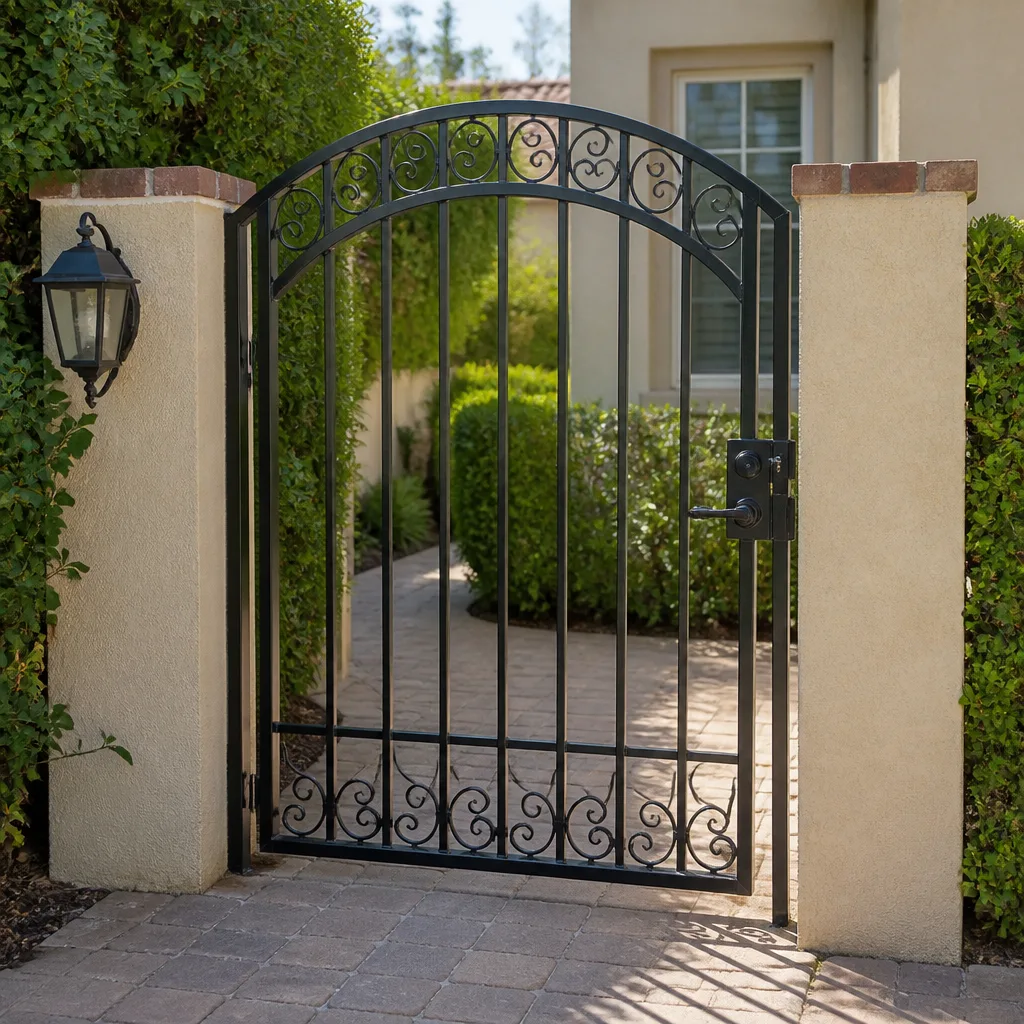 Wrought iron
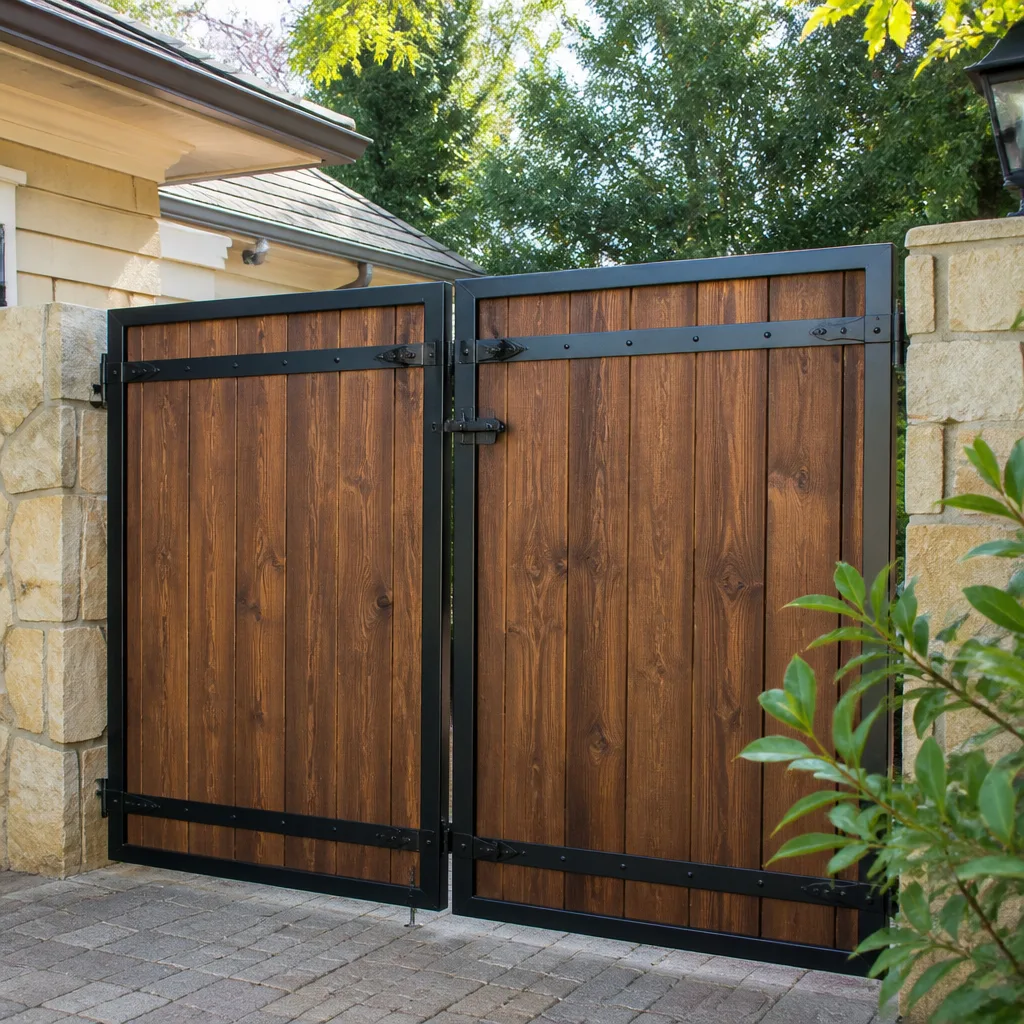 Wood & steel frame
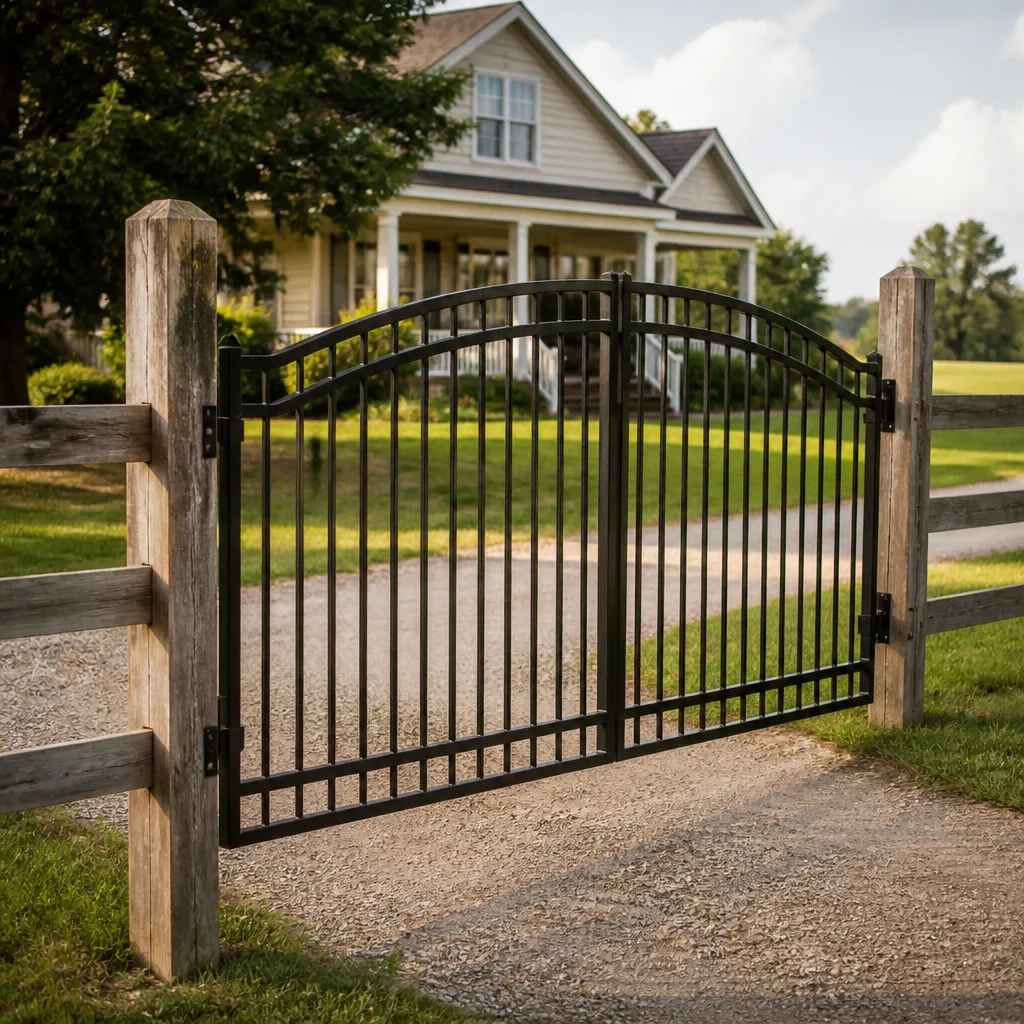 Farm & ranch
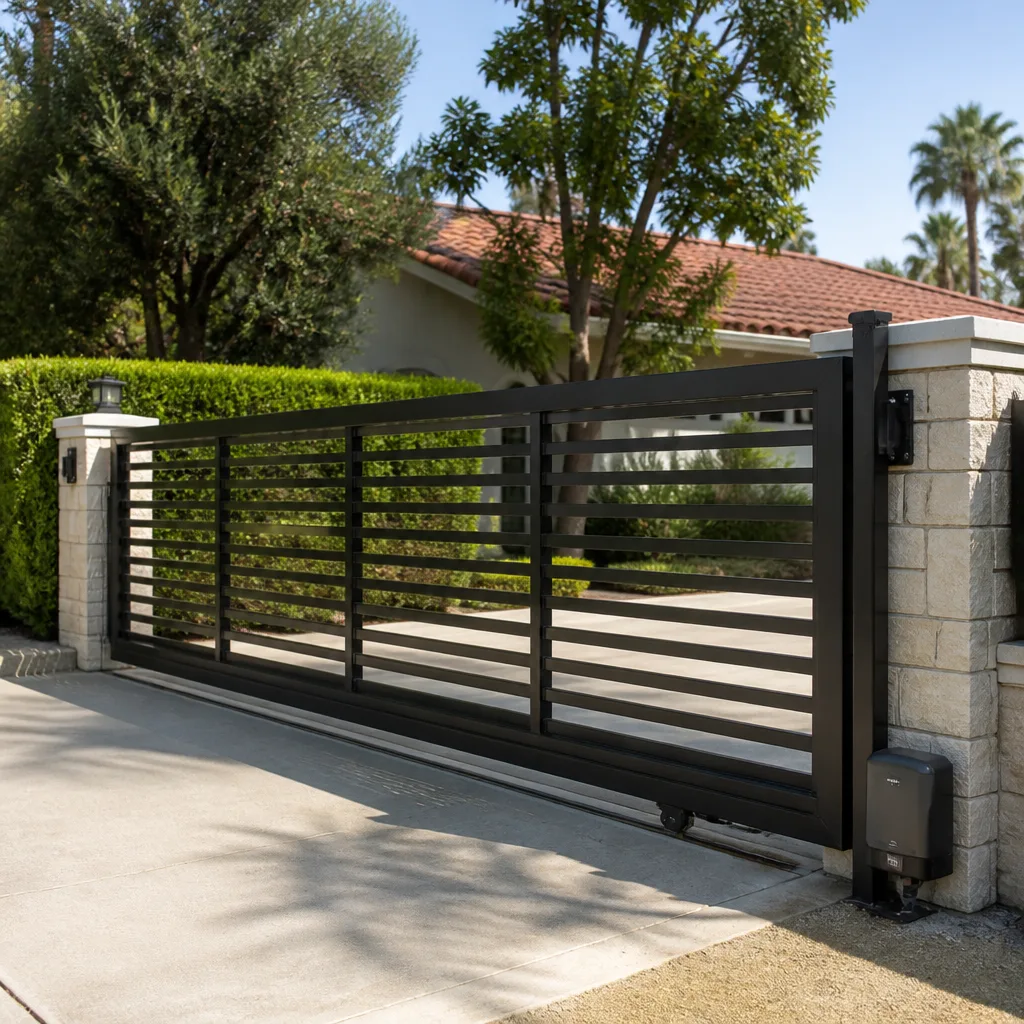 Sliding driveway gates
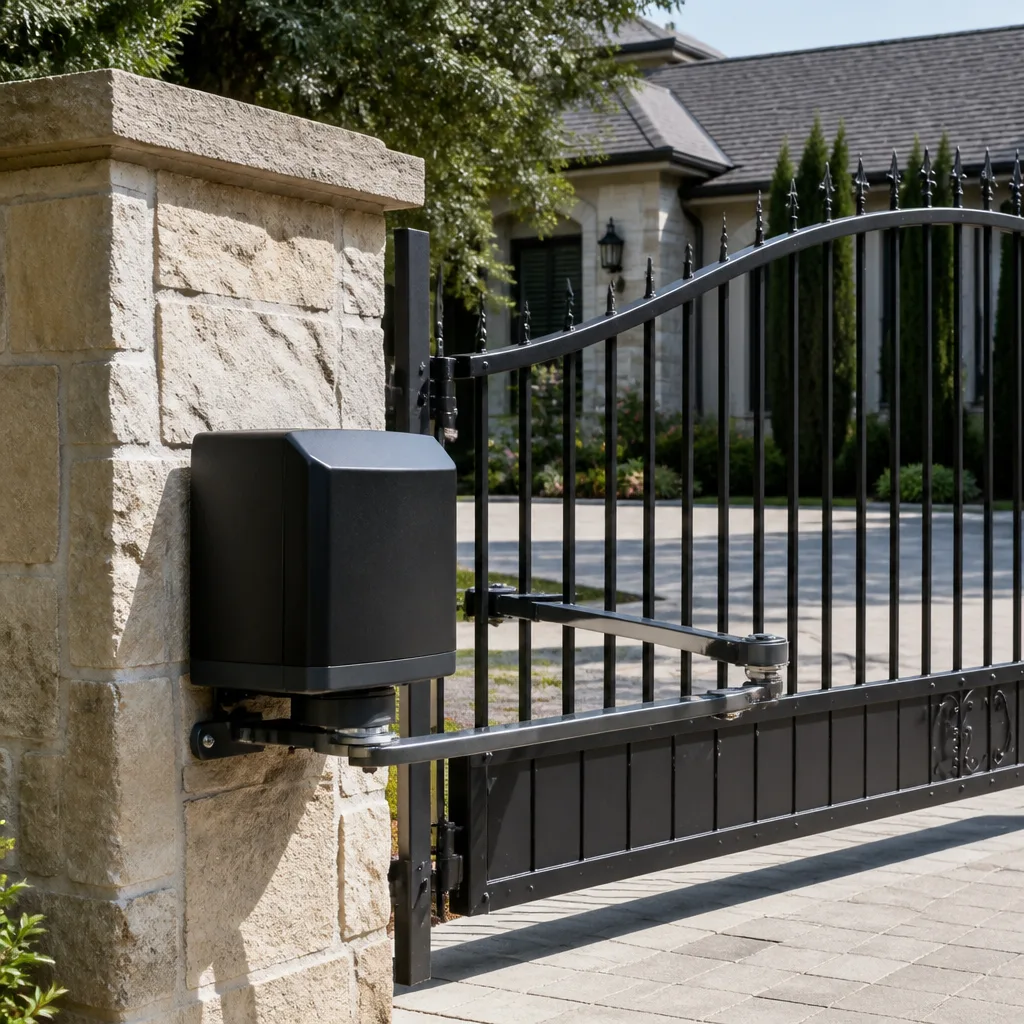 LiftMaster operators
Free on-site gate assessment - hinges, posts, and your LiftMaster or Nice gate operator checked before anything is quoted
The assessment is free and the quote is the invoice.
Get your free estimateThe Complete Guide to Gate Repair in Murrieta
A gate that reverses before closing isn’t a sensor problem. It’s a diagnosis, not a cause. That distinction matters more than most Murrieta homeowners realize, because treating the symptom instead of the failed component is exactly how people end up paying for the same repair twice. This guide maps every common gate failure to its actual mechanical or electrical origin, so you know what you’re really dealing with before anyone picks up a wrench. We’ll cover the five root causes behind most Murrieta gate failures, brand-specific weak points, the repair-versus-replace decision, and what a legitimate first-visit diagnosis should include.
Quick Answer
Gate repair in Murrieta typically falls into two categories: mechanical (hinges, wheels, track alignment, physical damage) and electrical (control boards, motors, sensors, wiring). Most failures trace back to one of five root causes: worn mechanical components, control board logic faults, motor capacitor degradation, damaged underground wiring, or misaligned safety sensors. A correct diagnosis identifies which of those five is actually failing, not just which symptom you’re seeing.
Styles & brands we work with
- Wrought iron
- Wood & steel frame
- Farm & ranch
- Sliding driveway gates
- LiftMaster operators
Table of Contents
- The Five Root Causes Behind Most Gate Failures
- How Murrieta’s Climate and Soil Stress Gate Systems
- Brand-by-Brand Failure Tendencies
- What a Correct First-Visit Diagnosis Looks Like
- Repair vs. Replace: The Decision Matrix
- Electric Gate Systems: The Parts That Actually Fail
- What Gate Repair Costs in Murrieta
- Common Mistakes to Avoid
- When to Call a Professional
- Frequently Asked Questions
The Five Root Causes Behind Most Gate Failures
After working on gates across Murrieta for 13 years, we’ve found that nearly every service call comes down to one of five underlying failures. Understand these, and you’ll understand why your gate behaves the way it does.
- Worn mechanical components. Hinges, wheels, and rollers carry the full weight of the gate panel every time it cycles. Murrieta’s dry heat accelerates wear on nylon and polymer bushings, causing the gate to sag, drag, or grind. A sagging gate puts uneven pressure on the motor, which shortens operator life.
- Control board logic faults. The control board is the brain of an automatic gate system. When a board’s relay sticks or its logic glitches, you get symptoms that look mechanical: the gate reverses for no reason, stops mid-travel, or ignores remote commands. Replacing the board fixes the cause. Adjusting the limits doesn’t.
- Motor capacitor failure. Capacitors provide the starting torque that gets a gate moving. In Murrieta’s summer heat, capacitors degrade faster than in coastal climates. A failing capacitor causes slow travel, humming without movement, or intermittent operation that comes and goes with temperature swings.
- Damaged underground wiring. Your gate operator receives power and safety-sensor signals through wires that run under the driveway or along fence lines. Murrieta’s alkaline soil, which we’ll cover next, corrodes insulation over time. The result is intermittent sensor faults or a completely dead operator, even when the breaker is on.
- Misaligned safety sensors. Photo-eye sensors must align precisely to form an invisible beam across the gate opening. When wind, gate sag, or a bumped post shifts the alignment, the system thinks something is in the way and refuses to close or reverses mid-cycle. This is a sensor problem, yes, but the cause is often the misalignment, not the sensor itself.
Here’s the key insight: symptoms overlap across these categories. A gate that reverses could be any of the five. A technician who swaps sensors without checking mechanical integrity or board logic is guessing, not diagnosing.
How Murrieta’s Climate and Soil Stress Gate Systems
Murrieta sits inland, in the Temecula Valley, with hot, dry summers and mild winters. That environment creates specific failure patterns that generic gate guides don’t mention.
High UV Exposure and Polymer Degradation
Murrieta averages more than 260 sunny days per year. That constant UV exposure breaks down nylon gears inside operators, photo-eye plastic lenses, and the PVC insulation on exposed wiring. We’ve seen photo-eye lenses become so cloudy from UV that the beam weakens and the gate intermittently refuses to close. It’s not an electrical fault. It’s solar damage.
Alkaline Soil and Underground Wiring
Much of Murrieta’s soil has a high pH, which accelerates corrosion on copper wiring that isn’t properly sheathed or conduit-protected. Underground cable runs for gate operators, keypads, and vehicle loops are vulnerable. When we dig into a dead system and find green, crumbling insulation, that’s alkaline soil doing its work over several years. This is a Murrieta-specific issue that out-of-town technicians often miss because their local soil chemistry is different.
Dust and Fine Particulate Matter
Murrieta’s dry conditions mean fine dust finds its way into everything: motor housings, limit switch contacts, and hinge assemblies. That dust mixes with lubricant to form an abrasive paste that accelerates mechanical wear. Regular cleaning of gate tracks, wheels, and hinge points matters more here than in wetter climates where rain rinses components naturally.
Temperature Swings and Capacitor Stress
Murrieta summers routinely reach the high 90s, and overnight temperatures can drop 30 degrees. Those daily thermal cycles stress motor capacitors and solder joints on control boards. A capacitor that works fine at 8 a.m. may fail at 2 p.m. when the operator housing interior hits 140 degrees. If your gate fails on hot afternoons but works in the morning, that temperature correlation is a diagnostic clue, not a coincidence.
Brand-by-Brand Failure Tendencies
Every gate brand has its strengths. Every brand also has weak points. Knowing which brand is on your gate helps you anticipate likely failures and evaluate the diagnosis a technician gives you. We work on all of them, so we see the patterns clearly.
LiftMaster
LiftMaster operators are common across Murrieta’s residential communities. They’re generally reliable, but their AC-powered swing-arm operators develop two specific issues over time. First, the internal plastic limit-switch cams wear and drift, causing the gate to stop short or over-travel. Second, the capacitor in older single-phase models degrades in Murrieta heat, producing slow travel and intermittent start failures. When a LiftMaster gate starts moving sluggishly and the capacitor hasn’t been changed in several years, that’s usually the fix.
Apollo
Apollo operators appear frequently on Murrieta’s larger residential lots and small commercial properties. Their swing operators are durable, but the control boards are sensitive to voltage fluctuations. A power surge from a summer thunderstorm or a utility company switching event can fry a board even when the motor remains fine. If an Apollo gate stops responding after a storm, the board is the first thing to test.
DoorKing
DoorKing is a workhorse in commercial and HOA applications throughout Murrieta. Their operators are designed for duty cycles far heavier than residential use. But DoorKing systems are also more complex, with component-level control boards, multiple safety inputs, and vehicle loop detectors. DIY troubleshooting often makes things worse. We see DoorKing gates where someone has adjusted the close timer or safety logic to “fix” a problem, creating a new symptom that masks the original fault.
Elite
Elite slide-gate operators are popular for driveway applications across Murrieta’s rural and semi-rural properties. The weak point on Elite systems is the drive chain and sprocket assembly. Dust and grit from Murrieta’s dry conditions accelerate chain wear, and a loose chain causes jerky travel and premature sprocket wear. Chain tension and lubrication are the two highest-impact maintenance items on an Elite slide gate.
Linear and Viking
Linear operators, common on Murrieta residential installations, are known for solid construction but develop intermittent sensor issues as wiring connections age. Corrosion at terminal blocks, rather than failed sensors, is the usual culprit. Viking operators appear on commercial and some high-end residential gates; their hydraulic models are extremely durable, but their circuit boards need clean, stable power. If a Viking gate is on the same circuit as other equipment with high inrush current, nuisance faults occur.
What a Correct First-Visit Diagnosis Looks Like
You deserve a diagnosis based on testing, not pattern-matching from a symptom list. Here’s what a proper first-visit diagnosis includes and the red flags that tell you the technician is guessing.
The Diagnostic Process We Follow
- Visual and mechanical inspection. We check gate level, hinge play, wheel condition, track alignment, and post stability before touching anything electrical. A mechanical problem will defeat a perfectly good operator.
- Electrical verification. We confirm proper incoming voltage at the operator, check breaker condition, and test the outlet or disconnect. Low voltage from a corroded connection can mimic a failed board.
- Component-level testing. Capacitors get tested for capacitance and ESR. Limit switches get continuity-tested through their full range. Photo-eyes get verified for both alignment and signal integrity at the board.
- Control board logic check. We test relay function, observe LED status codes, and verify input signals from the remote receiver, keypad, and safety devices.
- Load testing under operation. We cycle the gate under load repeatedly, watching for the specific failure mode. A gate that behaves perfectly for three cycles and fails on the fourth tells a different story than one that fails immediately.
Red Flags That Signal Guessing
- The technician adjusts the limits on the first visit without doing deeper testing first.
- Sensors are replaced without confirming alignment or wiring integrity.
- The diagnosis is delivered without any testing: “It’s probably the board.”
- The technician can’t explain why a component failed, only that it did.
- Multiple parts are suggested for replacement at once with the explanation that the tech is “covering all the bases.” That’s often a tech who doesn’t know which part is the actual cause.
Diagnosed right the first time means fewer return visits, less downtime, and a repair bill that reflects the actual fault, not a parts cannon.
Repair vs. Replace: The Decision Matrix
At some point, repairing an aging gate costs more than replacing it. The question is where that point sits. Here’s a practical matrix based on what we see across Murrieta.
Repair Is Usually the Right Call When:
- The gate panel and posts are structurally sound, with no significant rust or weld fatigue.
- The operator is less than 10 years old and has been maintained reasonably well.
- The failed component is a known wear item: capacitor, limit switch, photo-eye, hinge bushing, or wheel.
- The repair cost is less than 40% of a comparable new system.
- The system still meets your needs, and you’re not looking to add features like smartphone control or video intercom.
Replacement Makes More Sense When:
- The gate panel is sagging from weld fatigue, rust, or repeated stress, and straightening it is a temporary fix.
- The operator is 15-plus years old, and parts are discontinued or only available used.
- You’re looking at multiple simultaneous failures, like a failed board, a failing motor, and broken safety sensors.
- Your property’s needs have changed. A larger vehicle now uses the gate, or you want to add access control, camera integration, or a heavier-duty operator.
- The system was installed with undersized components for its duty cycle. Undersized operators on full-perimeter community gates fail repeatedly, and no repair fixes the underlying mismatch.
When we evaluate a gate for repair versus replacement, we look at current condition, remaining service life, parts availability, and whether the existing system still fits how you actually use the property. The goal is a decision that makes sense five years from now, not just this month.
Electric Gate Systems: The Parts That Actually Fail
Electric gate repair is our most common service call in Murrieta, and most homeowners don’t know what’s inside the box that moves their gate. Here’s a breakdown of the components that fail most often, what they do, and what a failure looks like.
Control Boards
The control board receives signals from every input device, remote controls, keypads, safety loops, photo-eyes, and translates them into motor commands. Board failures show up as gates that stop responding to remotes, open but don’t close, or behave erratically. Boards fail from voltage spikes, heat stress, relay fatigue, or corrosion on their terminal strips. Board diagnosis requires testing the inputs first: a dead keypad is not a failed board.
Motors and Capacitors
Gate motors are typically AC induction motors or DC-powered units. AC motors need a capacitor to generate the phase shift that starts rotation. Capacitors are the single most common electrical component we replace in Murrieta’s heat. A motor that hums but doesn’t move usually has a bad capacitor, not a bad motor. Motor failure itself is less common and typically follows years of neglect or a seized gearbox that overloaded the windings.
Limit Switches
Limit switches tell the operator where the gate’s travel ends. Mechanical limit switches wear and drift. Magnetic and Hall-effect limits are more accurate but can fail from wiring corrosion or magnet degradation. Symptoms of limit-switch trouble include gates that stop short, slam at the end of travel, or open far enough to stress the hinge but not quite reach full open.
Photo-Eyes and Safety Edges
Safety devices prevent the gate from closing on vehicles, people, or pets. Photo-eyes project a beam across the gate path. Safety edges are pressure-sensitive strips that trigger reversal on contact. Both are required for safe automatic-gate operation. Failure in these components causes the gate to refuse to close, reverse mid-cycle, or sound a warning but not move.
Vehicle Loop Detectors
Loop detectors sense a vehicle over an underground wire loop and either hold the gate open or trigger it to open. Loop wiring failures are common in Murrieta because alkaline soil corrodes the insulation. A loop detector that fails “closed” thinks a vehicle is permanently present and holds the gate open indefinitely. A loop that fails “open” won’t detect vehicles and requires a remote or keypad to exit.
What Gate Repair Costs in Murrieta
Pricing transparency matters. While every gate is different and the final price is always set by a written estimate before work begins, here are typical ranges we see in Murrieta.
| Repair Type | Typical Range | Notes |
|---|---|---|
| Hinge replacement (per hinge) | $85 – $220 | Heavy-duty weld-on hinges cost more than bolt-on residential hinges. |
| Wheel or roller replacement | $60 – $180 per wheel | Includes bearing inspection and track alignment check. |
| Capacitor replacement | $120 – $260 | Diagnostic testing included. Part cost varies by motor size. |
| Limit switch replacement | $100 – $250 | Mechanical limits cost less than magnetic Hall-effect units. |
| Photo-eye replacement or realignment | $90 – $240 | Includes verification of beam integrity and control-board signal. |
| Control board replacement | $280 – $750 | Varies by brand. Viking and DoorKing boards trend higher. |
| Underground wiring repair | $300 – $1,200 | Depends on run length, conduit condition, and whether trenching is needed. |
| Complete operator replacement | $1,400 – $4,500 | Includes operator, mounting, wiring, safety-device integration, and programming. |
These are estimates based on typical Murrieta installations. Your written estimate sets the final price, and it’s always quoted and agreed before any work starts. No surprises on the invoice.
Call (855) 817-0665 for a free estimate. We answer 24/7. Fast dispatch from 7am to 7pm, Sunday through Friday.
Common Mistakes to Avoid
- Treating the symptom instead of the cause. Replacing a sensor because the gate reverses doesn’t help if the real problem is a sagging hinge that drags the gate out of alignment. You’ll be back in the same spot within months.
- Adjusting limits to “fix” drift. If limit switches are drifting, they’re worn. Adjusting them buys weeks, not years. Replacing them is often the same hour of labor and ends the cycle of re-adjustment.
- Ignoring slow or hesitant opening. A gate that’s moving slower than it used to is telling you something: a weak capacitor, a tired motor, or a binding mechanical component. Waiting until it stops completely usually means the repair is bigger and more expensive.
- Powering through nuisance reversals. Holding the remote button down to force the gate to close overrides the safety logic. It also masks the real fault and can damage the operator. If the gate won’t close normally, something is wrong, not inconvenient.
- DIY board replacement without testing inputs. We see Murrieta homeowners replace control boards only to have the same symptom return. The failed input device that caused the original board stress is still connected. Worth testing everything upstream first.
- Lubricating without cleaning first. Spraying fresh lubricant onto dusty Murrieta hardware creates an abrasive paste that accelerates wear. Clean the component, then lubricate sparingly.
- Skipping safety-device verification after any repair. After any structural or mechanical work, the photo-eyes and safety edges need re-verification. A gate that functions but won’t stop for an obstacle is a liability, not a success.
When to Call a Professional
Some gate issues are safe to address yourself: tightening a visibly loose bolt, clearing small debris from the track, or checking that the power disconnect hasn’t been tripped. But electrical work on gate operators involves line voltage, and heavy gate panels can crush or pin if they move unexpectedly. If the problem involves the motor, control board, capacitor, underground wiring, or safety sensors, call someone whose entire job is gates.
We also recommend a professional when you’re not certain what failed. A gate that intermittently misbehaves requires testing under load, not a guess. Gate Repair Murrieta offers free estimates in Murrieta. Call (855) 817-0665 for an exact quote. Estimates are free.
Frequently Asked Questions
A gate that reverses before closing is activating its safety system, which can mean a misaligned photo-eye, a triggered safety edge, a failing loop detector that thinks a vehicle is present, or a control-board logic fault. In Murrieta, UV damage to photo-eye lenses is a common hidden cause. The fix depends on which input is actually triggering, and that requires testing, not guesswork. Call (855) 817-0665 for a diagnostic visit. We answer 24/7. Fast dispatch from 7am to 7pm, Sunday through Friday.
Typical Murrieta gate repairs range from $85 for a simple hinge replacement to $750 for a commercial-grade control board. Most residential repairs land between $150 and $400. The final price is always set by a written estimate before work starts, so there’s no surprise on the invoice. Call (855) 817-0665 for a free estimate.
We work on the widest range of gate brands in the industry, including LiftMaster, Apollo, DoorKing, Elite, Linear, Viking, FAAC, BFT, and Ghost Controls. Cross-brand diagnostic capability means we’re not locked into one manufacturer’s playbook. We identify the correct fix regardless of what brand is on the operator, from residential budget systems to commercial-grade operators like BFT and Linear.
Yes. We service residential driveway gates, HOA community gates, and commercial property gates. That includes both manual mechanical systems and full electric operators with vehicle loops, keypads, intercoms, and safety devices. Commercial-grade brands like FAAC and BFT require a different diagnostic approach than residential operators, and we’re equipped for both.
In our experience, Murrieta’s heat and alkaline soil create two dominant failure patterns: heat-stressed capacitors on AC operators and corrosion on underground wiring runs. Both produce intermittent symptoms that confuse the diagnosis. If your gate fails on hot afternoons or after rain, those environmental factors are usually part of the story.
Most gate repairs in Murrieta don’t require a permit because they’re considered maintenance or like-for-like replacement. New gate installations, especially those with electrical work or changes to driveway access, may require city approval. Check with Murrieta’s building department for your specific project. We can explain what’s typically required during the estimate.
The Bottom Line
Most gate failures in Murrieta trace back to five root causes: mechanical wear, control-board faults, capacitor degradation, wiring damage, or sensor misalignment. Knowing which one is actually failing, rather than which symptom you see, is the difference between fixing it once and paying for the same repair twice. Murrieta’s heat, UV exposure, and alkaline soil add local stressors that generic guides miss. A specialist who tests components rather than guessing from a symptom list is the most direct path to a gate that works reliably. Call (855) 817-0665 for a free estimate. We answer 24/7. Fast dispatch from 7am to 7pm, Sunday through Friday.
Written by the team at Gate Repair Murrieta, serving Murrieta since 2013.
See the difference
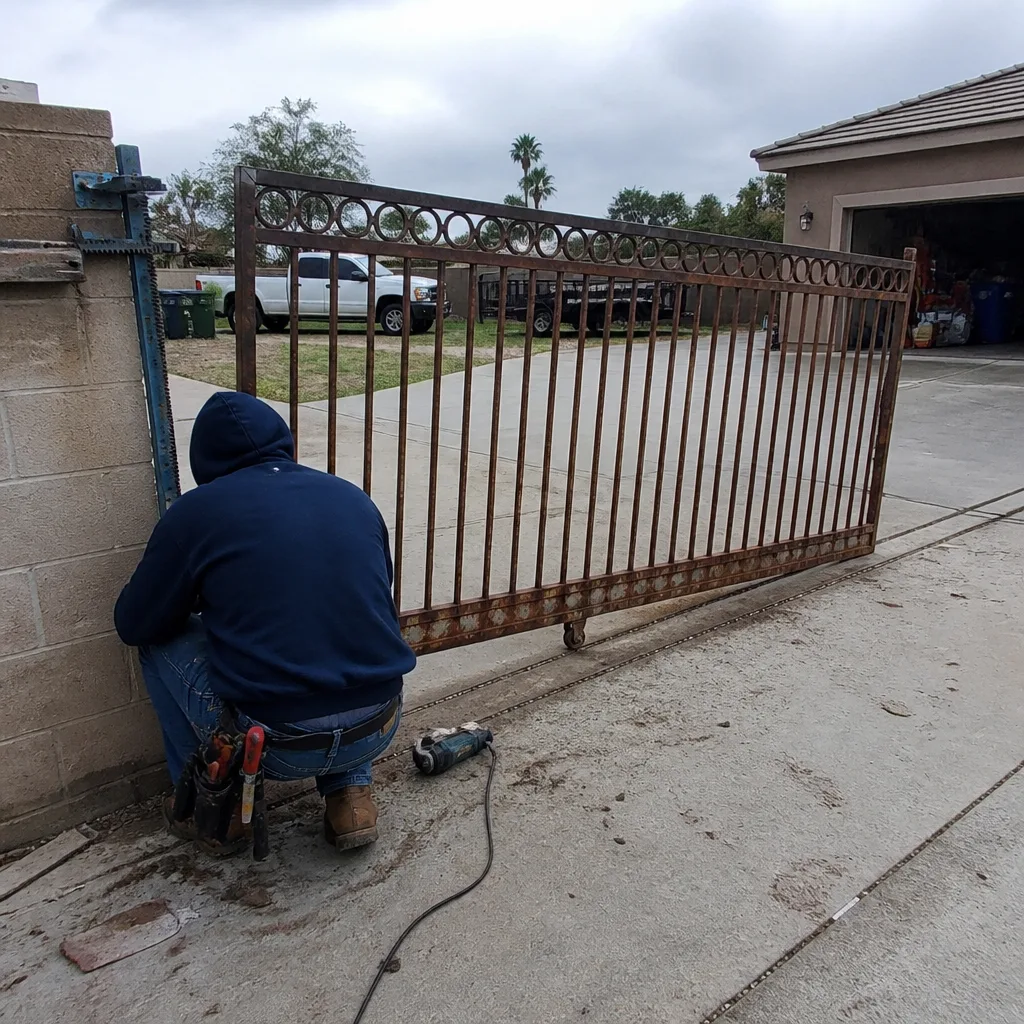 Before
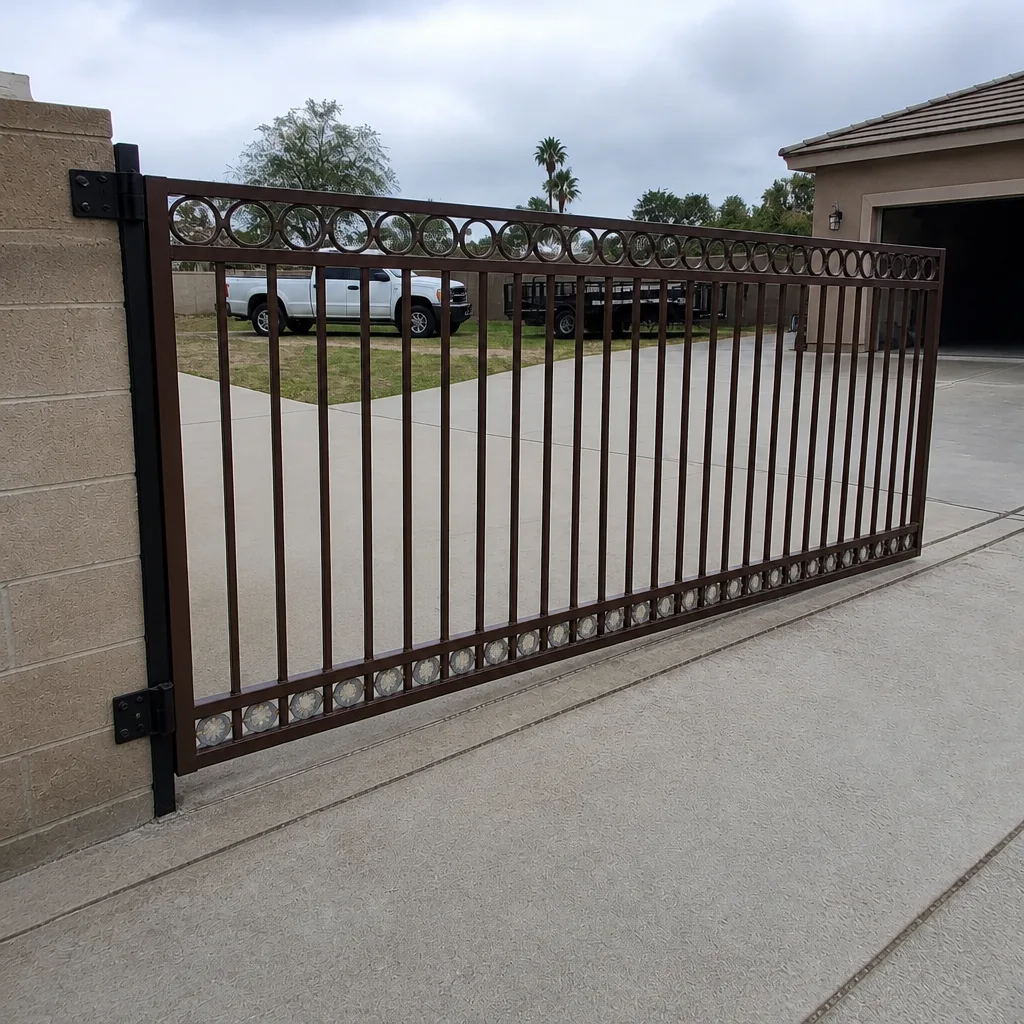 After
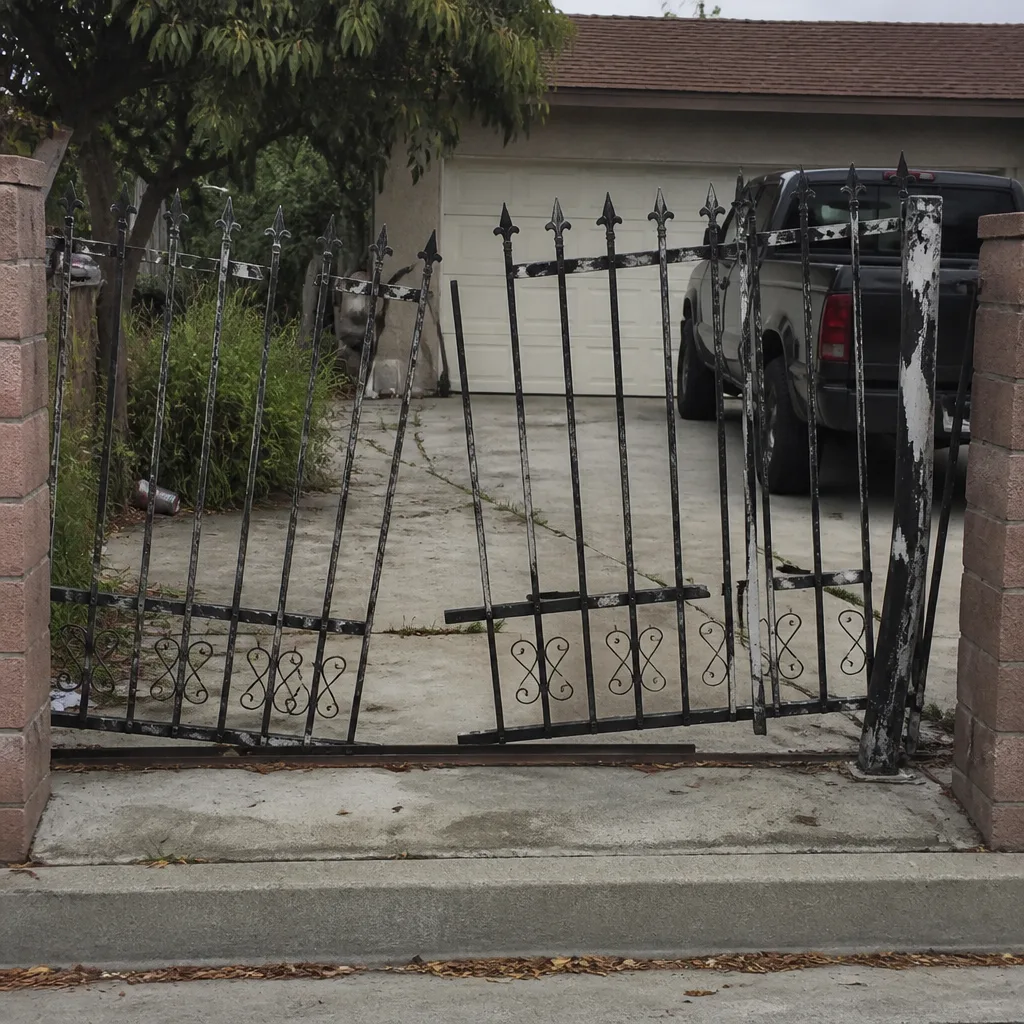 Before
 After
 Before
 After